A Jesuit priest with a crown of thorns on his head, lying on his back and strapped to a wooden cross, is pushed out into the river by Paraguayan natives. That is the opening scene of the 1986 movie The Mission.
The camera follows the priest down the river, which starts raging as he approaches a huge waterfall. Then, at the moment he goes over the falls, the camera pans out, and the viewer takes in the majestic 18th century South American landscape. The priest, strapped to his cross, can be seen plunging to his death in the background.
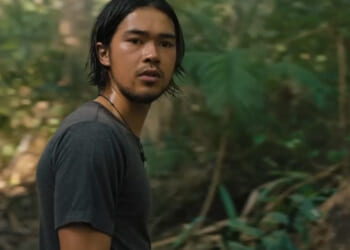
He dies, but the mission gets passed on. A new priest, Fr. Gabriel, is sent to take his place. He scales the dangerous cliffs to get over the falls where the natives live. He’s determined, as his predecessor was, to Christianize them. He makes inroads, but a fellow Spaniard named Rodrigo Mendoza interrupts the process. Mendoza is a mercenary and slave trader who terrorizes the natives by kidnapping and selling them.
Yet Mendoza has a human side—shown in his love for his younger brother. But when Rodrigo finds out that his girlfriend and his brother are, shall we say, fond of each other, Rodrigo ends up killing his brother, stabbing him in a duel.
Fast forward six months, and Fr. Gabriel is called down from above the falls for a special job. Mendoza has been sitting in a monastery cell for six months and refuses to see anyone. He has despaired and wants to die.
Fr. Gabriel enters Rodrigo’s cell and finds him sitting, lifeless, on the straw floor. Fr. Gabriel gently says, “So, you killed your brother. And it was a duel. And the law can’t touch you. Is this remorse?”
Rodrigo responds: “Leave, priest.”
Fr. Gabriel says, “Maybe you wish I was your executioner. Perhaps that would be easier.” Rodrigo answers, “Leave me alone. You know what I am.” And Fr. Gabriel says: “Yes. You’re a mercenary, you’re a slave trader, and you killed your brother. And you loved him. Although you chose a strange way to show it.”
With that, Rodrigo rises to his feet, grabs the priest and says, “Are you laughing at me?” That was the question Rodrigo asked a bystander directly before he killed his brother. Fr. Gabriel, mustering his courage, answers: “Yes, I am laughing at you. Because what I see is laughable.”
The priest’s courage breaks Rodrigo, and his rage turns to sorrow. He tells the priest there is no penance too severe for him, for his sin is too strong for God’s mercy. There’s no way out, no life, no redemption. But Fr. Gabriel responds that that is not true. He tells Rodrigo: “God gave us the burden of freedom. You chose your crime. Do you have the courage to choose your penance?”
After this exchange, the movie cuts to a new scene. Fr. Gabriel and a few Jesuits start the dangerous climb up the cliffs, up to the mission Fr. Gabriel had started above the huge waterfall. They take Rodrigo Mendoza, the slave-trading murderer, with them. Rodrigo, for his part, drags a huge net filled with metal armor—swords, helmets, breastplates, and such. He has a heavy rope tied around his chest that he uses to drag the big bundle.
As Rodrigo hauls the net, it gets snagged on bushes and hung up behind rocks. He loses his footing on some slippery rocks and almost falls to his death. Filthy from falling down so many times, Rodrigo slogs on, fighting and dragging the heap of metal—which probably contains the sword he used to kill his brother.
When the Jesuits reach the mission, the natives greet them. But then they notice Rodrigo bringing up the rear. He’s caked with mud from head to foot, but they recognize him as the one who has terrorized them for so long.
Rodrigo draws near, dragging the clinking bundle of armor. Then he stops, and falls on his hands and knees. The astonished native chief yells something at an underling. The underling grabs a knife, runs over to Rodrigo, yanks his hair back, and puts the knife to his throat, bringing on the tense climax. Does the native cut Rodrigo’s throat? No. On orders from his newly Christianized chief, he cuts the rope that was tied around Rodrigo’s chest. Then he pushes the bundle of armor over the cliff into the river.
Rodrigo, still on his hands and knees, watches the armor disappear into the water. All are silent and motionless as their eyes are fixed on Rodrigo, who, still on all fours, begins to weep. The Jesuits and the natives take turns hugging him, and Rodrigo’s tears become tears of joy. They become the tears of a free man.
You see, he chose his crime, he chose his penance, and now it was over. Rodrigo had gone to the one place for God’s sacramental forgiveness: Confession to a Catholic priest. And afterwards, with trust in God’s mercy, Rodrigo realized there is life, there is redemption, there is mercy from God.
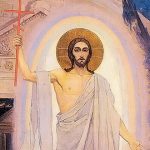
Divine Mercy. That is the reason Christ became a man. He said so Himself. He told Nicodemus: “God sent his Son into the world that he might save it.” And how would Christ save the world—by giving a brilliant series of lectures? No. Christ saved the world by bleeding to death on Calvary. Christ was born to die. That was His mission.
Three days after Christ died, the mission got passed on: “As the Father has sent me, so I send you.” God sent His Son, and the Son sends the Apostles. The Apostles are sent to apply the fruits of Christ’s sacrifice, so the rest of us might be saved. “Whose sins you forgive are forgiven them, and whose sins you retain are retained.”
What is your mission? Are you ready to be sent? Are you determined to Christianize a pagan world, or is someone or something always interrupting the process?
Given the burden of freedom, sometimes you choose crime instead of Christ. With that said, you should perhaps get on all fours, and thank Christ for having a human side, for that human side, joined to His divinity, was hung on the cross for you. And from that cross a raging torrent of mercy washes clean your soul, once caked with the muddy filth of sin.
In Confession, you can say to Christ: You know what I am. And He’ll answer: Yes. You love me, but you have a strange way of showing it. And with that comes the great climax: If you are truly sorry, and have the courage to amend your life, Christ will cut the rope that weighs so heavy on your heart. Then He will throw your sins over the cliff of Calvary, where they will disappear into His life-giving river of mercy.
Are you laughing at me? That is what Satan yells at Christ after his defeat on Calvary. That is what Satan is still yelling at each and every Sacrifice of the Mass. And what does Christ answer? He says: Yes. I am laughing at you, because what I see is laughable. That line was found in the Bible long before it made its way into any movie. It’s the second Psalm: “He who sits in the heavens laughs, The Lord scoffs at them.”
You can laugh, too. Strengthened with the water and blood that pours from Christ’s side, you can laugh, knowing that there is a way out. That there is life. There is redemption. That no sin is too strong for God’s Divine Mercy.