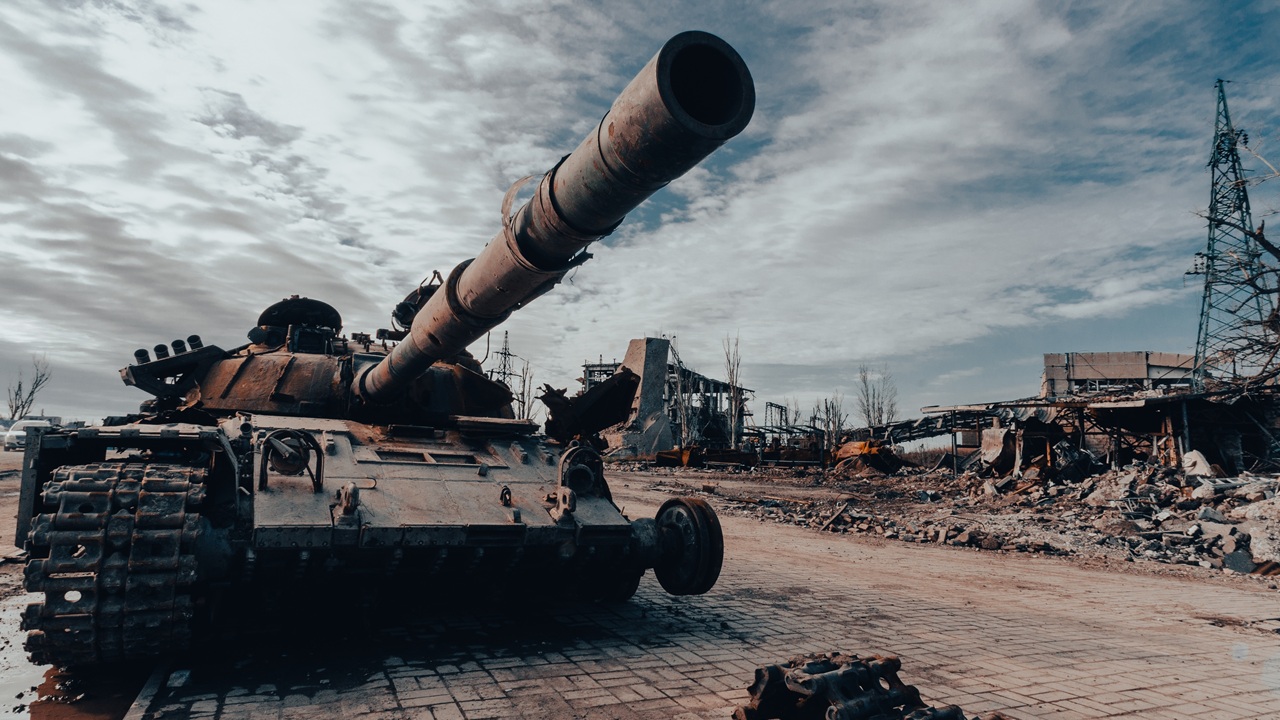
A number of Western tanks and armored vehicles are on display in Pyongyang as part of a Ukraine War exhibit—but it is unlikely that North Korea actually captured them.
North Korea hasn’t fought a war with the West since the end of the Korean War in 1953. However, Pyongyang did send pilots and psychological warfare staff to support North Vietnam in the Vietnam War. North Korean advisors may have also participated in the Yom Kippur War against Israel in 1973, and more recently the Angolan Civil War.
Today, however, North Korean military personnel are deployed in a combat role in the Ukraine War, supporting Moscow’s war effort. Even as Pyongyang would like to downplay the fact that as many as 6,000 soldiers have been killed in the ongoing fighting, and a number of others have defected to Ukraine, North Korean leader Kim Jong-un opened a memorial for the fallen in Pyongyang this week. It cast the war as a noble struggle to support its Russian allies.
North Korea also unveiled its Memorial Museum of Combat Feats in Foreign Military Operations on Sunday, which featured an exhibit of captured military equipment from the battlefield in Ukraine—much of it made in the United States and Europe.
Pyongyang’s haul “includes Leopard 2A4 and M1A1 Abrams tanks, Marder infantry fighting vehicles, AMX-10RC armored reconnaissance vehicles, VAB armored personnel carriers and mine-resistant vehicles, including [Turkish] Kirpi MRAPs,” The New Voice of Ukraine reported.
It is more likely that North Korea received the vehicles from Russia, which has captured many similar vehicles over the course of the four-year war, than that its personnel actually seized all of the vehicles themselves. Yet, it offers a narrative to the Hermit Kingdom’s citizens that their forces have scored a great victory over the Western powers.
Russian Minister of Defense Andrey Belousov, who led a Russian delegation, attended the opening ceremony for the memorials.
Captured Weapon Displays Are a Mainstay of the Ukraine War
Even as this is the first time that North Korea has displayed captured military hardware in Pyongyang, both Russia and Ukraine have used captured or destroyed vehicles for propaganda purposes. Ukraine was quick to display destroyed Russian tanks and armored vehicles—first in Kyiv, then in various other cities throughout Europe to underscore that its forces remained in the fight and were capable of inflicting serious losses on the Russian juggernaut.
Moscow has also been quick to present destroyed Western tanks to dispel any myths about the platforms’ invincibility.
The use of such “war trophies” dates back to antiquity, and museums around the world are filled with them. It highlights victories and downplays defeats. However, military analysts have warned that the captured vehicles will also offer much more than a brief propaganda coup.
“Historically, nations have leveraged captured equipment to accelerate domestic innovation or develop effective countermeasures. During the Cold War, both NATO and Warsaw Pact countries actively studied each other’s systems to refine tactics and technology,” Army Recognition reported.
It is known that the United States sent a captured T-90 main battle tank (MBT) to the Aberdeen Proving Ground after it was inadvertently spotted at a truck stop in Louisiana. Similarly, Russia made sure to let the world know that a captured M1 Abrams and Leopard 2A6 tank were sent to its Uralvagonzavod MBT production facility for study.
The USS Pueblo: North Korea’s Forgotten War Trophy
The US M1 Abrams main battle tank is, unfortunately, just the newest American war trophy now residing in the Hermit Kingdom.
In January 1968, the USS Pueblo (AGER-2), a US Navy surveillance ship, was attacked and seized by North Korean forces. The incident almost sparked a second Korean War, even as the United States was already actively involved in Vietnam.
Pyongyang released the crew after 11 months, but kept the ship. USS Pueblo is now on display at a museum in Pyongyang, but remains officially commissioned with the US Navy—making her the second-oldest ship technically in active duty, behind the famed USS Constitution.
About the Author: Peter Suciu
Peter Suciu has contributed to dozens of newspapers, magazines and websites over a 30-year career in journalism. He regularly writes about military hardware, firearms history, cybersecurity, politics, and international affairs. Peter is also a contributing writer for Forbes and Clearance Jobs. He is based in Michigan. You can follow him on Twitter: @PeterSuciu. You can email the author: [email protected].