A few days before Christmas, the Delaware Supreme Court overruled the state’s Court of Chancery and restored to Elon Musk the $56 billion in stock options he earned at Tesla by increasing the value of the company 12-fold between 2018 and 2024.
That’s good news—not only for Musk but also for everyone interested in seeing Delaware continue as the world’s preeminent corporate-law jurisdiction. No court system that invalidates a corporate transaction approved by a large majority of a company’s shareholders could seriously claim to provide fair and efficient corporate laws administered by economically sophisticated judges. (To reach this result, the Court of Chancery had said that the disclosure the shareholders received was inadequate because, though it clearly explained all the economic terms of the package, it did not explain how flawed—in the court’s view—were the procedures used by the directors in approving it.)
Finally, a reason to check your email.
Sign up for our free newsletter today.
However, the good news stops there. Once you get past the headline holding, everything else about the court’s decision bodes ill for Delaware.
In 2018, when the company’s market capitalization was about $45 billion, Tesla’s shareholders approved an extraordinary compensation plan for Musk. Under the terms of the arrangement, Musk could receive up to 12 payments, each consisting of options to purchase 1 percent of the company’s then-outstanding common stock. The value of the options could, and eventually did, aggregate to about $56 billion—by far the largest executive compensation package in history. But, to earn each payment, Musk had to boost Tesla’s market capitalization by an additional $50 billion, as well as meet another target related to the company’s revenues or earnings.
Thus, to get all 12 payments Musk had to increase the value of the company more than 12 times over, to $645 billion. In other words, to earn the full $56 billion, Musk had to produce $600 billion in value for the shareholders. Amazingly, Musk delivered, and today, Tesla’s market capitalization stands at about $1.4 trillion.
Soon after the package was approved in 2018, a lone Tesla shareholder sued, claiming that the deal was unfair to the company. In 2024, the Court of Chancery agreed and rescinded the transaction, leaving Musk with nothing.
To reach this result, the court applied the so-called transaction-specific controller doctrine. Under traditional principles of Delaware law, controlling shareholders are held to high fiduciary standards. But to be a controlling shareholder, a person had to have either majority voting control or the functional equivalent of such power, meaning he could broadly dictate corporate policy to the board of directors.
Critically, under these traditional principles, you can know with reasonable certainty before embarking on a transaction whether you’re a controlling shareholder. Your status as a controlling shareholder is not dependent on what you may or may not do in the future in connection with the potential transaction.
In a string of cases over the past 25 years, however, Delaware’s Court of Chancery developed a new doctrine: if a person exercises too much influence over any particular decision the board makes, then that person may be considered a transaction-specific controlling shareholder. This is true regardless of how many shares he owns or whether he can control corporate policy generally.
This transaction-specific controller doctrine, which had no basis in prior decisions of the Delaware Supreme Court, can be applied only after a transaction is negotiated and approved. Thus, a person can never know ahead of time whether he is a transaction-specific controller.
This was the doctrine the Court of Chancery applied in the Musk case. In 2018, Musk owned only about 22 percent of the Tesla shares. He had neither majority voting control nor the equivalent of such control. The court found, however, that Musk exercised too much influence over the negotiation process for the compensation package—because, for example, negotiations temporarily stopped when Musk was busy and recommenced when he was ready to continue, and because the board accepted the numbers Musk suggested. There was some truth to this: the board did behave as the court said. The reason, of course, was not that Musk had the power to control the board. Rather, he had the power to walk away and go to Mars with SpaceX. He had a bargaining power, not the power of a controlling shareholder, whether on a transaction-specific basis or otherwise.
Because of the obvious problems with the transaction-specific controller doctrine, the Delaware General Assembly abolished it legislatively last summer. The new legislation does not apply to pending cases, however. So in hearing the appeal in the Musk case, the Delaware Supreme Court had to decide what to do about the Chancery’s problematic doctrine.
The simplest way to restore the market’s trust in Delaware courts would have been for the state’s supreme court to abolish the doctrine, ruling that it runs counter to the general principles of Delaware corporate law. But the court’s ruling never even mentions the doctrine. Rather, noting that the various justices had different opinions regarding the Chancery’s claims that Musk and the other directors breached their fiduciary duties, the Delaware Supreme Court left this holding in place—thus implicitly affirming the transaction-specific controller doctrine.
But if the directors breached their duties in approving the package, how could the Delaware Supreme Court restore Musk’s $56 billion compensation package?
The answer is that the court only reversed the remedy the Court of Chancery applied—that is, rescission of the compensation package. This part of the court’s reasoning, at least, was correct. Under clear principles of Delaware law, a court may rescind a transaction only if rescission returns both parties to the positions they held prior to the transaction. While rescinding the package may perhaps have returned Tesla to its status quo ante, there was no way this could be done for Musk. He can never get back the time and effort he spent working for Telsa.
But if rescission was not the right remedy, what was? Presumably, Musk should have been forced to return the difference between the value of what he actually received and whatever (in the court’s view) was the fair value of his services. It is up to the plaintiff, however, to prove that he is entitled to a remedy, and since the plaintiff’s lawyers requested no remedy except rescission, there was no basis for computing damages; so the Delaware Supreme Court said that it would award nominal damages in the amount of $1.
At this point, things get very strange. Having blamed the plaintiff’s lawyers for failing to request the correct measure of damages, the court then declined to remand the case to the Court of Chancery to determine the appropriate fee for those lawyers, which would be the usual thing to do. Instead, the court decided on its own that those lawyers are entitled to a fee based on the legal doctrine of quantum meruit—that is, a fee based on how much they deserve based on benefit the case has conferred on the company.
Since the company received only $1 in damages (and no doubt spent tens of millions litigating the suit), you might think that the fee for the lawyers would be, at most, some fraction of a dollar. But no: the plaintiff’s lawyers will get $54 million—four times the value of their billable hours in the case. Why? Because “lessons were learned as a result of this case, and that alone is a benefit to the company.” Besides, the company’s lawyers indicated that the company would not object to paying such a fee, as long as Musk got back his $56 billion in options.
Some observers have suggested that the decision is a clever political compromise: Musk gets his $56 billion, the Court of Chancery is spared a humiliating reversal, and the plaintiff lawyers get a payday that, while tremendous by most people’s standards, is tolerable for a trillion-dollar company like Tesla.
Cynics interpret the same facts differently: afraid of the market, the Delaware Supreme Court gave Musk his options; afraid of the judges on the Court of Chancery, it declined to administer a strong rebuke; and afraid of the plaintiffs’ bar, it made sure the lawyers got paid handsomely.
Whichever interpretation one prefers, the one thing no one could say is that the decision holds up logically. It is the job of the Delaware Supreme Court to administer the state law of fiduciary duties—and that would require finding that the transaction-specific controller doctrine was unsupportable.
Given that mistake, the Supreme Court was right to overrule the Court of Chancery’s decision on rescission. But once it blamed the plaintiffs lawyers for not requesting the correct remedy and awarded only nominal damages of $1, there was no coherent argument for awarding the plaintiff’s lawyers a fee of $54 million. This move seems impossible to defend intellectually.
There may, however, be a bright spot in all this chaos. Since the case was brought as a derivative action, Musk and the directors must pay the $1 in nominal damages not to the shareholder who brought the suit, but to the company, for the benefit of all the shareholders. This means that, technically speaking, the company is the client of the plaintiff’s lawyers. Since the Supreme Court held that this client could get only $1 in damages precisely because the lawyers failed to request the proper remedy (the implication being that the company could have recovered much more if the lawyers had done their jobs right), it would seem that the client could sue the lawyers for malpractice. The client, Tesla, is run by Elon Musk—and he’s just the guy to bring such a suit.
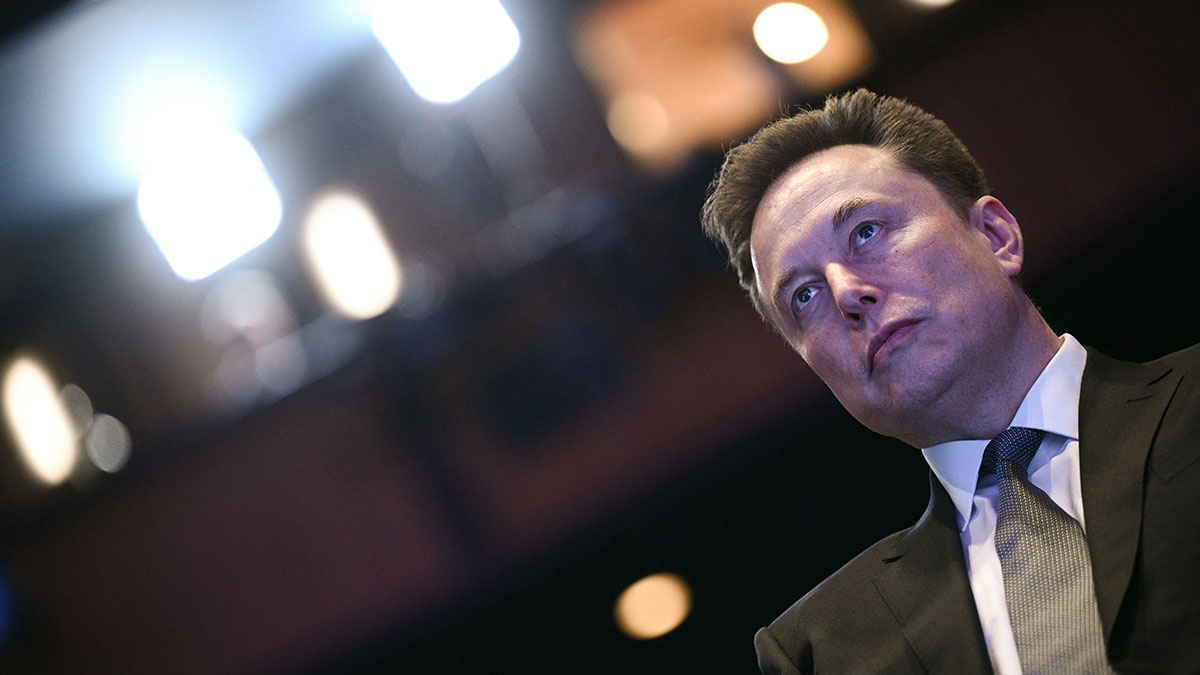
Photo by BRENDAN SMIALOWSKI/AFP via Getty Images
Source link