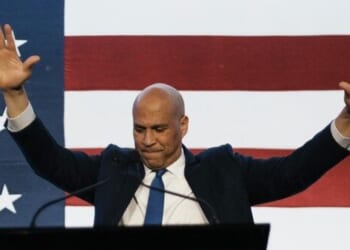
Senator Cynthia Lummis of Wyoming announced Friday she will not seek reelection in 2026, marking the end of a public service career that included advocacy for American energy independence, constitutional rights, and government accountability.
Lummis, who first entered the Senate in 2021 after serving in the U.S. House, said the exhausting nature of recent Senate sessions led her to conclude she does not have “six more years” left to serve. “I am a devout legislator, but I feel like a sprinter in a marathon,” she wrote, acknowledging a “change of heart” about seeking reelection and adding, “The energy required doesn’t match up.”
In her announcement, Lummis expressed gratitude for having served alongside Senators John Barrasso and Mike Enzi during her House tenure, and with Barrasso and Representative Harriet Hageman in the Senate. “We all put Wyoming first, which has cemented our cohesive working relationship,” she wrote.
She also noted she looks forward to “continuing this partnership” with President Trump and “throwing all my energy into bringing important legislation to his desk in 2026 and into retaining commonsense Republican control of the U.S. Senate.”
Lummis’s time in the Senate has been marked by significant involvement in energy policy. She played a leading role in the Trump administration’s drive for American energy dominance, particularly through the development of Wyoming’s rare earth minerals and coal resources. At the opening of the Brook Mine earlier this year — Wyoming’s first new coal mine in decades — Lummis called it a “triumph” that would help the U.S. reduce dependence on China for critical minerals, noting, “There are magnets and rare earth minerals in virtually everything that has a button.”
She praised Trump’s energy team, including Energy Secretary Chris Wright and Interior Secretary Doug Burgum, and hailed the administration’s deregulatory push that has accelerated permitting for mining projects and expanded nuclear development, including the construction of TerraPower’s natrium plant in Kemmerer, Wyoming. “Wyoming exports twelve times more energy than it consumes,” she remarked, underlining the state’s central role in powering national priorities, including growing demands from artificial intelligence.
Lummis was also a prominent defender of constitutional liberties amid revelations that Biden-era officials surveilled Republican lawmakers. In October, she disclosed that the FBI had informed her that Special Counsel Jack Smith, operating under the Biden Department of Justice, had obtained her and other senators’ phone records in 2023. “It’s shocking that the FBI would assault our constitutional rights in that way,” she stated, calling it “wrongdoing at the very highest levels of government.” She expressed concern that “the Democrat-led government” had strayed into “tactics out of the Bolshevik era,” citing broader concerns about surveillance, political targeting, and election interference.
In the aftermath of the disclosures, Lummis joined others in pressing for investigations, with Senate Judiciary Chairman Chuck Grassley and Attorney General Pam Bondi expected to pursue accountability. Lummis warned that proprietary encrypted systems at the FBI may still be concealing details of such activities, calling for a full reckoning. “We have to find out the extent of the Deep State’s abuse of our free democracy in a way that takes us down a path so dark that it shocks the conscience.”
Beyond domestic surveillance, Lummis was outspoken in exposing government spending she deemed wasteful. As a member of the Department of Government Efficiency (DOGE) caucus, she called out taxpayer-funded initiatives like $8 million to teach Sri Lankan journalists to avoid “binary gendered language,” $4.5 million on disinformation efforts in Kazakhstan, and DEI programs abroad. She championed the efforts of DOGE and President Trump to curb such expenditures, noting that cuts to federal DEI contracts alone had saved $1 billion.