The public backlash to the Iran War could give an opening for a strategic rethinking of the US-Israel relationship.
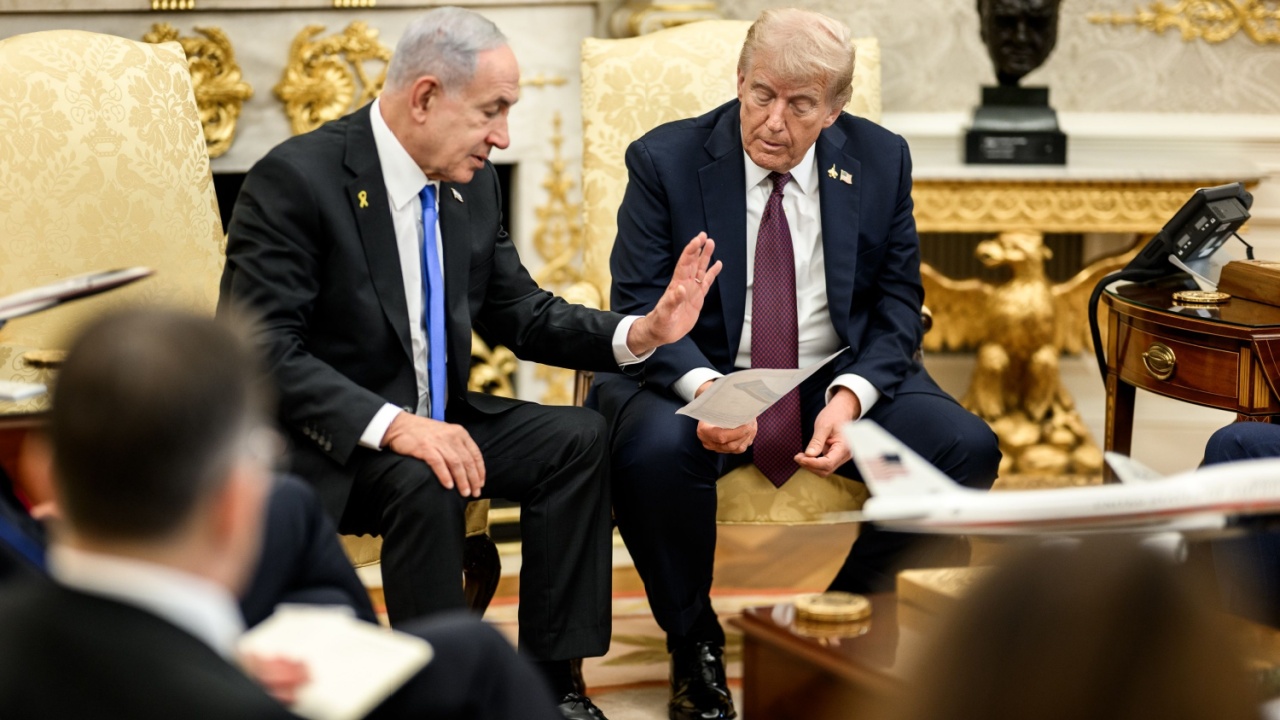
Wars are often pivotal moments in history, both in international relations and in the domestic politics of nations that fight them. War can highlight tensions that were not previously acknowledged and accelerate changes that were slowly brewing for other reasons. The current war initiated by Israel and the United States thus raises the question of whether this war, and the difficulties it has generated for the United States, might stimulate changes in the highly abnormal US-Israeli relationship.
That relationship is abnormal in the extraordinary deference a superpower has given to a foreign state, much smaller than itself, whose interests diverge significantly from US interests. That deference has entailed major costs to the United States, including repeated isolation from an international consensus, anti-US sentiment caused by the US association with Israeli actions, increased danger of anti-US terrorism, and the direct monetary costs of subsidizing Israel.
A normal US-Israeli relationship still would involve extensive diplomatic dealings between the two countries, reflecting how Israel is one of the more impactful states in the Middle East. The relationship would resemble those the United States has with many other mid-level powers around the world, whose policies and objectives parallel US interests in some respects but diverge in others.
Cooperation would prevail where there are common interests. Where interests diverge, the United States would stay disassociated from Israeli actions and, where appropriate, condemn those actions. The United States would not spend diplomatic capital providing cover for actions that most of the world community considers deserving of condemnation. Nor would it subsidize a state that is one of the world’s richer countries.
Even before the current war, public opinion in the United States had been moving away from support for the abnormal relationship. In an opinion poll in February, fewer Americans showed sympathy for Israel than for Palestinians—a reversal of the results of many years of previous polling.
This movement is partly a generational phenomenon, with the views of a younger cohort weighing more heavily than those of their elders as the American population ages. The lesser support among younger Americans than among older ones is one of the most pronounced demographic divisions in poll results about attitudes toward Israel. Older Americans first knew of Israel as a plucky little nation defending itself against hostile neighbors. In contrast, younger ones have known it as the dominant military power in the Middle East that throws its weight around destructively.
The carnage that Israel has inflicted on the Gaza Strip since October 2023 has been a major factor souring sentiment toward Israel and undoubtedly the biggest reason for the sharp reversal during the last couple of years in relative sympathies for Israel and the Palestinians. The Israeli assault has been one of the most inhumane large-scale actions that one nation has taken against another in recent years—one that human rights organizations, even in Israel itself, consider genocide.
Now Israel and the Trump administration have jointly launched a war of aggression against Iran that has strong support among Jewish Israelis but that, almost uniquely among modern US wars, lacked majority support among Americans even before the war began. The opening weeks of the war have not increased that support, with most Americans believing the war to be going badly or very badly.
The widespread perception that Israel had a major role in dragging the United States into this unpopular war will continue to push American public opinion about Israel in this same negative direction. To be clear, any suggestion that Israel compelled the United States to fight this war is unwarranted. The United States entered the war because President Donald Trump decided to do so, and he could have decided differently even if, as his secretary of state asserted in the first days of the war, Israel was going to attack Iran and the United States wanted to pre-empt Iranian retaliation against US targets.
Nonetheless, a war against Iran that also involves the United States has been a longtime objective of Israeli Prime Minister Benjamin Netanyahu. The Israeli government reportedly was a key player in persuading Trump that an attack on Iran would stimulate a regime-changing uprising there. In policy debate within the United States, those who lobby on behalf of the Israeli government have been some of the most enthusiastic advocates of war with Iran.
The softening—largely because of the war—of support for the current type of US-Israeli relationship is especially significant because of how much of it is occurring on the political Right and eating into Trump’s political base. Tucker Carlson is perhaps the most prominent person representing this development, as an influential figure on the Right who condemns the war as the result of the United States being too “tethered” to Israel.
The most conspicuous resignation from the administration over the war has been National Counterterrorism Center Director Joe Kent, a 2020 election denier and hitherto strong Trump supporter who has advanced conspiracy theories such as that the FBI was involved in the insurrection of January 6, 2021. Kent’s resignation letter said that he could not “in good conscience support the ongoing war in Iran,” which the United States started “due to pressure from Israel and its powerful American lobby.”
Director of National Intelligence Tulsi Gabbard and CIA Director John Ratcliffe have acknowledged in congressional testimony that US and Israeli objectives in this war differ. The difference is reflected in the targeting. Israel kills Iranian leaders and destroys economic infrastructure, while US forces have concentrated their fire on Iranian military targets.
The differences have already caused problems for the Trump administration in attempting to bring this war to a successful conclusion. Israel’s killing of Ali Larijani, the secretary of Iran’s Supreme National Security Council, eliminated the person whose clout, experience, and pragmatism had made him the most promising interlocutor for negotiating a war-ending deal that would stick on the Iranian side. His death added to whatever frustration Trump was feeling when he commented after the first four days of the war that most of the people he had considered as potential future leaders of Iran—with probably a Venezuela-type outcome in mind—were dead.
Trump showed open frustration when Israel attacked Iran’s portion of the giant Pars natural gas field, leading inevitably to Iranian attacks in response against gas facilities on the Arab side of the Persian Gulf and exacerbating the energy crisis that is having destructive effects on the global and American economies. Trump later tried to dissociate himself from the Israeli attack by claiming that the United States knew nothing about it.
Israel will continue to present challenges to ending the war by balking at peace proposals, undermining negotiations through escalated military operations, and possibly resuming attacks under a pretext, even if Iran and the United States achieve a ceasefire.
But US-Israeli differences in the conduct of the war reflect broader differences in objectives that existed before the current war and will persist after it ends. The differences are between not just Israel and Trump’s immediate objectives but also between Israel and US national interests, as well as between Israel and the cause of peace and security in the Persian Gulf.
Netanyahu’s government wants Iran to be so weakened that it can never play an international role that normally would be suitable for a nation of 90 million people and compete with Israel for regional influence. It wants Iran to be loathed and isolated by the rest of the world—including the United States. It wants Iran to be forever a bête noire that can be blamed for all the ills of the Middle East, as Israeli leaders frequently do, especially when anyone starts to talk about Israel’s own conduct.
These objectives lead Israel to oppose all constructive, positive-sum diplomacy with Iran. This posture conflicts with US interests, as it did when Israel opposed an agreement that closed all pathways to a possible Iranian nuclear weapon, and as it does now as the administration tries to bring to a close a war that is hurting US interests in multiple ways.
Although Israel’s principal objective with Iran is often described as “regime change,” it would be more accurate to call it regime collapse. Chaos and even civil war in Iran would be an acceptable outcome in the eyes of Netanyahu’s government. Such a situation obviously would keep Iran very weak, and not just in terms of its armed forces. It would preclude any agreements between Iran and Israel’s patron, the United States. An unstable and fractured Iran could plausibly be blamed as a prime source of regional instability. And all of this would be contrary to US interests.
An Israeli goal is definitely not the emergence in Iran of a liberal democracy that would be friendly toward the United States, nor is it peace and security in the Middle East. “The goal instead,” as Mitchell Plitnick aptly describes it, “is to maintain an atmosphere of insecurity so that the strongest country militarily will be able to dominate a region characterized by failed and dysfunctional states alongside friendly autocracies.”
The recent shifts in American public opinion about Israel by no means guarantee that the US-Israeli relationship will normalize. The large sums that the American Israel Public Affairs Committee (AIPAC) spent on recent primary elections bought it some wins despite suffering losses elsewhere. And Israel does not shy away from even clandestine methods of maintaining its unusual brand of influence in Washington.
But if one indirect result of the current war is eventually to bring Israel and the United States closer to a normal, healthy relationship—which in the long run would benefit both nations—that would be a silver lining in what otherwise is an unjustified blunder of a war.
About the Author: Paul R. Pillar
Paul R. Pillar retired in 2005 from a 28-year career in the US intelligence community, in which his last position was as the national intelligence officer for the Near East and South Asia. Earlier, he served in a variety of analytical and managerial positions, including as chief of analytic units at the CIA, covering portions of the Near East, the Persian Gulf, and South Asia. His most recent book is Beyond the Water’s Edge: How Partisanship Corrupts US Foreign Policy. He is also a contributing editor for The National Interest.