|
Forwarded this email? Sign up for free to have it sent directly to your inbox.
|
|
|
Good morning,
Today, we’re looking at whether New York City mayor-elect Zohran Mamdani will be able to raise taxes on wealthy residents, why price controls don’t work, the Texas Medical Association’s problematic continuing-education course, Mamdani’s mental-health proposal, the National Environmental Policy Act, and what Jared Isaacman’s leadership could mean for NASA.
Write to us at editors@city-journal.org with questions or comments.
|
|
|
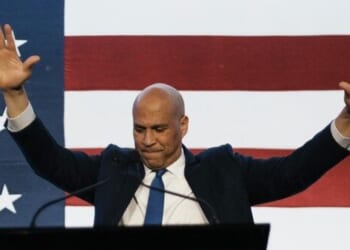
New York City mayor-elect Zohran Mamdani wants to raise taxes on residents making more than $1 million a year, which he needs state approval to do. While it remains to be seen whether Albany will give him the green light, it’s worth noting that Governor Kathy Hochul and the entire state legislature face an election next year.
“Anxious to avoid primaries and third-party challengers even in the most placid electoral environments,” E. J. McMahon writes, “incumbent Democrats will feel intense pressure from the network of well-funded left-wing advocacy groups and labor unions that have made higher taxes on the wealthiest New Yorkers a top priority since the heyday of Occupy Wall Street in 2011.”
So far, Democratic leaders haven’t rejected the tax hike outright. Hochul, then, could be the biggest potential roadblock, telling the Wall Street Journal last month, “I’m not raising taxes on high net-worth people right now, because we cannot have them leave the state.”
Read more of McMahon’s analysis.
|
|
|
A recent New York Times op-ed claims that price controls coupled with reforms that encourage production can help solve the affordability crisis. But as Judge Glock points out, you can’t boost output without offering an incentive to produce more. “If price controls block those rewards, the goods and services won’t be produced, no matter what the regulations say,” he writes.
Read more about why the case for price controls always falls apart.
|
|
|
The Texas Medical Association has long endorsed pediatric gender medicine. Troublingly, its Continuing Medical Education course on transgender health care misrepresents the evidence for the benefits of medical transition. And it relies on guidelines from the World Professional Association for Transgender Health (WPATH) and the Endocrine Society. “Both of these were deemed unsuitable for use in clinical practice by the U.K.’s Cass Report,” Joseph Figliolia writes. WPATH guidelines aren’t based on systematic reviews, while the Endocrine Society’s guidelines rely on low-certainty evidence.
Read more from his investigation.
|
|
|
New York City mayor-elect Zohran Mamdani’s mental-health plan seems to be inspired by former mayor Bill de Blasio, whose policies did little for the seriously mentally ill. Mamdani’s supposedly innovative platform “offers standard progressive talking points, like expanded voluntary mental health and wellness services,” Carolyn D. Gorman writes. “Most New Yorkers agree that the city needs to address untreated serious mental illness. But more of the same won’t help allay these concerns.”
Read her take.
|
|
|
The Trump administration has been working to streamline the National Environmental Policy Act (NEPA), but a future president could easily undo those efforts. “We need to restore NEPA to its function before litigation caused it to metastasize and cripple development,” Marc Levitt and Alex Trembath write. “This would free agencies to start writing clearly bounded reviews with environmental considerations in mind, but without having to worry about being second-guessed by judges.”
|
|
|
After withdrawing it in May, the White House recently announced that it was resubmitting Jared Isaacman’s nomination as NASA administrator. “Space advocates have high, perhaps unrealistic, expectations that Isaacman will quickly bring order to NASA and straighten out the troubled Artemis lunar program,” James B. Meigs writes. “But, below the surface, the messy leadership drama exposed the lingering conflicts between factions inside NASA and in the larger aerospace community.”
Read more about what Isaacman’s leadership could mean for the space agency.
|
|
|
“Brilliant people being acerbic is not a rare event. I hope we can celebrate their talents and contributions while showing some grace for their faults, which faults may differ from our own. It is unfortunate if their ill-handling of certain current-day taboos might negate, in some people’s minds, a lifetime of positive achievement.”
|
|
|
Photo credit: Spencer Platt / Staff / Getty Images News via Getty Images
|
|
|
A quarterly magazine of urban affairs, published by the Manhattan Institute, edited by Brian C. Anderson.
|
|
|
Copyright © 2025 Manhattan Institute, All rights reserved.
|
|
|
|
Source link