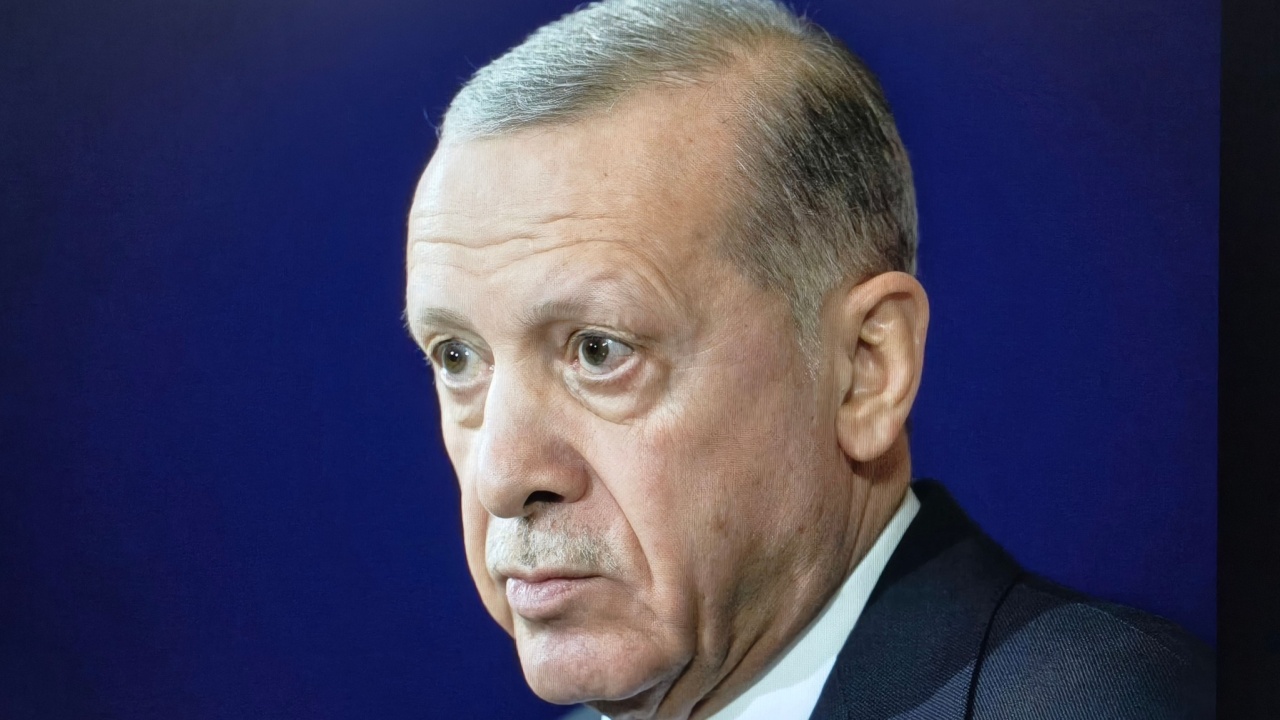
Unless Ankara changes its course, Hamas is likely to benefit from any inclusion of Turkey in the process of stabilizing and reconstructing the Gaza Strip.
“We want to believe that our allies will prefer to side with us, not with a terrorist organization.” That was Turkish president Recep Tayyip Erdoğan objecting to the 2017 US decision to arm Syrian Kurdish fighters, whom he considered terrorists, against the Islamic State. Today, Turkey should be held to its own standard as it demands to play a role in Gaza reconstruction: Turkey’s past support for Hamas should exclude it, permanently, from any role in securing Gaza; and, so long as Turkey sides with a terrorist organization over its allies, it can have no role there whatsoever.
For nearly two decades, Turkey has hosted Hamas leaders, pledged hundreds of millions in funding, and allowed front companies tied to the group to manage much of its $500 million in overseas assets. US sanctions have repeatedly targeted these networks, yet many still operate freely as Turkey refuses to join its US and European allies in designating Hamas a terrorist group.
Since Hamas’s brutal October 7, 2023 attack on Israel, Erdoğan has been the group’s loudest defender and Israel’s most vehement critic. Turkey has refused to condemn the October 7 massacre. Not content to declare that “Hamas is not a terrorist organization,” Erdoğan has called Hamas militants “freedom fighters.” His government coordinated with Hamas leaders, sent aid convoys, and treated Hamas operatives in Turkish hospitals. Erdoğan accused Israel of “surpassing Hitler in barbarism,” and has even threatened to “enter” Israel militarily, as Turkey did in Libya and Nagorno-Karabakh.
Now, after pushing Hamas to accept the ceasefire, Erdoğan boasts that Turkey is “ready to provide all kinds of support to Gaza.” The nature of that support was clear when, two weeks after the ceasefire went into effect, Turkish foreign minister Hakan Fidan hosted a Hamas delegation in Istanbul. This is but the latest in a series of Erdoğan’s attempts to cast himself as a global power broker and Turkey as the linchpin of a new regional order. But beyond mere grandstanding, Erdoğan is pursuing two distinct interests in Gaza: ideological and political.
Much as in Syria and Egypt previously, Erdoğan hopes to transform Gaza in his own image—Islamist-ruled and an Ankara client. To that end, he wants to deploy Turkish troops in a stabilization force and act as a “guarantor” for Palestinians.
To this, the United States cannot and should not acquiesce. Any Turkish military involvement in Gaza would sabotage the peace plan’s central aim: disarming Hamas. President Donald Trump’s framework calls for destroying all “military, terror, and offensive infrastructure” and establishing a “deradicalized, terror-free zone.” Turkey—which has spent two decades ensuring Hamas’s survival—cannot credibly enforce that mandate. Any Turkish role would give Ankara leverage to obstruct disarmament while preserving Hamas’s political networks. A country that views Hamas as a resistance movement cannot be trusted to dismantle it.
But Erdoğan also has a more prosaic objective: to secure reconstruction contracts for Turkish firms. Turkey’s construction sector has historically powered its economy and been plagued by corruption tied to Erdoğan’s inner circle. As Erdoğan considers how to stay in power past his 2028 term limits, bolstering Turkey’s weak economy with lucrative contracts funded by international donors could prove a powerful boon to his political prospects.
There might be a role for Turkey here, but only if it lives up to its own standards.
This starts with Turkey ending its support for Hamas. That means closing Hamas offices, expelling operatives, and halting all fundraising. But it cannot stop there. Turkey must demonstrate it is pressuring Hamas to disarm—in line with the ceasefire—by all available means. Erdoğan’s distinction between Hamas’s “political” and “military” wings is fiction. No state can claim credibility as a peace guarantor while sheltering terrorists.
Second, Ankara must restore relations with Israel. Since October 7, Erdoğan has methodically dismantled those ties—recalling diplomats, joining South Africa’s genocide case at the International Court of Justice, and halting trade. Ankara has most recently closed its airspace and ports to Israeli ships and aircraft. No country that recalls ambassadors, files legal cases, bans trade, and shuts its ports can credibly mediate peace. If Turkey wants a role in Gaza, normalization must come first—restoring diplomacy, trade, and basic cooperation.
Even if Turkey meets these conditions, its role in reconstruction must be carefully circumscribed. Turkey should not be involved in schools, mosques, hospitals, or other institutions of ideological influence. As Senator James Lankford (R-OK) recently said, “There are certain roles [Turkey] just should not be a part of.”
Turkey should be held to its own standard. Erdoğan’s long history of supporting Hamas should automatically disqualify Turkish troops from any role in providing security in Gaza. But Turkey could still participate in the reconstruction of Gaza if it can prove that it prefers to side with its own allies, not with terrorists.
About the Authors: Blaise Misztal and Jonah Brody
Blaise Misztal is the vice president for policy at the Jewish Institute for National Security of America (JINSA). His research interests include Iran and its nuclear program, US-Turkey relations, countering extremism, and strategic competition. Most recently, Blaise was a Fellow at the Hudson Institute. Prior to that, he served as the Executive Director of the Task Force on Extremism in Fragile States, a congressionally mandated project convened by the U.S. Institute of Peace, and Director of the Bipartisan Policy Center’s National Security Program. He has testified before Congress and published widely—including op-eds in The Washington Post, Wall Street Journal, New Republic, and Roll Call.
Jonah Brody is a policy analyst at JINSA. His research interests include Middle Eastern geopolitics, counterterrorism, and Turkish foreign and security policy. He previously worked at the National Democratic Institute on the West and Central Africa portfolio and has interned at the Hudson Institute, the European Army Interoperability Centre, and the International Institute for Counter-Terrorism. His writings have appeared in The Hill, RealClear Defense, The Jerusalem Strategic Tribune, and Modern Diplomacy.
Image: FotoField / Shutterstock.com.