In 2005, Congress canceled the RNEP nuclear bunker-buster bomb over fears that it might provoke China. Much has changed in the two decades since.
Warnings abound about the state of America’s nuclear forces relative to those of its great-power rivals. Analysts warn that the Chinese strategic arms buildup is on pace to match or surpass the deployed US force by 2035. They warn that Russian theater nuclear forces dwarf those that the US deploys in Europe. And a series of bipartisan study groups has even warned that the existing US nuclear program of record falls short of what is required to simultaneously deter China and Russia.
Adjustments are clearly needed—but of what kind? And how can the US possibly enact them in the near term?
The next-generation Sentinel ICBM program is 81 percent over budget and gross delays have pushed back its deployment until the early 2030s. The Columbia-class ballistic missile submarine fleet is also delayed, and its first boat won’t go on deterrent patrol until the 2030-31 period. Options to enhance the nuclear force at this time are therefore limited and, at first glance, seemingly restricted to uploading stockpiled warheads onto existing land- and sea-based strategic missiles.
But reviving an old idea that Washington abandoned prior to China’s buildup could help broaden its options.
The “Robust Nuclear Earth Penetrator” Is the Ultimate Bunker-Buster Bomb
The Robust Nuclear Earth Penetrator, or RNEP, was first contemplated by the administration of President George W. Bush in the mid-2000s. Envisioned as a means to destroy hardened and deeply buried targets, the RNEP did not constitute a novel nuclear weapon. The program simply entailed encasing an existing nuclear capability, such as the B61 or B83 gravity bomb, in a hardened shell that could burrow into the Earth’s surface before detonating.
Defense officials argued that the US needed this capability to credibly hold at risk adversaries like China who had built out extensive underground facilities. Congress disagreed, however, and withheld approval of the program for fear of provoking Beijing into a nuclear buildup. The RNEP consequently died a quiet death in 2005, and America went on life-extending its aging nuclear weapons and delivery systems in an attempt to engender Beijing’s goodwill.
Yet that goodwill never arrived. Today, the Pentagon faces a program of record that is delayed, vastly over budget, and insufficient to compete with China and Russia over the long haul.
The RNEP could help alleviate America’s nuclear ailments and provide an affordable and potent way to hold at risk what our adversaries value most. Since it merely requires the production of hard casings, rather than novel warheads, the RNEP would not impose a heavy additional burden on an already overtaxed weapons production infrastructure. It would be able to exploit existing weaponry, with US planners selecting from the family of B61 of gravity bombs, including the higher-yield Mod-13variant already in production.
Chinese Leaders Are Terrified of America’s Strategic Bombers
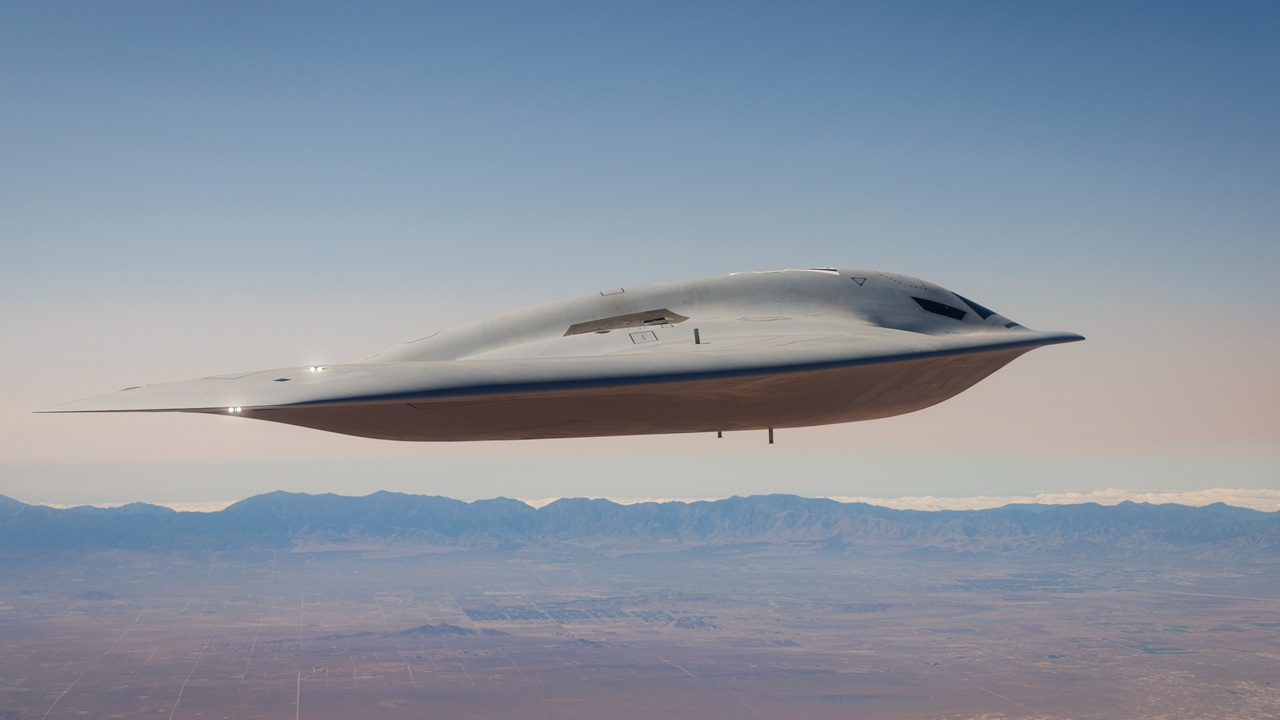
What’s more, the RNEP would leverage the only big-ticket modernization program that is (so far) on schedule, on budget, and certain to raise alarm in Beijing: the B-21 stealth penetrating bomber, set for delivery to Ellsworth Air Force Base in 2027.
A B-21 fleet armed with gravity bombs capable of knocking out hardened and deeply buried targets would certainly grab the attention of Chinese leadership. Beijing has a historically rooted fear of strategic bombers dating back to the Sino-Soviet border conflict in 1969, when the Soviets conducted bomber exercises that induced the Chinese leadership to disperse to protected shelters. Thus began China’s still-ongoing campaign to build out a more extensive network of underground bunkers and tunnels to ride out a nuclear attack.
China’s fear of strategic bombardment—and its herculean efforts to soothe it—only grew during America’s unipolar moment in the early post-Cold War years. The wars in Iraq and Kosovo put on display America’s unrivaled stealth bomber force, and Beijing continued to devote enormous resources to the construction of hardened shelters. Indeed, the 2024 edition of the Pentagon’s annual China Military Power Report estimates that the Chinese military has built thousands of advanced underground facilities and continues to build more each year.
The RNEP would thus not only help the US hold at risk what China values most, but also help make obsolete its generational investments in protected shelters. The RNEP might therefore goad Beijing to double down and pour even more resources into passive defenses rather than offensive capability. One need only observe China’s recent construction of “Beijing Military City”—a massive underground military command center—or its construction of tunneled submarine pens to recognize that the country’s leadership is predisposed to going underground.
The RNEP Would Scare Russia and North Korea, Too
The RNEP could also have a powerful deterrence effect in Russia and North Korea. Russia chose to maintain much of the sprawling complex of bunkers that it inherited from the Soviet era. The development of the B61-11 in the 1990s, which has a modest earth-penetrating capability, might even have driven Moscow to complete construction of Kosvinsky Kamen, a fortified shelter that is central to Russian military command and control.
North Korea also shares this fortress mentality peculiar to Eurasian dictatorships. Over the years, Pyongyang has built up extensive expertise and experience in underground tunneling—so much so that it has exported this hard-earned knowledge to Hezbollah in Lebanon. Its Yongjo-ri missile base near the Chinese border, for example, comprises twelve drive-through tunnels designed to ride out preemptive attacks. And it has a sizable system of bunkers near the demilitarized zone, which at one time included a subterranean network reaching into South Korea.
The RNEP would therefore bolster deterrence in the relative near term and help alleviate delays and cost overruns in the US nuclear modernization program. Along with its relative affordability and ease of production, it would pack a deterrent punch too great to pass over a second time. Given the evolving nuclear threat environment and China’s tendency to take critical infrastructure underground, it deserves another look.
About the Author: Kyle Balzer
Kyle Balzer is a fellow at the American Enterprise Institute, where he focuses on US nuclear strategy, national security policy, and strategic studies. He is currently working on a forthcoming book, The Revivalist: James Schlesinger and the Rebirth of Cold War American Nuclear Deterrence. He has authored and coauthored several reports and academic book chapters, including China’s Continental Conundrum: Nuclear Geopolitics and the American Strategy in the Western Pacific and “To Deter and Assure: A US Nuclear Posture Tailored for Three Theaters” in Affording Defense: Investing in American Strength to Confront a More Dangerous World (AEI Press, 2025).