Iranian proxy attacks on Kurdish energy infrastructure could put US troops in danger.
On the evening of November 26, the Khor Mor gas field in the autonomous Kurdistan Region of northern Iraq was attacked by what was initially believed to be a kamikaze drone. The attack was the latest in around a dozen similar attacks that have targeted this important gas facility over the last several years. The facility supplies liquefied petroleum gas, critical for electricity generation in the region. After the attack, the surrounding areas suffered blackouts. The attack illustrates why the Kurdistan Region, a key US partner, requires better air defenses to stop attacks in the future.
The attack has been widely condemned by Kurdish leaders in Erbil, the capital of the autonomous region, as well as by the United States, the UN, and others. Turkey and Iran have both put out statements condemning the attack. In the past, Iranian-backed militias have been blamed for threats against the gas field. The militias have targeted the Kurdistan region using drones and rockets over the last six years. In addition, the same militias have targeted American forces in Iraq.
Kurdistan Region prime minister Masrour Barzani put out a statement saying, “I condemn the cowardly attack on the Khor Mor gas field in the strongest terms and urge the federal government to find the perpetrators and bring them to justice.” He said, “The usual terrorists or whoever may be behind tonight’s attacks cannot be allowed to repeat these crimes or be released on bail, as in the past.” He urged the United States and international partners of the region to “provide the defensive equipment necessary to protect our civilian infrastructure, and to support us in taking serious action to deter these attacks on our people and our progress.”
Barzani is one of a number of local voices urging Washington and others to do more in terms of enabling the region to defend itself. The United States appears ready to do more than in the past. For instance, the US Embassy in Baghdad noted, “We are prepared to lend support to efforts to protect this critical infrastructure, and we will continue to underscore the importance of Iraq asserting its sovereignty in the face of attempts to undermine it and ensuring all weapons, especially drones, missiles, and rockets, are brought under state control.”
Mark Savaya, the new US Envoy to Iraq, has also highlighted how important future stability is for Iraq. “Today, the world views Iraq as a country capable of playing a larger and more influential role in the region, provided that the issue of weapons outside state control is fully resolved and the prestige of official institutions is protected,” he wrote on November 29. While US officials choose their words carefully, not mentioning Iran in statements so far, it is clear that references to “unofficial power” and other terms point to militias being the culprit. “Iraq stands at a critical crossroads. It can move toward independent institutions capable of enforcing the law and attracting investment, or fall back into the cycle of complexity that has burdened everyone,” Savaya says.
Providing Iraq’s air defenses, or having the US deploy air defenses at selective sites, is not likely the best answer. The United States has deployed air defenses to Iraq in the past to intercept drones and ballistic missiles. US forces should already have the defenses they need, and if they don’t, then those defenses should be boosted.
The key now is to provide the Kurdistan Region with the right defenses. This could be paired with a similar package for Baghdad. However, there will be concerns that any defense equipment provided to Baghdad could fall into Iranian hands because of the influence that Iranian-backed militias maintain in Iraq. These militias are part of the Popular Mobilization Forces, an official paramilitary group in Iraq. Many of the militias are already sanctioned by the United States as terrorist groups. Considering the tensions between Israel and Iran, it could be problematic to provide Baghdad with any kind of advanced air defense system.
On the other hand, the Kurdistan Region is a key US partner and faces threats from the Iranian-backed militias. The companies involved in work at the Khor Mor gas field include UAE-based Dana Gas. As such, it makes sense to defend the facility because of its crucial role in supplying the region with electricity. US diplomats met with the Kurdistan Region’s Minister of Electricity the same day as the attack on Khor Mor.
There are other issues at stake in Erbil. The region recently reopened a pipeline to Turkey, a NATO ally. In addition, Turkey is working toward peace with the Kurdistan Workers Party (PKK), which has bases in northern Iraq. Stabilizing and strengthening the Kurdistan Region, and preventing power cuts, helps with the peace process across the border as the PKK undergoes disarmament.
This will also impact the US-backed Syrian Democratic Forces in Syria, who have improved their ties with the Kurdistan Region in recent months. This puts Erbil at the center of threads that link to Baghdad, Ankara, Tehran, and Damascus. If relatively cheap drones, possibly supplied by Iran to militias in Iraq, or rockets can wreak havoc on the electrical grid in northern Iraq, it will feed chaos and distract from policies that affect the region.
Air defenses need not be expensive. The Ukraine War has shown that Iranian-style Shahed drones can be shot down in large numbers since they are relatively slow and easy to target. The Kurdistan Region doesn’t have an air force or helicopters capable of downing drones. Therefore, a solution could involve C-RAM and similar systems that the United States has used to protect forces in Iraq and Syria. With the Pentagon focused on new technologies to roll out drones and counter drone threats, there is ample opportunity here to protect a key facility and learn from their challenges.
About the Author: Seth J. Frantzman
Seth J. Frantzman is the author of Drone Wars: Pioneers, Killing Machine, Artificial Intelligence and the Battle for the Future (Bombardier 2021) and an adjunct fellow at The Foundation for Defense of Democracies. He is the acting news editor and senior Middle East correspondent and analyst at The Jerusalem Post. Seth has researched and covered conflict and developments in the Middle East since 2005 with a focus on the war on ISIS, Iranian proxies, and Israel’s defense policy. He covers Israeli defense industry developments for Breaking Defense and previously was Defense News’ correspondent in Israel. Follow him on X: @sfrantzman.
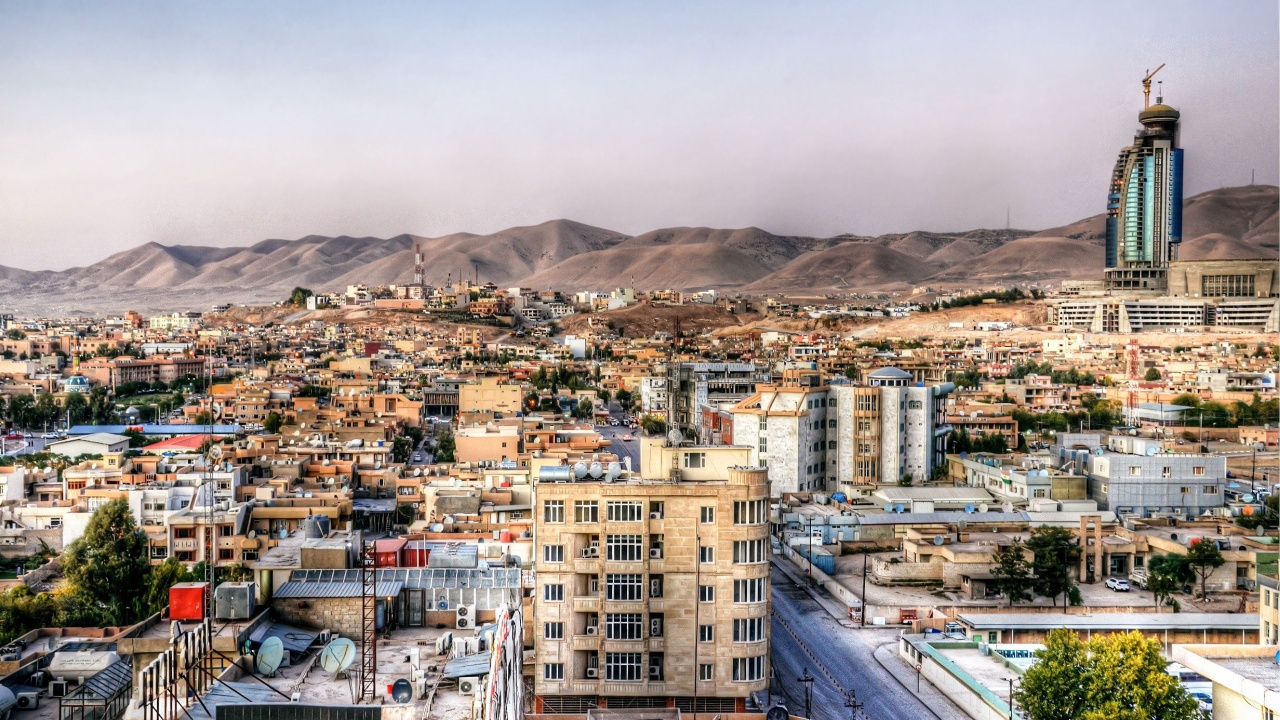
Image: Al-Orfali / Shutterstock.com.