The Gospel of the Holy Family presents us with something very concrete and very fragile: a child who must grow, parents who must protect him, and a family that must find a place where life can be lived. Before ideals, before projects, before explanations, there is something simpler and more decisive: a place where one can dwell.
The Family as the Human Habitat
This may seem obvious, and yet it is precisely what our culture struggles to understand. Here we are helped—perhaps unexpectedly—by an insight already present in Aristotle. In his biological works, especially History of Animals, Aristotle observes that every living being requires a proper place. Animals do not thrive anywhere; plants do not grow without soil. Each living being needs a habitat suited to its nature. Without the right place, life does not flourish—it withers.
If this is true of animals and plants, how much more is it true of the human person? Man is not less embodied, less vulnerable, or less dependent than other living beings—he is more so. A child, above all, cannot grow in abstraction. He cannot grow in experiments, or in theories, or in endlessly reconfigured arrangements. He needs a place where he is received before being judged, loved before being evaluated, protected before being exposed. This place is not first of all four walls. It is a home, and at the heart of the home is the family.
The family is the human habitat. It is the place where difference is not erased but lived; where wounds exist but are borne together; where love is not perfect but faithful. It is where one learns, slowly and often painfully, what it means to belong to someone else and to be responsible for someone else.
When the Human Habitat Is Dismantled
Today, we are often told that we can do better by dismantling this structure: open couples, relationships without children, endlessly interchangeable roles, the refusal of permanence. The promise is freedom, flexibility, self-realization. Yet when we look honestly at the societies that have tried to live this way, we must ask: “Are we proud of the results? Have we not seen enough failure, enough loneliness, enough fragmentation—enough blood on the walls of our common life?”
What is ultimately at stake here is not simply a moral ideal, but life itself. Sacred Scripture is unsparing on this point: “Children are a heritage from the Lord, the fruit of the womb, a reward” (Ps. 127:3), and “It is not good that the man should be alone” (Gen. 2:18). From the beginning, life is received, not produced; welcomed, not engineered. When the family is weakened, children are the first to pay the price.
Ideas Have Consequences
We see this concretely today in the normalization of abortion, in the expansion of artificial reproduction, and in the growing number of children intentionally deprived of a mother or a father in the name of adult desire. In 1930, when Pius XI wrote Casti Connubii, one might still have claimed that such warnings were exaggerated. Nearly a century later, we live amid their fulfillment.
As the political philosopher Richard Weaver famously observed, ideas have consequences—and in this case, those consequences are written on bodies, on relationships, and on lives that never came to be. Pro-life realism begins not with slogans, but with the recognition that when the human habitat is dismantled, human life itself becomes fragile, negotiable, and expendable.
The Holy Family: Life in the Midst of Fragility
The Gospel does not present us with an idealized family. The Holy Family itself knows displacement, danger, misunderstanding, and exile. They flee by night. They live as strangers. They carry fear and uncertainty. And yet, precisely there, Jesus grows—in wisdom, in stature, and in grace. Why? Because even amid hardship, there is a place where He belongs.
The Gospel does not offer a romanticized or self-enclosed vision of human life, nor does it portray the Holy Family as an abstraction removed from real responsibility. St. Mary and St. Joseph are holy not because they escape the conditions of creaturely life, but because they fully accept them. Against the modern temptation to see the human person as solitary, self-sufficient, and self-defining—living for himself rather than before God—the Holy Family reveals a different truth: we are creatures who have received life, not authored ourselves.
Creaturehood, Responsibility, and the Gift of Life
When this fundamental dependence on God is forgotten, relationships become fragile and reversible, and we should not be surprised by the spread of divorce or by the refusal of generativity. St. Mary and St. Joseph do not place themselves at the center; God is at the center, and precisely for that reason they make room for life. They freely accept responsibility for a child who depends entirely upon them, cooperating with the Creator in the procreation and care of a human person who himself participates in Creation. In their fidelity, something essential takes place: a human life is given the conditions it needs to grow.
This is why the family is irreplaceable—not because it is easy, and not because it is flawless, but because we were made for it. We were made to grow in a place where love is not provisional, where identity is not negotiated day by day, where one is someone’s son or someone’s daughter before being anything else.
Why Defending the Family Is Anthropological Realism
The Holy Family reminds us that salvation does not begin with structures or ideologies, but with dwelling. God Himself chose not to save us from nowhere. He entered a home. He accepted dependence. He allowed Himself to grow within a family. And this tells us something decisive: to defend the family is not nostalgia; it is anthropological realism. It is the recognition that human life needs a place where it can take root. May the Holy Family help us rediscover, protect, and rebuild those places where life can truly grow.
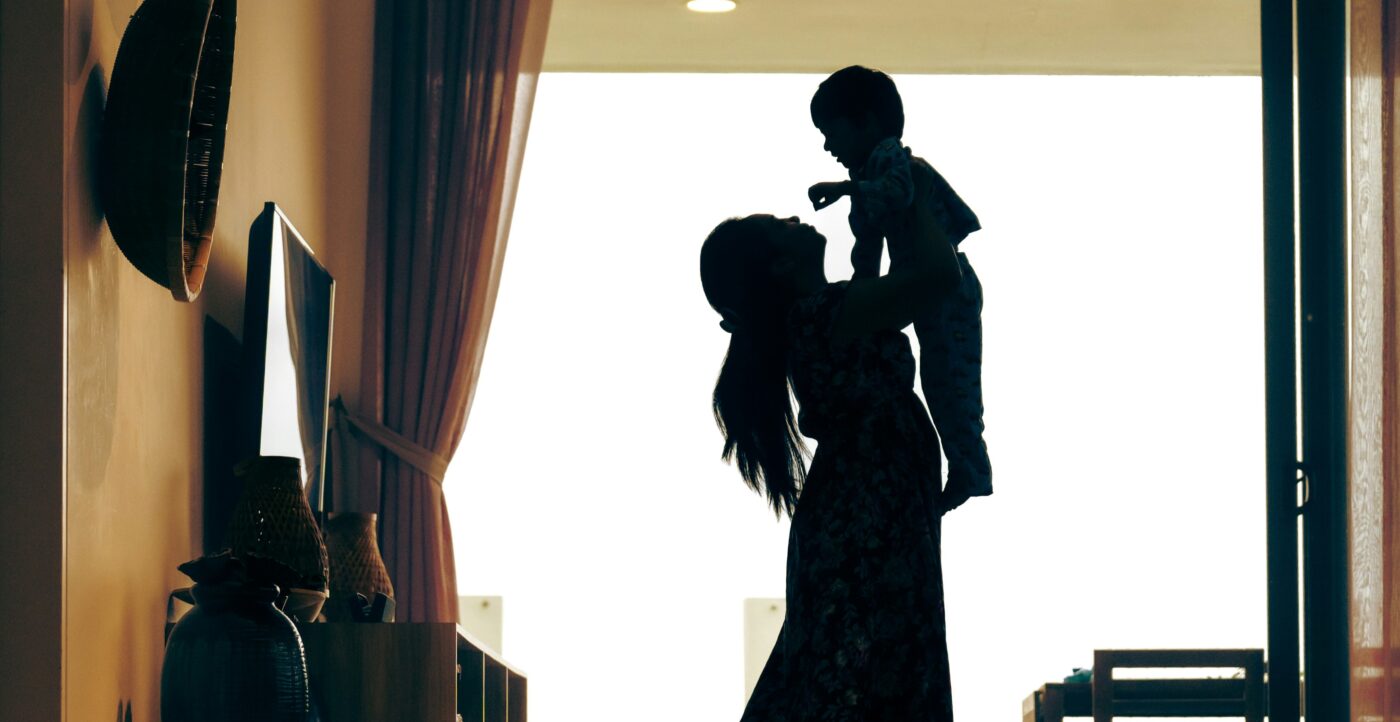
Photo by Happysurd Photography on Unsplash