As tensions simmer between Pakistan and Afghanistan, Islamabad is shifting from coercive diplomacy to managed escalation to bring the Taliban to heel.
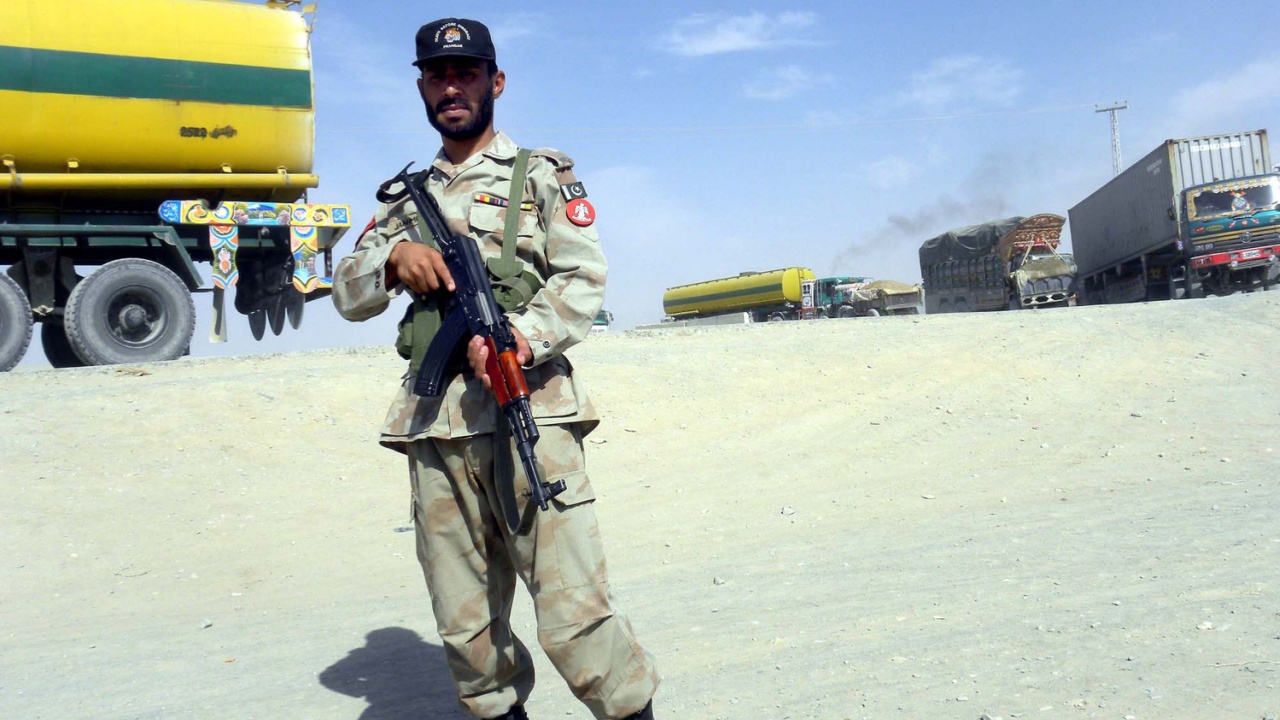
Gunfire and airstrikes now define the Afghan-Pakistan frontier. Over the past year, violence along the border has surged as relations between Kabul and Islamabad have plunged to their most dangerous point since the Afghan Taliban’s return to power in August 2021. Pakistan accuses Afghanistan’s Islamist rulers of allowing militant groups—most notably the Tehrik-e-Taliban Pakistan (TTP), also known as the Pakistani Taliban, and the Balochistan Liberation Army (BLA)—to operate from Afghan soil, launching deadly attacks across the border. Islamabad has answered with an increasingly aggressive military response, and with 2026 approaching, the prospect of a negotiated settlement appears remote as momentum builds toward broader Pakistani operations inside Afghanistan.
This deterioration is striking, given Islamabad’s long history of support for the Taliban. Pakistan was one of only three countries to recognize the Islamic Emirate in the 1990s, and its main intelligence agency, the Inter-Services Intelligence (ISI), was the Afghan Taliban’s chief sponsor throughout the 2001–21 US-led occupation of Afghanistan. Yet the Taliban’s return to power almost four-and-a-half years ago has brought not strategic depth but strategic strain. Cross-border attacks attributed to the TTP and BLA have intensified, and Pakistan now openly accuses the Afghan Taliban of tolerating, if not enabling, the militants threatening its internal security.
Among the armed groups operating in Afghanistan, Islamabad regards the TTP as the most serious threat to Pakistan’s national security. Formed in 2007 during the George W. Bush administration’s “war on terror,” the TTP has waged a prolonged campaign of violence against the Pakistani state. Its objective is the overthrow of the government and its replacement with a regime enforcing a rigid interpretation of Sharia law. While ideologically aligned with the Afghan Taliban, the TTP operates independently of the Kabul authorities. Following the Afghan Taliban’s return to power in 2021, TTP attacks inside Pakistan intensified, particularly from 2024 onward.
These concerns are further heightened by the Afghan Taliban’s growing engagement with India, which Islamabad also accuses of backing the TTP—a claim denied by New Delhi. The strengthening of an Afghan Taliban-India partnership, which was visibly underscored by Afghan foreign minister Amir Khan Muttaqi’s high-profile visit to India in October, informs a view in Islamabad that Kabul and New Delhi are converging in ways that undermine Pakistan’s security and geopolitical position.
From the Afghan Taliban’s perspective, Pakistan’s accusations about Kabul’s alleged tolerance of the TTP and BLA are baseless. The Islamic Emirate argues that Islamabad has failed both to cooperate with Afghanistan in addressing militant threats and to assume responsibility for its own internal security. At the same time, Kabul condemns Pakistani military strikes inside Afghanistan as acts of international aggression and clear violations of Afghan sovereignty, deemed wholly unacceptable.
Rising Tensions and Cross-Border Strikes
In the period ahead, Pakistan is likely to intensify its aerial operations inside Afghanistan, with more frequent air and drone strikes. The objective is to deny the TTP and other armed groups safe operating space in southern Afghanistan along the disputed Durand Line. Such pressure may incentivize the TTP to relocate toward northern Afghanistan, where it would pose a comparatively reduced threat to Pakistan’s national security. This approach should be understood within the broader context of Islamabad’s longstanding four-point strategy to counter the TTP threat emanating from Afghan territory.
First, Pakistan sought to push the TTP into Afghanistan by facilitating the Afghan Taliban’s return to power in 2021.
The second element of Pakistan’s strategy was to leverage its influence over key Afghan Taliban factions to advance the Qosh Tepa Canal project in northern Afghanistan. The project was intended to create substantial new arable land, enabling the resettlement of displaced TTP members and their families far from the disputed border with Pakistan. By relocating them to areas along the canal, Islamabad sought to significantly distance these groups from Pakistan, thereby constraining their ability to use Afghan territory to launch attacks. Despite substantial financial support from the United Arab Emirates (UAE) to facilitate this resettlement, the TTP ultimately did not relocate to northern Afghanistan, a diplomatic source explained to this author.
The third component of Islamabad’s strategy involves sustained air and drone strikes in southern Afghanistan, aimed at denying the TTP safe operating space in the region. By rendering southern Afghanistan increasingly inhospitable, Pakistan seeks to compel the group to relocate north of the Hindu Kush into northern Afghanistan. This phase currently represents the active stage of Pakistan’s four-point strategy.
The fourth and forthcoming stage involves supporting select anti-Taliban groups in Afghanistan, particularly in Takhar, Badakhshan, and Panjshir. Pakistan aims to create an active internal battlefield that draws TTP fighters into confrontations with groups such as the National Resistance Front (NRF) and Afghanistan Freedom Front (AFF), diverting their focus from attacks within Pakistan. The strategy relies on the premise that the Afghan Taliban will require TTP support against these insurgent groups in northeastern Afghanistan, effectively making the TTP a tool in internal Afghan conflicts.
While the NRF and AFF currently remain weak and unable to mount significant offensives, Pakistan hopes to shift the balance by providing logistical support, intelligence, and air cover. In recent months, both the NRF and AFF have even established offices within Pakistan, signaling early steps toward this strategy, according to a diplomatic source who spoke to this author.
Diplomatic Maneuvers and Regional Mediation
A host of powerful actors have interests in the Afghan-Pakistan frontier and stable relations between Kabul and Islamabad.
China, as a direct neighbor of both Afghanistan and Pakistan, has the most at stake among external actors. Beijing is wary of the conflict escalating and its potential to disrupt Belt and Road Initiative (BRI) projects in the region, including the $62 billion China-Pakistan Economic Corridor (CPEC), which links the Chinese-Pakistani border to Gwadar Port. Additionally, China is concerned that a destabilized Afghanistan could provide a foothold for militant Uighur factions to threaten its security in the future.
In May, China’s Foreign Minister Wang Yi met his Afghan and Pakistani counterparts in Beijing, paving the way for the restoration of diplomatic relations between Kabul and Islamabad. Three months later, the three ministers reconvened in Kabul. Days after Afghanistan and Pakistan agreed to a temporary ceasefire in October 2025, China again called on both sides to exercise calm and restraint. This measured diplomacy underscores Beijing’s calculated effort to safeguard its security interests, protect regional investments, and advance its broader aspirations for regional influence.
Throughout the conflict, China has carefully balanced its relations with both capitals and has avoided assigning blame while positioning itself as a stabilizing force. As the world’s leading power in critical minerals—accounting for over 60 percent of global rare earth production and nearly 90 percent of refining capacity—China views both Afghanistan and Pakistan as strategically important partners, particularly given their largely untapped rare earth reserves.
Russia, too, views the escalating tensions between Afghanistan and Pakistan with concern. As the only government worldwide that formally recognizes the current Afghan government, Moscow maintains positive relations with both Kabul and Islamabad. Considering both the Afghan Taliban and Pakistan, key counterterrorism partners, Moscow has consistently advocated for de-escalation through diplomatic channels.
Albert Khorev, Russia’s ambassador to Pakistan, has emphasized that the shared interests of Afghanistan, Pakistan, Russia, and other nations are best served through a collective approach to combating terrorism, positioning Moscow as a diplomatic bridge between the two capitals. Then, following the breakdown of recent discussions in Istanbul, Russia convened multiple consultation rounds aimed at easing tensions between Afghanistan and Pakistan.
Iran shares a perspective closely aligned with Russia and maintains security ties with both Kabul and Islamabad. Like Moscow, Tehran has hosted consultations aimed at managing tensions along the Afghan-Pakistan frontier. A central concern for the Islamic Republic is that escalating instability could create power vacuums in Afghanistan, potentially empowering groups hostile to Iran. From Tehran’s viewpoint, the primary threat emanates from Islamic State-Khorasan Province (ISKP). Iranian policymakers fear that a collapse of the Islamic Emirate regime could allow ISKP or other anti-Iranian, anti-Shia extremist groups to gain strength.
In response, Iran has prioritized mediation efforts designed to bring elements of the Afghan Taliban’s opposition—particularly figures linked to the former Northern Alliance—into a power-sharing framework to bolster the durability of the Afghan Taliban’s governance. This strategy underscores Tehran’s acute concern over eastern border instability, especially as it simultaneously navigates heightened security threats posed by Israel in the wake of the June 2025 12-day conflict.
Among the six Gulf Cooperation Council (GCC) states, Qatar has been the most active and effective in mediating between the Afghan Taliban and Pakistan, even if its efforts have yet to produce a lasting resolution. Notably, talks hosted in Doha led to an initial ceasefire on October 19, followed by two subsequent rounds in Istanbul aimed at consolidating the truce. However, the parties were ultimately unable to agree on terms for a permanent settlement.
Pakistan has grown increasingly wary of Qatar’s role in post-US Afghanistan, viewing Doha’s engagement with the Islamic Emirate as misaligned with, and potentially detrimental to, Pakistani interests. “Security circles in Pakistan now understand that Qatar is supporting the Afghan Taliban and undermining Pakistan’s interests in Afghanistan,” Dr. Umer Karim, Associate Fellow with the King Faisal Center for Research and Islamic Studies, told this author.
Doha, however, has faced frustrations with the Afghan Taliban, stemming from the group’s partial compliance with the 2020 Doha Accords and its record on women’s and broader human rights in post-US Afghanistan. Nevertheless, Doha has deliberately refrained from exerting significant pressure on the Afghan Taliban, seeking to maintain its position as a credible diplomatic bridge between Kabul and Islamabad.
India, however, stands out as one country that has much to gain from continued escalation in hostilities between the Afghan Taliban and Pakistan. As Pakistan concentrates on managing its Afghan frontier, its capacity to address issues related to India diminishes. At the same time, escalating tensions with Islamabad incentivize the Afghan Taliban to deepen ties with New Delhi, thereby extending India’s influence in Afghanistan and, by extension, Central Asia, at the expense of India’s two main rivals—Pakistan and China. “For India, the more these tensions escalate, the better it is,” noted Dr. Karim.
Why Diplomatic Solutions Remain Elusive
Despite mediation efforts by China, Russia, Iran, Turkey, and GCC states, diplomatic initiatives between the Afghan Taliban and Pakistan have so far yielded little progress. Currently, Qatar and Turkey are at the forefront of regional diplomacy, providing venues for dialogue and making genuine efforts to broker a truce to stabilize the Afghan-Pakistan border. However, their prospects remain constrained by the apparent unwillingness of both Kabul and Islamabad to pursue meaningful de-escalation.
At the heart of these tensions between the Afghan Taliban and Pakistan are fundamental differences that will be difficult to resolve through mediators. “I don’t think there will be any reduction in tensions, and I don’t think any mediator can resolve these tensions in a meaningful manner. Therefore, there will be more violence as it appears the Pakistani side now understands that the regime in Kabul must be changed, while Kabul will further strengthen its relationship with India,” explained Dr. Karim.
Pakistan demands firm action from the Afghan Taliban to curb TTP and BLA attacks on its soil. Yet the regime in Kabul appears incapable of delivering this for Islamabad. Any meaningful crackdown risks triggering internal fissures and even disintegration, with the Islamic Emirate falling. At the same time, Afghan Taliban leaders seem to calculate that, in the event of another collapse of their rule, TTP-controlled areas inside Pakistan could serve as a critical fallback sanctuary should external intervention recur. For Islamabad, this continued tolerance, if not tacit backing, of the TTP is unacceptable.
Consequently, the impasse is likely to persist throughout 2026. More airstrikes, recurrent border clashes, and a growing reliance on proxy actors on both sides of the frontier will likely continue to mark this messy border conflict.
About the Author: Giorgio Cafiero
Giorgio Cafiero is the CEO of Gulf State Analytics, an adjunct assistant professor at Georgetown University, and an adjunct fellow at the American Security Project. He is a frequent contributor to Al Jazeera, Gulf International Forum, The New Arab, Responsible Statecraft, Stimson Center, and Amwaj.Media. Throughout his career, Mr. Cafiero has consulted with many public and private-sector entities, briefed diplomats from various countries on Gulf affairs, and worked as a subject-matter expert for multinational law firms. Mr. Cafiero holds an MA in International Relations from the University of San Diego. Find him on X: @GiorgioCafiero.
Image: Asianet-Pakistan / Shutterstock.com.