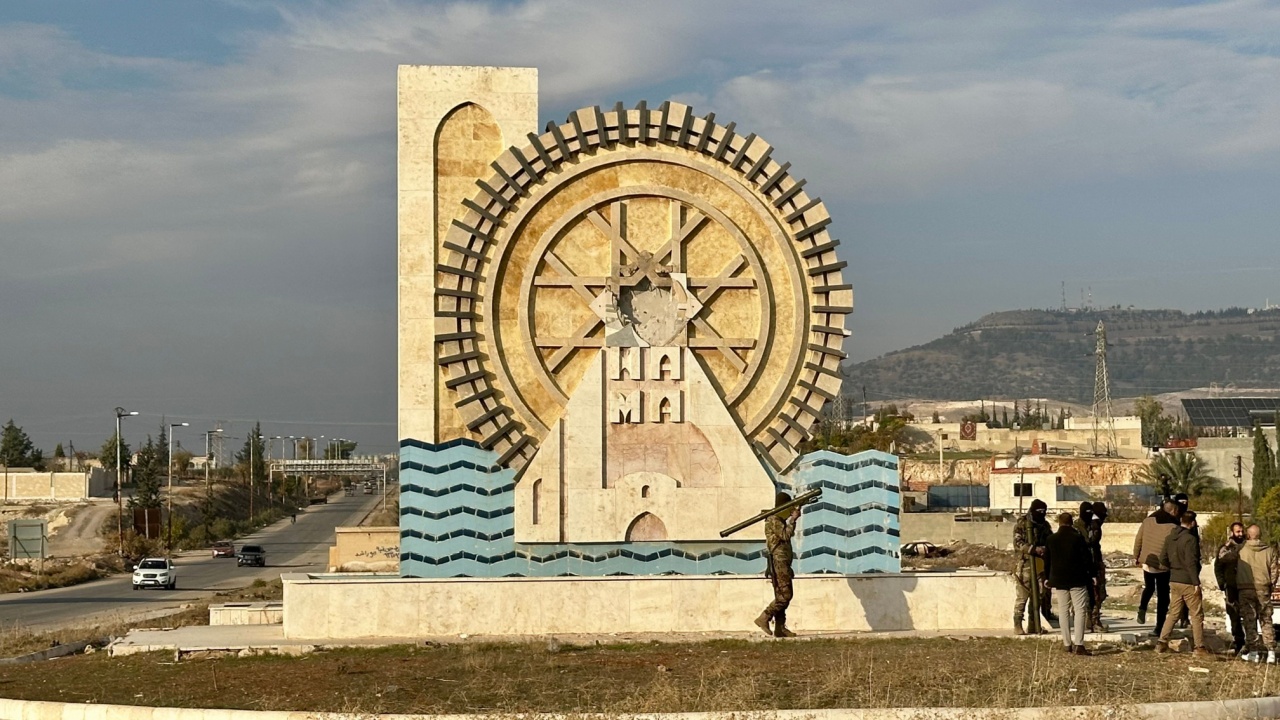
A more decentralized Syria is a surer route to stability and prosperity.
It’s been over one year since the overthrow of Bashar al-Assad’s dictatorship in Syria, and American soldiers are still getting killed. The global media promotes the new ruler as the unifier, Ahmed al-Sharaa, also known by his nom de guerre, Abu Mohammad al-Jolani. In reality, Shara only represents the Sunni Arab majority, while the rest of the country edges closer to civil war and four-way partition.
The Kurdish-led Syrian Democratic Forces (SDF) runs a de facto independent entity called the Autonomous Administration of North and East Syria (AANES) with US support. Last week, the SDF signed an integration agreement with the Syrian government. Forces linked to Shara’s government have brutally attacked the Druze community of Sweida and the Alawite community on the coast. Amid the chaos, two US soldiers and a civilian interpreter were killed by a recent recruit to Syrian government forces. Shara himself has already escaped several assassination attempts, and it would only take a successful attack to throw Syria back into civil war.
Along with the human toll, a new collapse of Syrian society could also further entangle America in Middle Eastern wars. The best immediate alternative is a federal system based on a realistic, conditional framework that involves cooperation from local and foreign actors to ensure protection and progress for all on the ground. A special constitution should recognize and enable regional self-governance, welcome alignment with the United States and Russia (given their military bases in al-Hasakah and Tartus, respectively), and secure buy-in from Gulf states to finance reconstruction.
Calls for federalism in Syria aren’t limited to the Kurds and SDF in the Northeast, but include additional minority communities—specifically Alawites and Druze caught in the crossfire of the new regime’s lack of control over its terrorist counterparts. The SDF seeks recognized autonomy, local control, and political representation. The latter want more insulation and guaranteed protection from the aggressive new government. Additionally, diasporan investors participating in Syria’s reconstruction have an interest in a partitioned country to build a foundation for stability and reduced corruption.
Main parties against federalism include the Turkish-backed central new government, local and foreign Arab nationalists, and opposing factions to the SDF and other minorities due to fears of losing territorial control, foreign funding, and centralized authority. To them, a federalized Syria is a fragmented Syria–and an undermining of future unity.
Established states would reduce ethnic violence, provide a safe space for the SDF to negotiate assimilation of AANES into the new state, and provide a stable framework so remaining functional regions can rebuild their own communities and education systems without waiting for national-level mandates—while ensuring a consistent flow of basic necessities such as water and electricity throughout the country.
A federal structure would also be a stabilizing buffer with Israel, whose recent intervention to shield the Druze in Sweida emphasizes the need for locally empowered regions capable of de-escalating cross-border tensions before their eruption. This stability would encourage greater capital flows through reconstruction projects and preserve the unity of the state while redistributing autonomy to the people.
Three key components of a federalist Syria would be unified citizenship, decentralized regional governance, and Schengen-style internal freedom. A federal constitution would guarantee national Syrian citizenship for all, regions would manage local education and policing, while the federal government handles national matters, including currency and foreign policy. Free movement of people across all regions would encourage free trade and a common market for all goods, capital, and labor. The one non-negotiable? A free flow of essential resources, such as water and agricultural goods, without obstruction.
The time has come to lay our “Timber Sycamore” days to rest and expel the association of US interests to the revival of terror cells in the Middle East. The evident cracks within the Syrian polity—especially the newer fissures in Homs and Tartus—signify a renewal in sectarian tension that will prevent a recovery. Additionally, a counterrevolution may spread across the country if accountability and discipline are not maintained against the offenders.
Any positive rhetoric from Western diplomats about Shara in light of recent developments only rewards the government’s heinous behavior and does more harm than good to civilians while the “new Syria” unravels. In its current state, Syria could remain unified only under a truly decentralized system that protects all communities and ends ongoing hostilities—conditions the existing government has yet to meet.
About the Author: Lora Karch
Lora Karch is a senior contributor with Young Voices and an independent analyst focused on national security and political issues in the Middle East and Europe. She works at The Middle East Institute in Washington, DC, and is passionate about individual liberties, fostering peace, and preserving legacies of ancient civilizations. Her work has appeared in The National Interest, Reason, The Libertarian Institute, Free the People, RealClearWorld, Times of Israel, and more. You can find more of her work on X: @LoraKarch.
Image: Obaida Hitto / Shutterstock.com.