Iran’s missile attacks have alienated the Hashemite Kingdom, but the chances of Jordan joining the war are still slim.
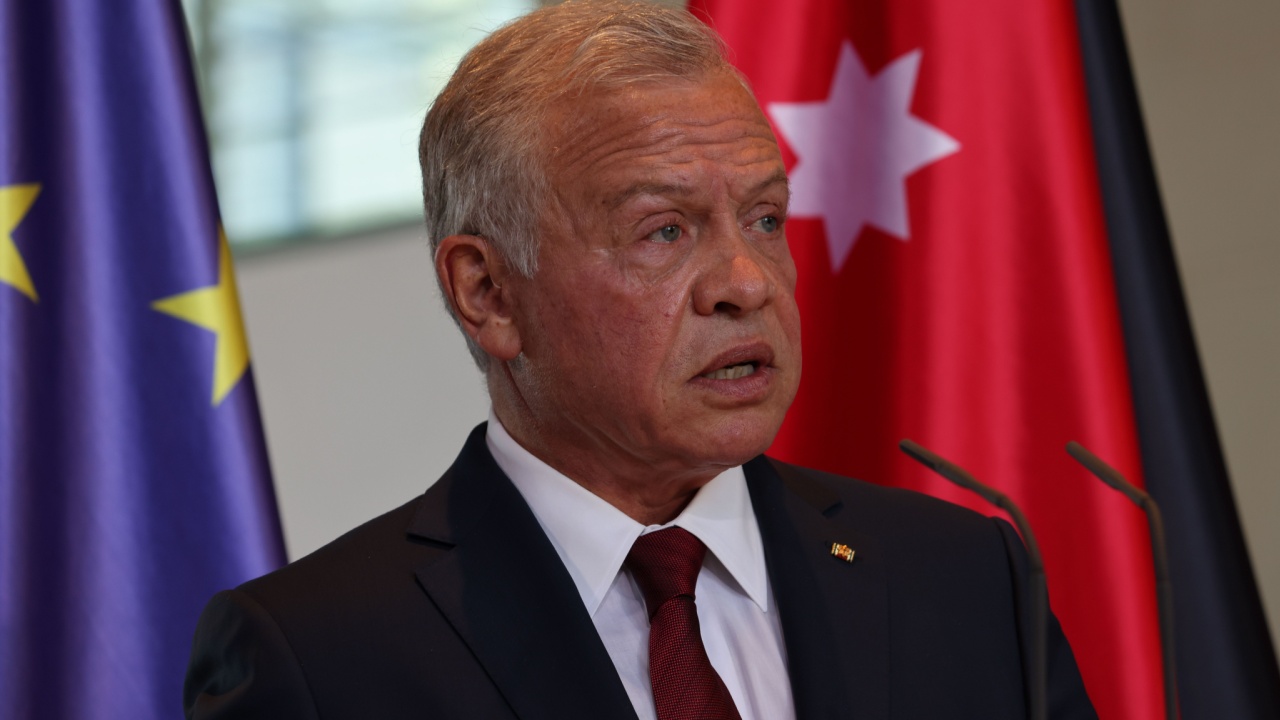
On Christmas Eve 2004, a suicide truck bomb headed to Jordan’s Embassy in Baghdad exploded, killing nine people. King Abdullah II later blamed a Shia group with support from Iran’s Islamic Revolutionary Guard Corps (IRGC) for the attack. The Hashemite ruler went to Tehran the previous year to strengthen relations, but King Abdullah noted in his memoir that his planned initiative “literally went up in smoke.” The king’s 2003 visit to Iran would be his last one.
Amman’s frustration with Iran has only deepened in recent weeks. On March 18, Jordan’s government spokesperson said that Iran had fired over 200 missiles and drones at the Hashemite Kingdom since the United States and Israel began bombing Tehran on February 28. Jordan’s Foreign Ministry summoned the Iranian chargé d’affaires for a reprimand on March 1, protesting Tehran’s “flagrant violation” of Jordan’s sovereignty and an “unacceptable escalation that threatens civilian safety.”
Since the war erupted, King Abdullah has repeatedly condemned Iranian “aggression” and declined to critique the killing of Supreme Leader Ayatollah Ali Khamenei. On March 4, Foreign Minister Ayman Safadi announced that all Jordanian diplomats at the embassy in Tehran had been withdrawn.
Iran’s missile attacks have also damaged Jordan’s broader economy. The Jordan Times reported that 100 percent of March bookings were cancelled in Petra, a popular tourist site. Royal Jordanian and international airlines were forced to suspend some flights at Queen Alia International Airport in Amman. On March 2, the Jordanian government-run Petra News reported that Iran attempted to hack the Hashemite Kingdom’s national wheat silos system. With the country’s unemployment rate over 20 percent before the conflict erupted, Jordanians could ill afford to suffer further financial harm.
Iran’s attacks also placed Jordan’s leadership in an uncomfortable light. “What is Jordan’s interest in intercepting Iranian missiles and dropping them on the heads of peaceful Jordanian civilians instead of letting them take their course toward Israeli cities?” former Tunisian Foreign Minister Rafik Abdessalem wrote on March 4. “Why didn’t it [Jordan] commit itself to neutrality to protect itself and its people from a war it’s not even a party to?”
The Jordanian government has not disclosed the approximate breakdown of how many Iranian missiles fired at Jordan were aimed at US military bases, civilian sites, or merely crossing through Jordanian airspace to target Israel. Veteran Jordanian journalist Lamis Andoni assailed Jordan’s leadership for hosting US military bases after the Iranian attacks, contending that stationing US troops in the Hashemite Kingdom forces Jordan into America and Israel’s wars.
On March 6, CNN reported that an American THAAD missile battery was struck and apparently destroyed at Muwaffaq Salti Air Base, east of Amman, in an Iranian attack. Five days earlier, the US Embassy in Amman told its employees to avoid the embassy compound, warning that it may be attacked. Last month, The New York Times revealed that over 60 US attack aircraft were spotted at a Jordanian base ahead of the Iran War, around triple the number of jets normally present, despite Jordan’s insistence that it remains neutral.
For the first time since the 2022 Russian invasion of Ukraine, the Royal Court announced that King Abdullah spoke with President Volodymyr Zelensky on March 4; Kyiv later sent drone experts to protect US military bases in Jordan. Iranian ballistic missiles also attacked a German field camp at a military base in Jordan.
Amman’s hesitancy to join the military campaign against Tehran has not reduced its anger at Iran. A 2025 Arab Barometer poll showed that only 19 percent of Jordanians believed that Iran’s policy in the Middle East was favorable. Three times in 2024 and 2025, Iran fired ballistic missiles and drones that violated Jordan’s airspace on their way to Israel. The Hashemite Kingdom’s military shot down dozens of Iranian drones.NBC News reported that Jordan even allowed Israeli fighter jets to enter the Hashemite Kingdom’s airspace in April 2024 to intercept the Iranian projectiles.
That same month, Jordan’s Foreign Ministry summoned Iran’s top diplomat, lambasting Iran for interfering in internal Jordanian affairs. Before Syrian President Bashar al-Assad fell, Jordan’s military spokesman, Mustafa Haiti, criticized Iranian militias in 2022 for smuggling operations across the Syrian border in a bid to destabilize the Hashemite Kingdom.
After numerous Iranian attacks, Jordanian authorities have little patience left for Tehran’s provocations. Amman likely did not appreciate Iranian lawmaker Mojtabe Zarei’s call last month for Jordanians to seize a military base used by US forces in the Hashemite Kingdom. “For decades, Jordan’s security and military institutions have been and continue to be a persistent thorn in the side of Iran and its militias across the region,” explained former Jordanian Information Minister Samih Al-Maaytah in a March 5 post on X. “All attempts at meddling, infiltrating, smuggling weapons and drugs and establishing militias with the aid of local organizations have failed.”
Even as Amman rebukes Iran for its attacks, few believe that the ongoing conflict will lead Jordan to boost relations with Israel. During this past week, Jordan’s Foreign Ministry has repeatedly condemned the Jewish state for its campaign in Lebanon and policy toward Jerusalem’s holy sites. After the war erupted, Israel suspended gas exports to its eastern neighbor, costing Jordan tens of millions of dollars. The Royal Court has not announced a single conversation between King Abdullah and Israeli Prime Minister Benjamin Netanyahu since the October 2023 Gaza War began, as trust between the two leaders remains low.
While King Abdullah insisted on March 12 that Jordan will take “all necessary measures to safeguard its security,” the Hashemite Kingdom likely will not launch military strikes against Tehran in response to the over 200 Iranian missiles and drone strikes. Throughout his 27-year reign, King Abdullah has been cautious about approving Jordanian military operations and has not allowed his country to be drawn into extended military quagmires.
A Jordanian attack on Iran would also increase the odds of more aggressive Iranian strikes against the Hashemite Kingdom, a scenario that King Abdullah seeks to avoid. During conversations with foreign leaders about the Iran War, the Hashemite ruler has called for restraint and “utilizing dialogue to resolve crises.” King Abdullah has also opposed attempts to “drag Arab states into a conflict in which they are not involved.” Jordan sees little benefit in joining Netanyahu’s war, as Amman seeks a diplomatic solution to the Iran crisis rather than additional regional chaos.
About the Author: Aaron Magid
Aaron Magid is the author of a recent biography on King Abdullah II of Jordan. A former Amman-based journalist, his articles on the Hashemite Kingdom have appeared in Foreign Affairs, Foreign Policy, and Al-Monitor. He also hosts the podcast On Jordan. Follow him on X: @AaronMagid.