The Royal Navy came into its own during the “Age of Reason,” in which ancient Greece was seen as a virtuous and exemplary society and its aesthetics were widely copied.
The flagship of the UK’s Royal Navy is the aircraft carrier HMS Prince of Wales, which is now on the final leg of its “Operation Highmast” deployment to the Indo-Pacific. The conventionally-powered flattop, which led the multinational Carrier Strike Group 2025 (CSG-25), is also the seventh warship to be named for the title of the heir apparent to the British throne.
It is hardly alone among names that have honored multiple warships. Other popular names for the UK’s senior service have included Victory, Dreadnought, Queen Elizabeth, and Agincourt. Interestingly, there have also been an abundance of ships named Ajax, Achilles, Agamemnon, and Hermes—each named for the heroes of Ancient Greece, rather than the British Empire.
This begs the question: why has the Royal Navy repeatedly used names linked to a nation it has few ties with—apart from stealing its treasures? Yet the naming of ships after Greek heroes was a tradition long before the Greek-born Prince Philip married the future Queen Elizabeth II.
The Origins of the Royal Navy’s Greek Names
The naming of Royal Navy warships for figures from Ancient Greek history/mythology began with HMS Achille and HMS Alcide. What is notable about the choice of names is that it used the French versions of “Achilles” and “Hercules,” but for good reason. Neither vessel was actually built for the Royal Navy; both were built for the French Navy, and later came into British possession.
Achille was an 8-gun sloop captured during the War of the Austrian Succession in 1745, only to be captured by the Spanish. The 64-gun ship of the line Alcide was launched in 1742, then captured in June 1755 and re-commissioned into the Royal Navy as the HMS Alcide. Given that ships were commonly renamed, it is unclear why the British kept these names, but it began a tradition of naming ships after Greeks!
In 1779, the Royal Navy commissioned a second HMS Alcide. The 74-gun third-rate ship of the line saw service in the American Revolution, taking part in multiple actions in the Caribbean against the French Navy. Damaged in the fighting, it was broken up in the early 19th century after languishing in port for many years.
What is also noteworthy is that during the final decades of the 18th century, the British retained French spellings, but by the early 19th century, the Royal Navy adopted English spellings for the Ancient Greeks.
That resulted in multiple ships being named HMS Achilles and HMS Hercules.
The Royal Navy Wants to Honor the Classical Era
Why were the Greeks embraced by the French and then the British navies? Much of it stems from the widespread adoration for the Classical era, which began in the late 17th century during the Enlightenment, a period that promoted reason and individualism as a reaction to the ornate Baroque style.
Also known as the “Age of Reason,” this period saw Europeans embrace classical Roman and Greek ideals of clarity, order, and balance. It was seen in art, architecture, and music. It was during this period that the Royal Navy began naming warships after figures from Greek history and mythology.
The Age of Enlightenment was followed by the Romantic period, which prioritized emotion, individualism, and imagination. It also ushered in a fascination with the medieval period that led to nationalist movements—culminating in the Age of Revolution—yet the Royal Navy continued to embrace Greek names. At that point, it had simply become a matter of tradition.
It was in this latter period that the Royal Navy built multiple warships named HMS Agamemnon, after the legendary Greek king; HMS Ajax, for the heroic Greek warrior; and HMS Danae, after the Greek heroine Danaë, among many others. Six ships were even named HMS Charybdis, after a sea monster of Greek mythology!
Although one might wonder if the sailors of the day had trouble pronouncing some of these foreign names, it is essential to remember that sailors were often more literate on average than other members of the working or laboring classes in the 19th century. Reading became a popular leisure activity for sailors during periodic dull moments at sea.
Likewise, many Royal Navy officers were well-educated. During the early 19th century, potential officers—called midshipmen—began their naval careers as young as 12, and were tutored by experienced officers. By the end of the century, the apprenticeship system was replaced by formal schooling, which included instruction on the Classical era, including figures such as Agamemnon, Achilles, and Ajax.
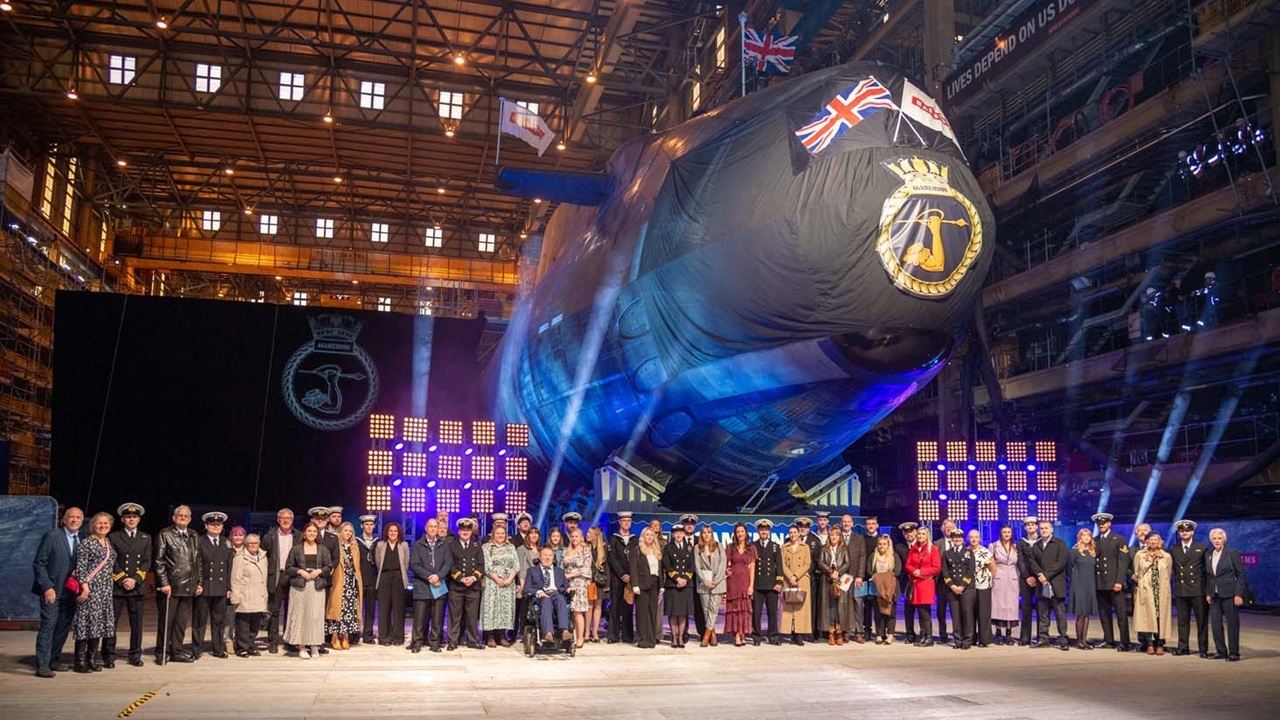
In the 21st century, the tradition of naming warships after the Greeks continues. The latest is the HMS Agamemnon, the sixth Astute-class nuclear-powered fleet submarine, which was commissioned in September.
About the Author: Peter Suciu
Peter Suciu has contributed over 3,200 published pieces to more than four dozen magazines and websites over a 30-year career in journalism. He regularly writes about military hardware, firearms history, cybersecurity, politics, and international affairs. Peter is also a contributing writer for Forbes and Clearance Jobs. He is based in Michigan. You can follow him on Twitter: @PeterSuciu. You can email the author: [email protected].
Image: Wikimedia Commons.