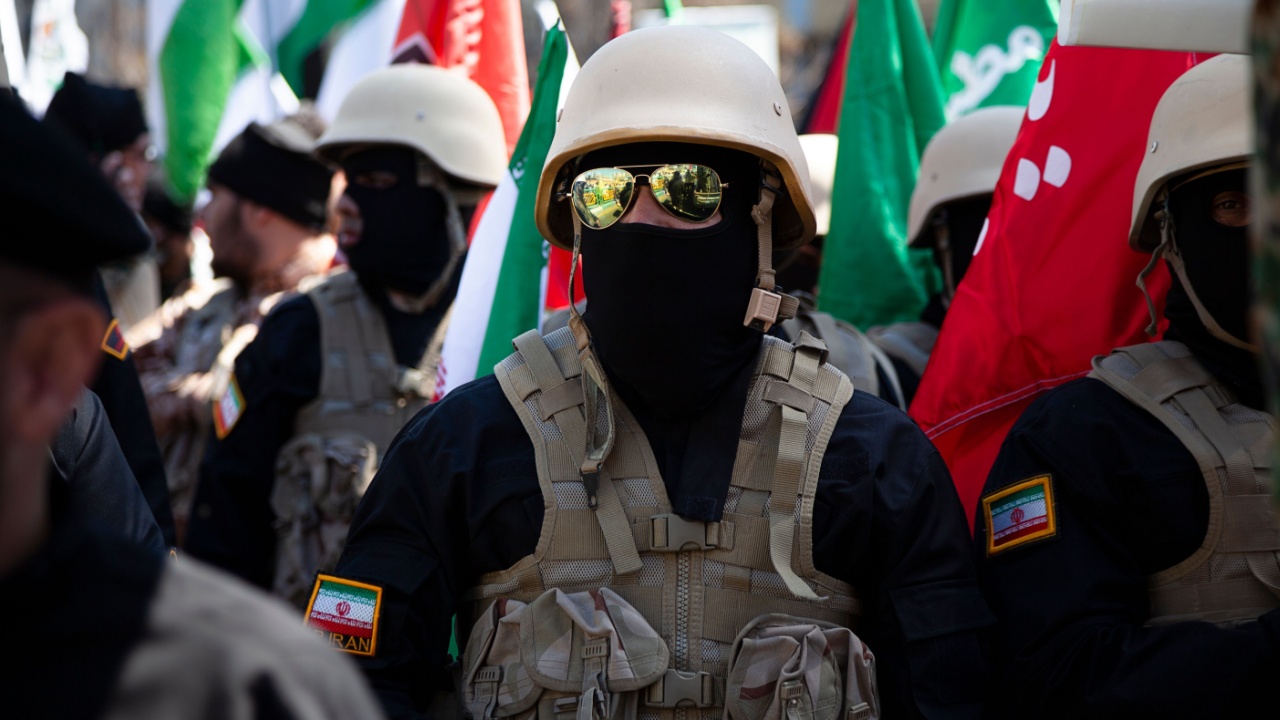
A recent Senate hearing confirmed the danger that Iran could never accept a peaceful Middle East order.
Today’s Senate Intelligence Committee’s Worldwide Threats demonstrated that in an age of deep polarization and mounting international disorder, the public questioning of intelligence leaders before elected representatives is one of democracy’s highest disciplines. Those in power must explain their actions before the nation.
Specifically, CIA Director John Ratcliffe and Director of National Intelligence Tulsi Gabbard testified before the Senate committee on the Trump administration’s decision to launch strikes on Iran on February 28. Their testimonies mattered not because they satisfied partisan ritual, but because they defined to the public how they assess the threats gathering against the United States, its allies, and the strategic order America sustains.
Measured against that standard, Ratcliffe projected command, seriousness, and strategic clarity. He spoke like a man who understands intelligence not simply as the collection of information, but as the fuel of statecraft. He reaffirmed the administration’s rationale for striking Iran, saying that Iran posed a “constant threat to the United States for an extended period of time, and posed an immediate threat at this time.” Tulsi Gabbard, by contrast, appeared less at ease in a role that demands steadiness, clarity, and discipline.
Ultimately, it is for President Donald Trump to judge how these perceptions matter. But the central question raised this week is fundamental to American strategy going forward. Did Iran represent a danger to the United States? And did that danger justify American action? The answer is yes in terms of both principle and strategy.
In principle, the matter should not be elusive. Israel is not a distant acquaintance of the United States. It is an ally, a friend, and a democratic partner living under the permanent threat of a regime that has made hostility toward the Jewish state a pillar of its legitimacy and doctrine. Nor is Israel the only target of Iranian aggression.
For years, Tehran has built and expanded an arsenal of ballistic missiles and drones while cultivating a network of coercion that has threatened not only Israel, but also Gulf states such as the United Arab Emirates and Bahrain—countries that chose peace, modernization, and partnership with Israel and the United States. To suggest that America had no obligation to stand with such partners against a regime built on intimidation, blackmail, and ideological expansionism would constitute a shocking abdication.
The Hamas massacres of October 7, 2023, did not emerge from a vacuum. Whatever debate may persist about Iran’s precise role, the deeper strategic reality is unmistakable: Iran spent years financing, arming, training, and legitimizing the forces of militant extremism that made such a massacre possible. Tehran did not need to sign every operational order to bear central responsibility for the ecosystem of terror it built and sustained.
Nor did that strategy stop at Gaza. Hezbollah opened a northern front against Israel before the smoke cleared on October 8. Not long after, the Houthis attacked ships in the Red Sea, one of the world’s most sensitive maritime corridors. Iran also sought to deepen its reach along the Red Sea basin through Sudan, where General Abdel Fattah al-Burhan chose to restore relations with Tehran, opening another strategic avenue for Iranian influence along a vital theater. It was a regional strategy of encirclement—designed to pressure Israel, intimidate America’s Arab partners, and establish influence across the region’s most critical routes.
There is also a moral dimension that serious strategic analysis must not ignore. The Iranian regime is not merely authoritarian. It is repressive, ideological, and structurally committed to domination at home and destabilization abroad. It has brutalized its own people while exporting fear across the region. Regimes of this kind do not become less dangerous because democracies grow tired of confronting them. On the contrary, in Tehran, democratic fatigue is interpreted as permission.
A stronger Iran would not have remained a local nuisance. It would have become a more formidable pillar in a broader revisionist alignment increasingly useful to Russia and China against the American presence in this decisive region. To ignore such a threat in the name of restraint is not prudent. It is strategic negligence disguised as sophistication.
Democracies are right to ask difficult questions before, during, and after military action. But one cannot seriously claim that Tehran was harmless, or that the United States had no stake in preventing the consolidation of a regime whose ambitions have long extended beyond its borders. The more demanding question begins after the strike.
The day after the Islamic Republic cannot be reduced to a military ledger. It must be conceived as a political and civilizational project. That requires a different level of engagement with Iran’s democratic opposition, civil society, technocrats, women, students, workers, and diaspora networks. The world should not merely hope for a better Iran; it should help serious Iranian alternatives become equal to the expectations of a people who deserve better than repression, isolation, and endless indoctrination.
Any serious post-crisis strategy must therefore aim higher than containment. It must help create the conditions in which Iranians can rebuild their economy, restore credible institutions, and recover the hopes and dreams that have been denied to them for decades. The Iranian people do not aspire to endless ideological mobilization. They aspire, like all peoples, to freedom, peace, dignity, and prosperity.
Here, the Abraham Accords offer a strategic approach. They showed that the Middle East need not be organized around permanent grievances, but can be reorganized around commerce, technology, security cooperation, and mutual recognition. Jared Kushner deserves recognition for the role he played in helping bring those accords into being and in working afterward to deepen their promise.
For that reason, his experience and support should be brought to bear in thinking through a post-transition regional framework—one that links security to opportunity, peace to prosperity, and regional normalization to the legitimate aspirations of the Iranian people. Their deeper lesson was not merely that old enemies can sign documents. It was that the future can be built around incentives more powerful than hatred.
In the end, the choice was never between war and perfect peace. It was between confronting a regime that had spent decades arming proxies, tightening a ring of fire around Israel, terrorizing America’s Arab partners, and extending its reach toward the world’s most sensitive maritime corridors—or waiting until that architecture of aggression became even harder, bloodier, and costlier to dismantle.
History is rarely kind to powers that confuse delay with prudence. If this moment is to mean anything, it must mean more than having checked Tehran’s advance. It must mark the beginning of a different regional horizon: one in which Israel can live in security, Arab states can deepen stability and prosperity, and the Iranian people can finally reclaim a future stolen from them by a regime that made regional chaos its grand strategy.
About the Author: Ahmed Charai
Ahmed Charai is the publisher of the Jerusalem Strategic Tribune and serves on the boards of directors of the Atlantic Council, the International Crisis Group, the Center for Strategic and International Studies, the Foreign Policy Research Institute, and the Center for the National Interest.