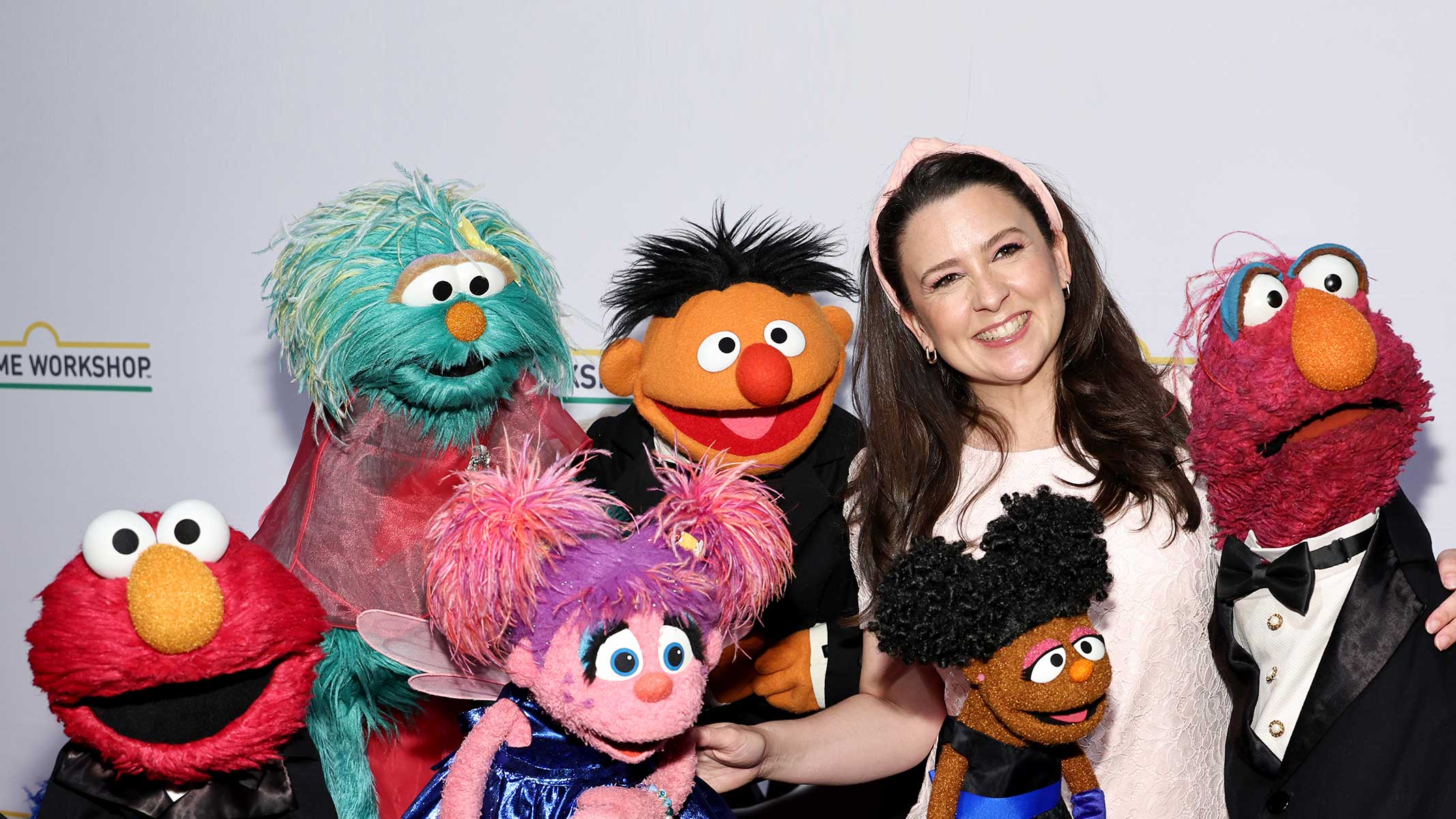
The Jewish-American scholar Saul Lieberman once quipped that “nonsense is nonsense, but the history of nonsense is scholarship.” Lieberman was referring to Kabbalistic mysticism, but the principle is true more broadly. A squealing children’s television icon is nonsense; her effort to manipulate the American people’s views on the Middle East deserves careful analysis.
Rachel Griffin-Accurso, known primarily by her stage name “Ms. Rachel,” has gained wealth and influence through her low-budget children’s show, a favorite of millions of “littles.”
Finally, a reason to check your email.
Sign up for our free newsletter today.
Like so much of this decade’s cultural content, the show is slop—annoying but hardly indoctrinating. But beyond the confines of her show, Ms. Rachel has emerged as an authoritative voice on every subject that even tangentially relates to children, including Israel’s war on Hamas.
Ms. Rachel admits to being a neophyte when it comes to the world’s most volatile region. In an interview with left-wing journalist Mehdi Hasan, she acknowledged that she “didn’t know much” about the Middle East before Hamas’s October 7 terrorist attacks.
Still, that has not stopped her from using her various platforms to construct a simplistic narrative of the conflict. Her Instagram, followed by more than 4 million accounts, reads like the product of an anti-Israel activist who happens to wear bright colors and overalls.
There is nothing wrong with advocating for children suffering during wartime. It’s the content of her advocacy that raises questions.
First, despite telling Hasan that she was “horrified by October 7,” Ms. Rachel had little to say that day about the harms to Israeli children. Her only Instagram post from October 7—long after Hamas’s live broadcast of its rampage of murder, torture, and kidnapping—is a hairdo tutorial. That silence continued for weeks even as the extent of Hamas’s atrocities became clear.
Ms. Rachel has no obligation to weigh in on all the world’s suffering children, a policy she continues to honor when it comes to China, Africa, and Ukraine. But she eventually broke that silence. After Israel launched its war to defeat the barbarians who had wiped out entire families (including babies pummeled to death in Gaza), Ms. Rachel began her campaign with a song about peace for “all children.”
The second giveaway that Ms. Rachel is not merely engaged in children’s advocacy is her repeated, selective use of blame. Though she started with vague hopes for peace that did not mention Israel or Hamas by name, Ms. Rachel has gradually begun including “analysis” in her Instagram posts. She informed her followers that Israel is committing “genocide,” accusing it of “murder[ing] 4 year olds!” and blaming the world for dehumanizing Palestinians to excuse Israel’s conduct.
The surest sign that something is amiss in Ms. Rachel’s advocacy is that while she has regularly called on Israel to stop its just war, she has never once (as far as I can find) called on Hamas to lay down its arms. (She has “condemn[ed] HAMAS” in the same post as she “condemn[ed] the Israeli government.”) Indeed, she has recently dropped the pretense of hating Israel on behalf of the suffering children of Gaza and now regularly posts anti-Israel messages unrelated to children’s welfare.
Ms. Rachel is probably not an agent of malign actors, but an outstanding useful idiot. Most likely, her early posts were genuine emotional reactions to a tragic war, which the vast anti-Western PR machine took advantage of. But it remains a possibility that she has been (unwittingly) encouraged and possibly supported by terror supporters posing as humanitarian groups.
That’s not as outlandish as it may sound. Ms. Rachel recently became a global ambassador for the Palestine Children’s Relief Fund (PCRF) after “fundraising” for them. The PCRF is as much a propaganda arm for the anti-Israel cause as it is a humanitarian outfit. According to NGO Monitor, PCRF consistently “promotes a narrative of sole Israeli aggression and minimizes the role of Palestinian violence” and “systematically erases Palestinian terror attacks against Israeli civilians.” The PCRF’s ostensible medical infrastructure in Al-Rantisi Hospital in Gaza City contained “evidence of Hamas infrastructure . . . explosives, suicide vests and even a motorcycle used in the [October 7] attacks, hidden in a basement.”
The PCRF is not the first anti-Israel group to betray its benign-sounding name by working with terrorists. For instance, KindHearts for Charitable Humanitarian Development, an Ohio-based nongovernmental humanitarian organization, “coordinated with Hamas leaders and made contributions to Hamas-affiliated organizations,” according to the U.S. Treasury Department. A recent Network Contagion Research Institute report found that the Middle East Children’s Alliance, a California-based humanitarian aid nonprofit, had “fiscal and personnel ties to entities associated with the Popular Front for the Liberation of Palestine,” a U.S.-designated Foreign Terrorist Organization since 1997.
That terrorist groups should have ties to organizations that maintain a humanitarian façade should come as no surprise. Anti-Israel groups frequently employ children and hospitals to appeal to people’s emotions in order to win support for their eliminationist war effort.
The more interesting question is why groups like PCRF would target Ms. Rachel. What do they think they can achieve by appealing to toddlers and parents of young kids?
Much like the terrorists they support, the anti-Western PR apparatus preys upon our decency. When your enemy both causes suffering and broadcasts it strategically, it can use your compassion against you. The result is the terrorists’ classic coercive formula: ensure that children suffer, document it relentlessly, then insist that this suffering means that their enemy must surrender—for the children’s sake. If the enemy refuses, this resolve becomes callous indifference to “murdering kids.”
This dynamic explains why groups like PCRF see Ms. Rachel as an ideal entree into American culture. Her authority is aesthetic: bright colors, speech that appeals to kids, instinctive associations with innocence. She only cares that children are safe. That’s a powerful message to have associated with your side.
You cannot judge asymmetric warfare using platitudes about kindness—not because they’re wrong but because they’re insufficient. They cannot tell you who started a war, what incentives reward aggression, or what happens when organizations that maximize civilian suffering survive to fight again. Ask “what happens if Hamas remains in power?” and you’re accused of quibbling while children die.
Why has it worked? Why has the American public begun to adopt a “just stop killing babies” approach to the Middle East, despite its being both slanderous and shallow?
Because we have not learned asymmetric warfare’s central lesson: our inability to tolerate children’s suffering is a civilizational strength that becomes a weakness if we refuse to acknowledge that some actors will take advantage of it. Empathy is suicidal unless paired with moral courage.
Westerners need to learn how to respond: children’s suffering is intolerable—and that is precisely why the terrorists who started this war, use children as shields, and exploit their suffering need to be eliminated. This response requires us to discern good from evil. It requires real moral analysis. That is what we should aim to teach our children.
If you, like me, have young kids, I recommend turning off the sugar-high of Ms. Rachel and pulling up some vintage episodes of Mister Rogers’ Neighborhood. Fred Rogers was formative, deliberate, and occasionally moralistic, in the best way. You can still rely on his show to help your kids grow up to be decent people—not dupes.
Photo by Jamie McCarthy/Getty Images
Source link