Have you ever heard someone say that God’s forgiveness removes the guilt of sin? And have you ever wondered why God would punish a person from whom He had removed guilt? In other words, if God forgives me, thereby declaring me not guilty and removing sin from my soul, why does He punish me? This article will elucidate the reasons why punishment following God’s forgiveness is necessary. Let’s begin with sin.
Sin
What is sin? Sin is a transgression of moral law. It offends God and others. It is a word, deed, thought, or omitted act that is contrary to grace and separates us from God. See Catechism paragraphs 1849 and 1853 for more.
Sin results in numerous consequences. First and foremost, it separates us from God. If I steal, regardless of the amount, the very act of stealing separates me from God. In the firm choice to steal and in the act itself, I choose to reject God’s grace and put myself at enmity with Him. I turn away from Him and toward the sin.
Sin also estranges us from the neighbor we harm and the body of Christ, His Catholic Church. It creates disorder in ourselves and in the world. When we sin, we make ourselves guilty of causing each of these defects, and we make ourselves responsible for repairing them.
Please note that the above definition refers to mortal sins. However, even venial sins create disorder by inclining us to commit mortal sins. To better understand the distinction between mortal and venial sins, click here.
Guilt
What is guilt? According to the Catholic Dictionary, guilt is the “condition of a person who has done moral wrong, who is therefore more or less estranged from the one he offended, and who is liable for punishment before he has been pardoned and has made atonement.” In other words, guilt for sin is the condition of separation from God.
By rejecting the eternal God who made us for eternity in Heaven, we embrace eternal punishment in Hell. We make ourselves guilty of exchanging friendship with God for enmity, Heaven for Hell. But this is not the only thing of which we make ourselves guilty.
We also make ourselves guilty of creating both eternal and temporal disorders. God’s forgiveness restores the eternal order by putting us back in friendship with Him. But then we must remedy the temporal disorders in the interest of justice and holiness. Forgiveness alone does not accomplish this, but it is the beginning of the process.
Please click here for more on the reality of Hell.
For more on guilt, see Summa Theologiae III, q. 86, a. 4, 5 and all answers to the objections in these two articles.
Forgiveness
What is forgiveness? The Catholic Dictionary defines forgiveness as “[p]ardon or remission of an offense. The Catholic Church believes that sins forgiven are actually removed from the soul and not merely covered over by the merits of Christ.” Put another way, forgiveness is the removal of guilt by the infusion of grace that reunites us to God.
For more on grace and how it works, please read these two articles: “How God Moves Us Without Destroying Our Free Will” and “Grace and Our Response To It.”
When God forgives us, we are no longer guilty of destroying our relationship with Him because He repaired the relationship with His forgiveness and the infusion of grace. Because of God’s mercy and because He makes us in His image and likeness, we then have a duty to forgive others and correct the wrongs we have committed against them.
Therefore, instead of removing our responsibility to correct what we have disordered, God’s forgiveness makes us more responsible for forgiving others who have sinned against us and for correcting temporal disorders we introduce through sinning.
In other words, God’s grace makes us more like God. Therefore, we must reflect God by showing mercy and restoring order through love, just as God does. Jesus tells us what will happen if we do not do this in Matthew 18:23-35, the Parable of the Unmerciful Servant.
Punishment
What is punishment? The Catholic Dictionary defines punishment as:
Any ill suffered in consequence of wrongdoing. It has three functions, which ideally should be retributive as serving the offended person, corrective for the offender, and deterrent for the community at large. Punishment is retributive because it pays back the offender for his crime and re-establishes the balance of justice, which has been outraged. It is corrective when directed to improving the offender and rehabilitating him as a member of society. It is deterrent as a means of forestalling similar wrongdoing by others.
In addition to contritely apologizing to the person we have harmed by sinning, temporal punishments include restoring the thing taken or the damage caused, repairing the disorder we created, and detaching ourselves from the sinful object. The Catholic Church teaches that punishment redresses a disorder caused by an offense, and when a person undergoes this punishment voluntarily, it takes on the value of expiation (CCC 2266), also known as satisfaction.
But the question asked at the beginning of this article still needs a fuller answer, and it lies in the purpose of God’s punishment. God intends punishments to heal us, to discipline us, to sanctify us, to make us “perfect as the heavenly Father is perfect.” Hebrews 12:3-11 provides a solid explanation for punishment’s purpose. Please take a moment to read it.
This passage teaches us that God disciplines/chastises “every child whom He accepts,” which is every person in a state of sanctifying grace. When a person has grace in their soul, God has received them, justified them, and made them His friend.
Discipline for sin is simply punishment directed at our sanctification and the restoration of the common good. God may have forgiven and justified us, but that does not mean He morally perfected us, at least not yet. Therefore, God gives us the discipline needed to make us perfect. God who is Justice, justifies us in grace that we may reflect His justice by justly executing His will and repairing the damage we caused by sinning.
Also, notice that in the Hebrews passage, discipline yields righteousness to those whom God has “trained” by it. Training takes time and cooperation. So, this passage is telling us that God’s children, those whom He has justified, must continue in and cooperate with disciplinary training designed to morally perfect them.
Next, if we reject God’s post-justification discipline, we make ourselves illegitimate children. This is why the Church and Scripture teach that we must willingly undergo discipline that we may “share His holiness” and yield the “peaceful fruit of righteousness.” We call this full sharing in God’s holiness complete sanctification.
So, even though we escape the eternal punishment of Hell by grace through which we become God’s legitimate children, we must accept any kind of temporal punishment as discipline ordered toward moral perfection and sanctification.
Similarly, a pill may destroy cancer, but the person must recover from the toll the cancer has taken on his/her body. Although forgiveness destroys sin in the soul, we must still repair the toll sin takes on the body of Christ (the Church), the community at large, and our own souls. Discipline and cooperating with grace are how God and we accomplish this.
Discipline And Holiness
Punishment can come in many forms and from numerous entities (e.g., the state, parents, employers, the Church, etc.). If we receive an earthly form of punishment for doing something immoral, we should ask God to use the punishment as discipline ordered toward purification of our souls.
Similarly, we sometimes suffer for doing right or for being Christian (see 1 Peter 2:19-21). If this happens, we should ask God to help us undergo suffering patiently and to accept suffering as penance or satisfaction for our sins. For more on this please read this article on suffering and this article on turning insults into holiness.
Editor’s Note: This article was adapted from a piece originally published on Catholic Stand.
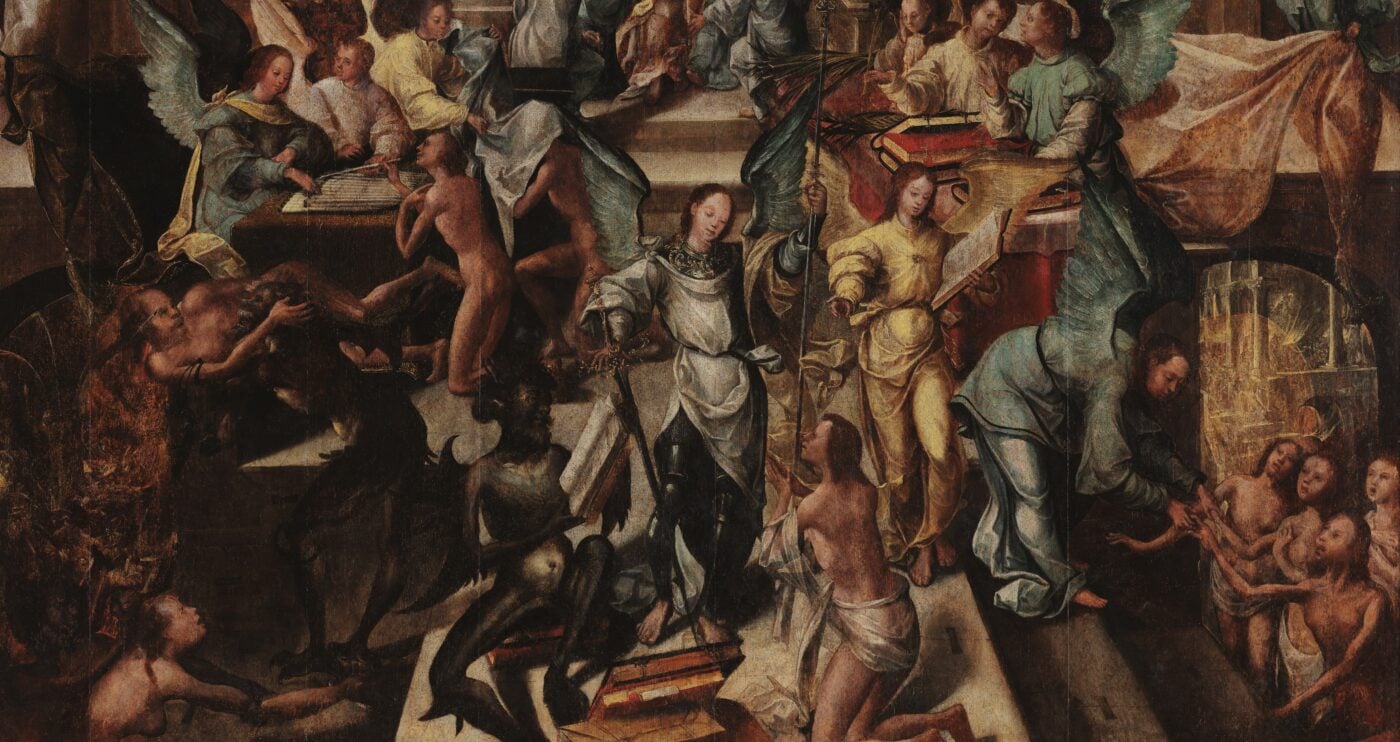
Image from Wikimedia Commons