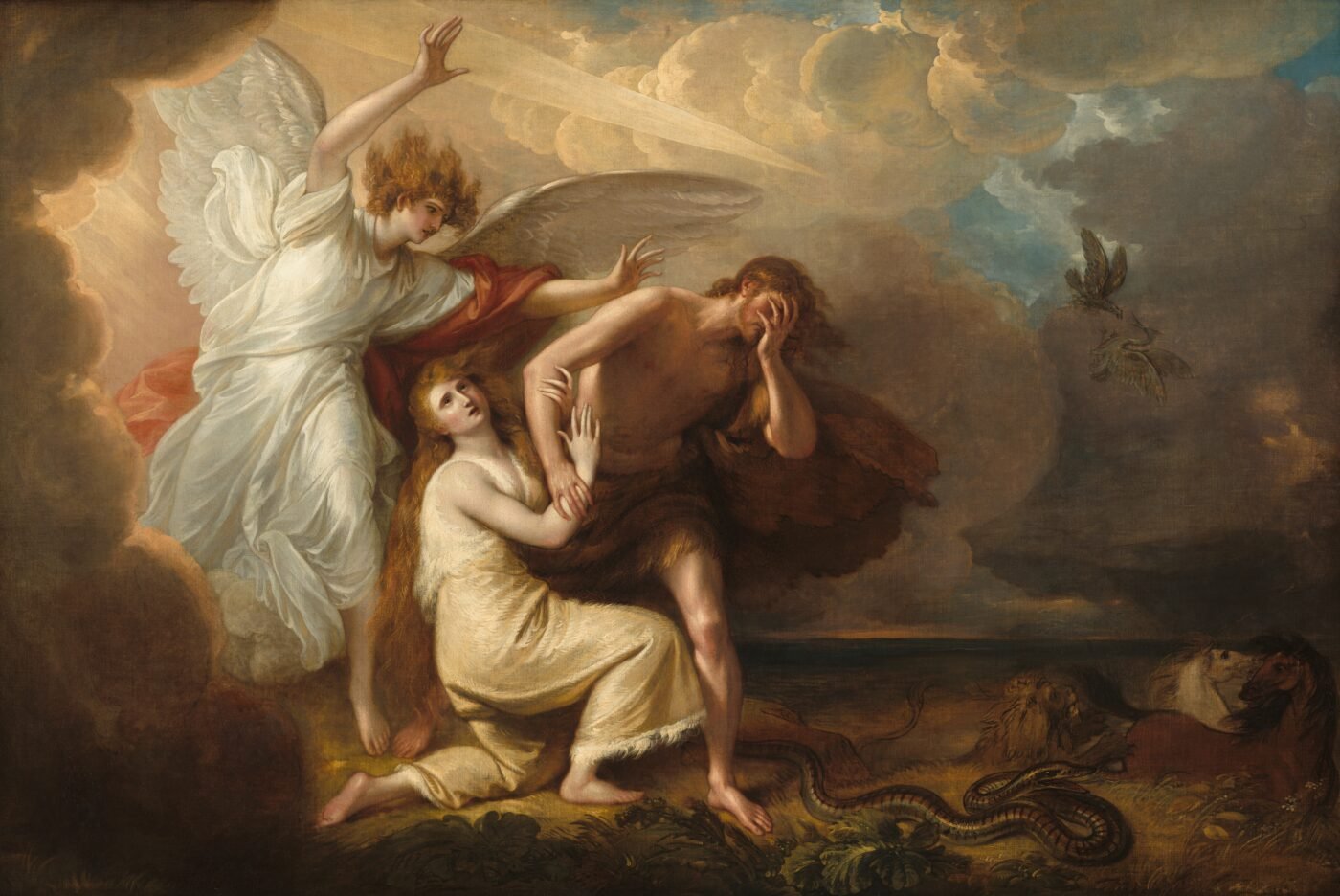
When we look at our world, we see a lot of beauty and good. However, we also see a lot of ugliness and evil going back to the beginning of man. Naturally, we wonder why God created Adam and Eve knowing they would sin and knowing how much evil would enter the world as a result.
A World Without Defect
The first that that we should know is that God created everything “good” (see Genesis 1). This means that everything God created in the beginning was without defect and functioned properly. Then, on the sixth day, God created man in His image and likeness and declared that creation was “very good” (Gen. 1:31). Thus, man added something to creation that made creation better than good. This thing that made creation better was grace (see this article for more).
Grace placed man in a state of communion with God, and since man had not committed sin at this point, man maintained the order with which God created him and the world. If man would not have sinned, creation would have remained subject to man, man’s body would have remained subject to his soul, and his soul would have remained subject to God. This seems wonderful and, indeed, it was. However, there is something better on this side of Heaven as you will see.
Innocence in the Garden
When God created Adam and Eve, they were innocent in the truest sense of the word. They were like young children who do as their parents instruct them simply because they cannot conceive of disobedience. Disobedience does not enter these children’s minds because of 1) their innocence, 2) their trust in their parents, and 3) a lack of temptation.
When God told Adam and Eve not to eat from the tree of knowledge of good and evil, they understood the command and trusted that God gave it to them for a good reason—“for in the day you eat of it you shall die” (Gen. 2:17). The tree itself was good (Gen. 2:9), but eating from it would have brought death simply because God told them not to do so.
The command not to eat from this tree gave Adam and Eve a choice—do we eat from it or not? However, being completely innocent and full of grace, they did not have a real choice. They were aware of the choice, but willing a bad choice did not occur to them. Therefore, something from outside the garden needed to enter and entice them to disobey. This enticement was a temptation, and a temptation is a test of fidelity and love (see A Tour of the Summa, II-II, q. 165).
Temptation in the Garden
Satan, desiring to destroy man’s innocence, entered the garden and tempted Adam and Eve. Before he did this, Adam and Eve loved God like young children love their parents. Their love was more like affection, whereas true love is a free act of the will. In Greek, their love was storge rather than agape—agape being unconditional, sacrificial love and not merely affection.
Although temptation to sin is evil, it provides occasions to turn to God, seek His guidance, ask for His protection, journey with Him, and pull away from the thing tempting us. Therefore, temptations become occasions to love sin or to love God. Adam and Eve should have chosen to love God, but they chose the sin of disobedience instead. To understand why they chose this sin, please read my previous article at Catholic Exchange.
The Role of Sin
But how does sin work in the scheme of sanctification and salvation? Well, if temptations provide opportunities to turn to God, our favorite sins give us even greater opportunities to turn to Him.
In Luke 7:36-50, a sinful woman washed Jesus’ feet with her tears and hair at the house of a Pharisee named Simon. The indignant Simon asked himself how Jesus could be a prophet if He did not know the kind of person this woman was. Jesus, knowing Simon’s thoughts, said to him:
A certain creditor had two debtors; one owed five hundred denarii, and the other fifty. When they could not pay, he forgave them both. Now, which of them will love him more? Simon answered, “The one, I suppose, to whom he forgave more.” And Jesus said to him, “You have judged rightly.”
Accordingly, given the extraordinarily grievous nature of Adam’s and Eve’s sin (grievous because God created them full of grace), their sin gave them an opportunity to love God even more than they could have loved Him in a state of innocence or with temptation alone.
Our Sins
Our sins do the same thing. When we sin, we create an attraction to the sin. And every time we commit this sin, we develop a greater fondness for it. We sacrifice time, money, relationships, and, sometimes, our health to obtain it. Essentially, we develop agape love for the sin by devoting ourselves to it.
But God’s love for us is infinitely greater than our love for sin. Therefore, because of His love and mercy, He gives us His strength (i.e., actual grace) to turn from the sin and toward Him. When we do this, He forgives us, and we journey with Him toward a deeper love than we would have before we sinned. Therefore, God uses our sins and our sinful inclinations to purify us. He alone turns sin into opportunities for holiness.
By doing this, God turns the fallen world into a love-making (pardon the phrase) and saint-making machine. He uses all kinds of temptations and sins to help us see our own ugliness. Then, He uses the same temptations and sins to help us see His beauty, goodness, glory, and mercy. By battling sin with God at our side, we (us and God) forge a relationship based on truth, love, trust, and cooperation welling up to perfect sanctification and eternal life.
With grace, God uses our sins to completely sanctify us, to make us the perfect images and likenesses of Him that He creates us to be. We walk with Him out of darkness and our love for Him grows during the journey. Our love matures from storge to agape, something that would not have happened in a state of pure innocence without a command and a temptation.
Mary’s Love of God
One might ask that if Adam’s and Eve’s love was merely affection while they were full of grace, was Mary’s love for God merely affection since God created her full of grace? To answer this question, we must consider how Mary loved God.
Mary clearly loved God, and she was innocent in the purest sense like Adam and Eve. However, Mary lived in a fallen world with countless temptations. Consequently, Mary experienced many temptations, yet she did not fall. These temptations provided many opportunities to put her love into action. In this sense, she grew in love with God like we do when we successfully overcome temptations. But there is one more thing to consider about Mary’s love for God.
God chose her to be the mother of His eternal Son made flesh. Therefore, from the moment of Jesus’ conception, Mary fell in love with God the way a mother falls in love with her child. This kind of love for God was something unique and special to Mary. Her love was a parental love that sacrificed for the good of her child to make sure He had everything necessary for life. In this sense, Mary’s love for God exceeded (and still exceeds) everyone else’s love for Him. Her love for God is agape love in the purest creaturely sense.
Caution
Do not commit grievous sins thinking that you will walk away from sin in the future and love God like the man whom the creditor forgave five-hundred denarii. Scripture tells us that we do not know when we will die (see Luke 12:16-21), and it cautions us against developing a hardened heart (see Hebrews 3:12-13). Also, St. Paul warns us not to do evil that good may come (Rom. 3:8). Therefore, now is the time to repent and love God with your whole being. Do not wait!
Author’s Note: Here are some related resources:
- To understand complete sanctification better, please listen to my new radio show here.
- For more on actual and sanctifying grace, please click here.
- On why God created Mary immaculate, please read this article.
- If you have ever wanted to read St. Thomas Aquinas’s Summa Theologiae but realized you didn’t have time to read 4000 pages, please read A Tour of the Summa by Monsignor Paul J. Glenn, Ph.D, S.T.D. by clicking here. It is also available in digital format.
Image from Wikimedia Commons