Renault will produce around 600 Shahed-type drones per month at its factories in Le Mans and Cleon, with assistance from French aerospace firm Turgis Gaillard.
One of the most well-known French car manufacturers will start producing one-way attack unmanned aerial systems.
Renault Group, the French multinational car manufacturer, will soon open two production lines for long-range one-way attack unmanned aerial systems.
From Cars to Loitering Munitions
A famed French car manufacturer and iconic French company—and one that has participated several times in the Formula 1 championship with success—Renault is diversifying its production lines with the addition of a loitering munition.
The French carmaker will open the production lines at its factories in Le Mans and Cléon, France. Renault will reassign employees and transfer factory equipment from its automotive manufacturing lines in France.
To be sure, as an automobile manufacturer, Renault Group does have adequate expertise to design and produce loitering munitions on its own. Accordingly, the French company will pair with aerospace and defense manufacturer Turgis Gaillard. The contract is reportedly worth €1 billion ($1.2 billion) over 10 years.
The initial plan is for Renault to produce 600 long-range one-way attack unmanned aerial systems per month.
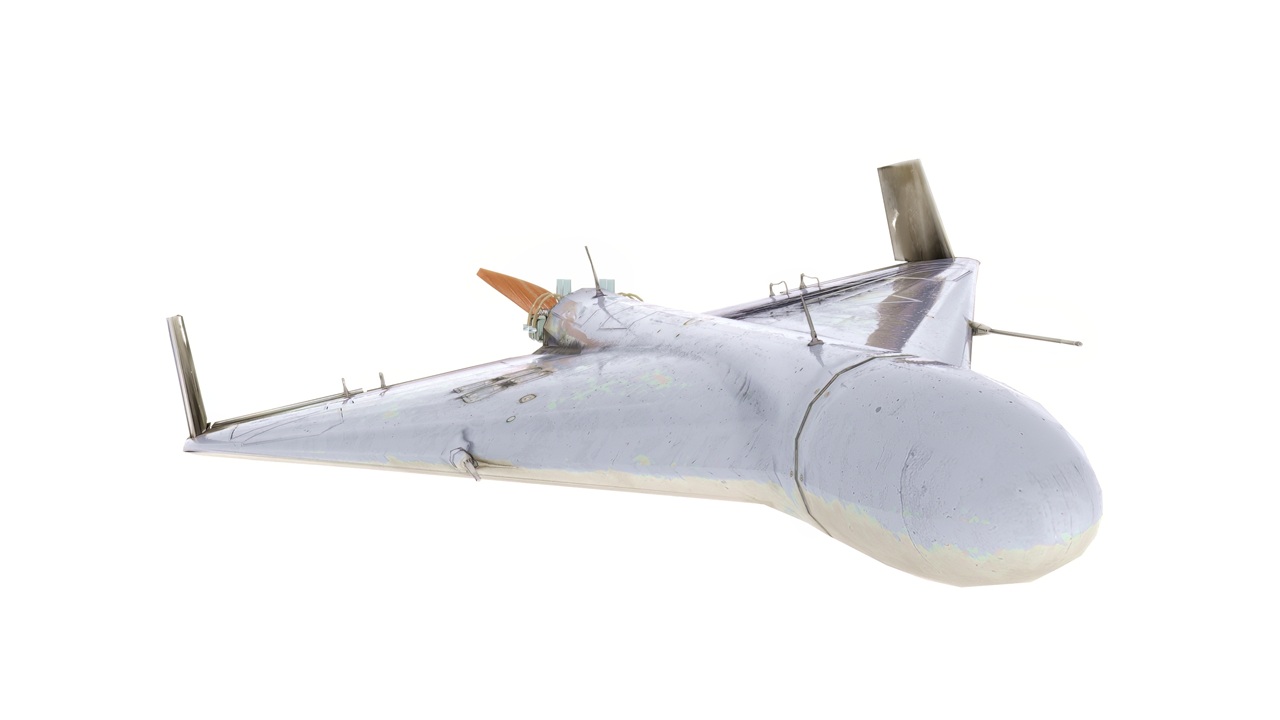
The French loitering munition will be called “Chorus,” and its design will be based on the popular Shahed-type drone. Designed and initially produced in Iran, the Shahed-131 and Shahed-136 drones are long-range one-way attack unmanned aerial systems that can travel up to 1,550 miles (2,500 kilometers) and deliver a 110 lb warhead to the target with decent precision.
Since the onset of the Ukraine War in 2022, Iran has provided a steady stream of Shahed drones to Russia. Moreover, the Iranian government has assisted the Kremlin in producing the loitering munition inside Russia. The Russian aerospace and defense industry has also been manufacturing its own iteration, the “Geran,” of the popular loitering munition.
It was the French military that began the project. France has historically sought to be independent in its military affairs. The creation and full-scale production of a homegrown long-range one-way attack unmanned aerial system will provide the French military with important strike capabilities in line with developments in other countries.
“We were contacted a few months ago by the French Ministry of the Armed Forces about a project to develop a French drone industry,” Fabrice Cambolive, Renault’s chief growth officer, said during an interview with BFM TV on Tuesday. “We were contacted for our industrial, production, and design expertise. This project is currently underway.”
France has historically sought to be independent in its military affairs. The creation and full-scale production of a homegrown long-range one-way attack unmanned aerial system will provide the French military with important strike capabilities in line with developments in other countries.
Loitering Munitions Are the New Face of Warfare
One-way attack unmanned aerial systems, or loitering munitions, have become essential components of modern warfighting. In Ukraine, both sides have extensively used loitering munitions for offensive and defensive operations.
What makes loitering munitions particularly useful to militaries is their low cost. It is estimated that a Shahed-type loitering munition costs approximately $35,000. This is quite cheap as weapon systems go. The low cost of a loitering munition is especially pronounced when compared to the cost of the counter-drone systems used to intercept it, often in the hundreds of thousands of dollars.
Low costs also mean large numbers. One-way attack unmanned aerial systems are most effective when deployed in large numbers, or swarms.
About the Author: Stavros Atlamazoglou
Stavros Atlamazoglou is a seasoned defense journalist specializing in special operations and a Hellenic Army veteran (national service with the 575th Marine Battalion and Army HQ). He holds a BA from the Johns Hopkins University and an MA from the Johns Hopkins’ School of Advanced International Studies (SAIS). His work has been featured in Business Insider, Sandboxx, and SOFREP.
Image: Shutterstock / ivkovmark.