In the daily lectionary readings recently, we heard the prophet Isaiah explain that fasting is simply a means to an end. If our fasting does not produce good fruit in our life, and in the lives of those around us, then it is meaningless! He proclaims:
Look, you serve your own interest on your fast day,
and oppress all your workers.
Look, you fast only to quarrel and to fight
and to strike with a wicked fist.
Such fasting as you do today
will not make your voice heard on high.
Is such the fast that I choose,
a day to humble oneself?
Is it to bow down the head like a bulrush,
and to lie in sackcloth and ashes?
Will you call this a fast,
a day acceptable to the Lord?Is not this the fast that I choose:
to loose the bonds of injustice,
to undo the thongs of the yoke,
to let the oppressed go free,
and to break every yoke?
Is it not to share your bread with the hungry,
and bring the homeless poor into your house;
when you see the naked, to cover them,
and not to hide yourself from your own kin?(Is. 58:3-7)
Fasting, like all other religious practices, can turn into an idol if we are not mindful of this temptation. God is not impressed with our fasting—He is God! God wants us to use our fasting to temper our secular worldview, to cling to heavenly pursuits, to sharpen our prayer, and to bring to our attention our great need for divine assistance. This is the purpose of fasting, and this will open us up to God’s grace.
But the devil is shrewd; he works in our lives subtly. Radical fasting, especially when we accomplish what we set out to fast from, can easily feed our pride, when just the opposite is supposed to take place. Fasting should humble us.
So, keep your “eyes on the prize.” Use this time of fasting, and remember that fasting is not something to be utilized just for Lent.
Now, we might ask ourselves the question: Why do I fast?
Seek good and not evil so that you may live, and the Lord will be with you. (Amos 5:14)
Lent is an opportunity for grace, and fasting for 40 days helps us to obtain that grace.
Many years ago, when I was in my late twenties and single, I fasted for the grace to live a chaste life as prescribed by the Church for single men. In my struggle with my own flesh, I came to realize that without God’s grace there is no way a person can live a chaste life—no way! However, during that Lent, after an intense period of fasting, I was given the grace to remain chaste—and that period lasted for nearly 15 years until I met my wife, with whom I now have five children.
That Lenten fast years ago taught me many things. For one, we cannot self-manufacture grace. There are limits to our strength, to our will power, and to our self-discipline. Realizing these limitations is a good thing, because when we do, we cling to God—and God never abandons us.
As Catholics, the Church asks of us many things—and everything the Church asks of us is achievable—but only with and through God’s grace. Our world today does not value grace, nor do I think the secular world believes it is even real—but it is very real! Sacramental grace is the “lifeblood of the world.” Recall the words of Jesus noted in the Gospel of John:
Amen, amen, I say to you, unless you eat the flesh of the Son of Man and drink his blood, you do not have life within you. (Jn. 6:53)
Did you catch that? No life within you. Do we take the words of Jesus seriously? Our world desperately needs to live sacramentally. What does that entail? Frequent Confession (once a month, as prescribed by the saints Padre Pio and Pope John Paul II) and reception of the Blessed Sacrament in the state of grace. This is the answer to so many of our problems. This is how we obtain much needed grace. Our physical bodies have limits, but God is limitless, and with God’s grace we can do all things in and through Christ.
For you are not pleased with sacrifices; should I offer a burnt offering, you would not accept it. My sacrifice, O God, is a contrite spirit; a heart contrite and humbled, O God, you will not spurn. (Ps. 51:18-19)
The prophet Isaiah teaches us what a proper fast looks like and the outcome our fasting should produce. To paraphrase: “Releasing those bound unjustly, untying the thongs of the yoke; Setting free the oppressed, breaking every yoke; Sharing your bread with the hungry; Sheltering the oppressed and the homeless; Clothing the naked when you see them, and not turning your back on your own.”
Fasting is a means to an end. It’s a “tool” in our Catholic “toolbox,” and we ought to utilize it. Why? Because we need all the help we can get!
Isaiah goes on to reveal:
Then your light shall break forth like the dawn, and your wound shall quickly be healed; Your vindication shall go before you, and the glory of the LORD shall be your rear guard. Then you shall call, and the LORD will answer, you shall cry for help, and he will say: Here I am! (Is. 58:8-9)
Lent is a special time in the liturgical calendar. It’s an opportunity to obtain tremendous amounts of grace, a time to learn about our weaknesses and our attachments to this world, and also a time to understand how God “steps in” and assists us, forming us into the people we were born to be.
The “light” Isaiah references is not our own; it’s from God. And in order for that “light” to “break forth like the dawn,” we must do as the great John the Baptist instructed us: “I must decrease and he must increase.” Fasting helps us to do just that, so we can be a source of light to the world.
Editor’s Note: This article was originally published on Oh Francesco on February 20, 2026.
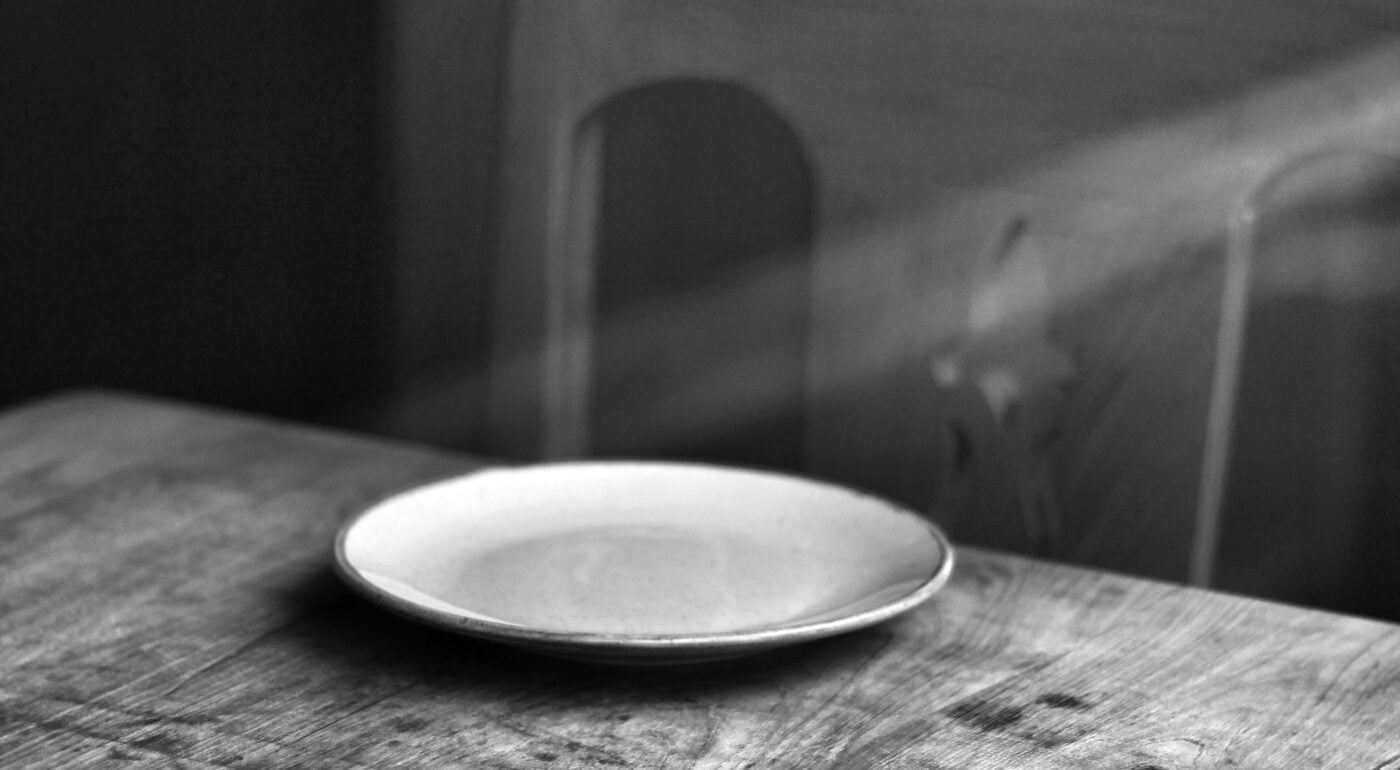
Photo by Metin Ozer on Unsplash