Greece, Turkey, the United Kingdom, and France have each committed to defend the small Mediterranean island from Iranian attack. Why?
Cyprus is caught in the Iran War crossfire.
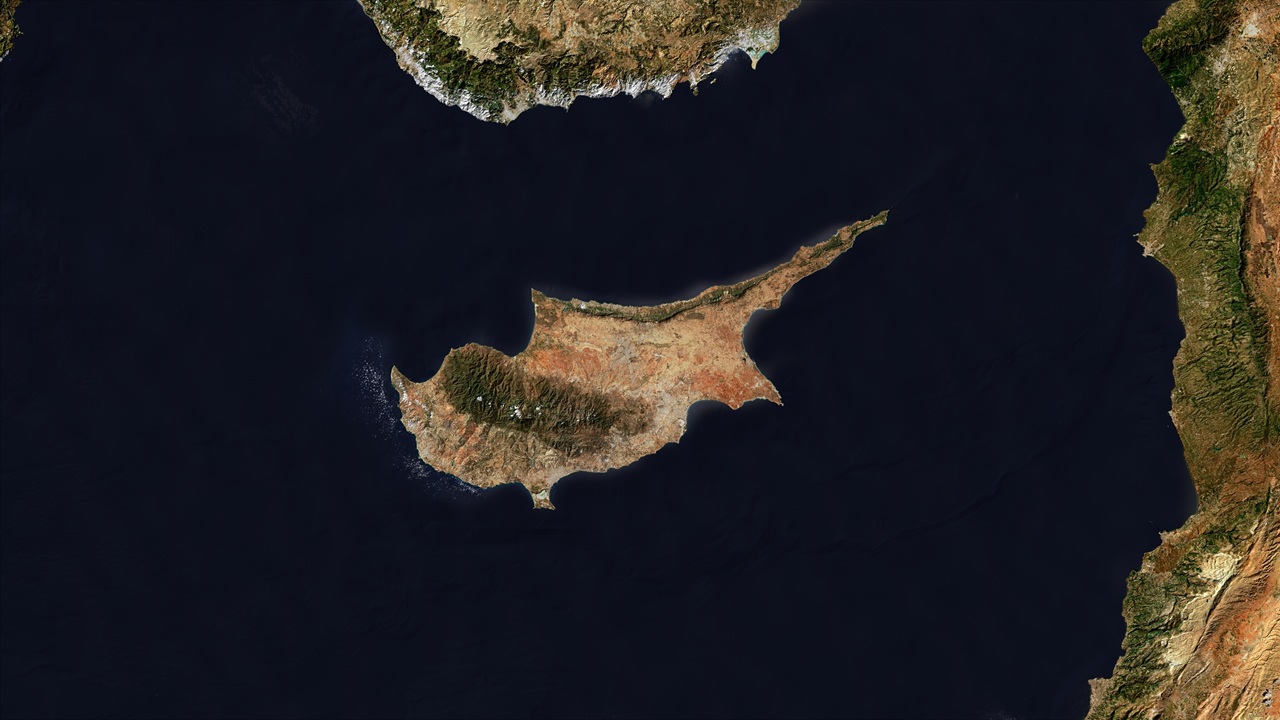
The island nation south of Turkey in the Eastern Mediterranean Sea has little connection to Iran, and is not even part of NATO. But its colonial past, as well as the centuries-old animosity between Greece and Turkey, has forced the small island to the forefront of ongoing events.
Iran has launched drones at the island, aimed at its British military facilities. And the island is so important to Europe that several nations have deployed combat aircraft and warships around it to protect it from further attack.
The UK Has a Major Air Base on Cyprus
One main reason for the attention Cyprus has gathered in the current war in Iran is the Royal Air Force’s base in Akrotiri.
The UK ruled Cyprus as a Crown Colony from 1925 to 1960, when it granted the island its independence. Still, the British military retained the use of some military facilities, including RAF Akrotiri. The air base has been key to UK and NATO operations in the Middle East, providing fighter jets, unmanned aerial systems, air tankers, and early warning aircraft capabilities.
The Cypriot government has restricted the UK military’s use of RAF Akrotiri to strictly defensive operations. Royal Air Force fighter jets and unmanned aerial systems are not permitted to take offensive action against Iranian targets. However, they can, and have, scrambled to intercept incoming ballistic missiles or one-way attack unmanned aerial systems.
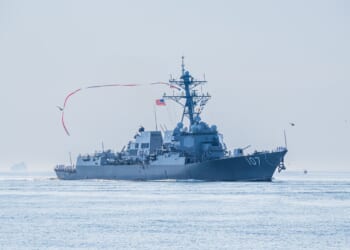
The United Kingdom has sent the HMS Dragon, a Type 45 destroyer, and two Wildcat helicopters to help defend its base and its island locale.
Both Greece and Turkey Want to Defend “Their” Side of Cyprus
The other main reason Cyprus has garnered so much attention in the current conflict is the regional geopolitical competition between Greece and Turkey, each of which has sought to demonstrate to the island that it can function as a powerful security guarantor.
Cyprus has long been divided between an ethnically Greek majority and an ethnically Turkish minority. In 1974, a pro-Greek group seized power and sought to unify the island with Greece; in response, Turkey invaded and carved off the island’s northern section, ostensibly to protect the rights of Turkish Cypriots. Today, Cyprus is divided between the internationally-recognized “Republic of Cyprus,” which governs most of the island, and the “Turkish Republic of Northern Cyprus,” which controls the north and is not recognized as an independent state by any country except Turkey.
In the half-century since Turkey’s invasion, Greece and Turkey have solidified their ties to their respective halves of the island. Greece has deployed a permanent military task force on the island, while the local government in the northern part of the island relies on the Turkish military for security. The three sides have consistently failed to reach an agreement that would unify the island, and in the interim, Turkish Cypriots in the north face various difficulties related to the unrecognized nature of their de facto government, such as restrictions on traveling abroad.
As both Greece and Turkey seek to assert their interests in Cyprus, they have deployed additional military forces on the island.
Greece responded first by sending four F-16 Fighting Falcon fighter jets and two frigates, including its most modern warship and flagship of the fleet. Athens also deployed an MIM-104 Patriot air defense battery on the island of Karpathos, approximately 300 miles off the Cypriot coast.
Turkey responded by sending six F-16 fighter jets to the island’s north—a move that some experts warned could run afoul of US law, given end use restrictions on sending military equipment to contested areas without permission from Washington.
France Is Also Deploying Forces to Cyprus
In addition to the United Kingdom, Greece, and Turkey, France has announced its commitment to defend the island and deployed anti-missile and anti-drone systems there—a move that may strike some observers as odd, given its lack of obvious connections to the island.
Since the onset of the war, France has deployed significant forces to the Eastern Mediterranean, including the nuclear-powered aircraft carrier Charles de Gaulle, the flagship of the French Navy.
Unlike the United Kingdom, France does not have a base on Cyprus. And unlike Greece and Turkey, France does not have an ethnic connection to the island’s people. Instead, France’s presence in Cyprus is motivated by Paris’ desire to lead European security. France has the largest and strongest military in Europe, and has led security issues within Europe for years. And Cyprus, despite its relatively long distance from the mainland, is a part of Europe.
About the Author: Stavros Atlamazoglou
Stavros Atlamazoglouis a seasoned defense journalist specializing in special operationsand a Hellenic Army veteran (national service with the 575th Marine Battalion and Army HQ). He holds a BA from the Johns Hopkins University and an MA from the Johns Hopkins’ School of Advanced International Studies (SAIS). His work has been featured in Business Insider, Sandboxx, and SOFREP.