In the era of sophisticated long-range air-to-air missiles, cannons on aircraft may seem quaint—but they still serve a vital purpose.
For over a century, the cannon has been the fighter aircraft’s defining weapon. From World War I to World War II to Korea and Vietnam, the airborne cannon served as the decisive weapon of air combat.
However, in the era of stealth, beyond-visual-range (BVR) missiles, and software-driven targeting, the role of the fighter’s gun has changed. Although the gun remains present and important, its tactical envelope has narrowed significantly. Modern guns are not a primary weapon, but instead an auxiliary insurance policy—a last-resort tool whose relevance depends on the rare situations where missiles are not an option.
The Air Force Tried to Get Rid of Aircraft Guns Once Before
In the era before sophisticated missiles, the cannon was the central weapon of air combat. In World War II, through years of intensive, trans-global dogfighting, almost every single aerial victory was achieved with a gun. Pilots closed to visual range, maneuvered into position behind an enemy aircraft, and fired their cannons to destroy it. Even in Korea, as fighter jets replaced propeller aircraft, guns still accounted for the majority of kills.
When the missile age arrived in the 1950s and 60s, some designers prematurely declared the era of the cannon to be over. Early F-4 Phantoms were famously built without an internal cannon—an omission that Vietnam proved to be shortsighted. Early missiles were unreliable, short-ranged, and often foiled by weather or rules of engagement that required visual identification. Cannons, the trusted weapon of decades, suffered none of these drawbacks. As a result, US pilots were forced to recommit to learning how to use their guns; post-F-4 fighters like the F-14, F-15, F-16, and F/A-18 reintroduced internal cannons as a mandatory feature that pilots were required to master.
Do Aircraft Cannons Still Matter? Sort Of…
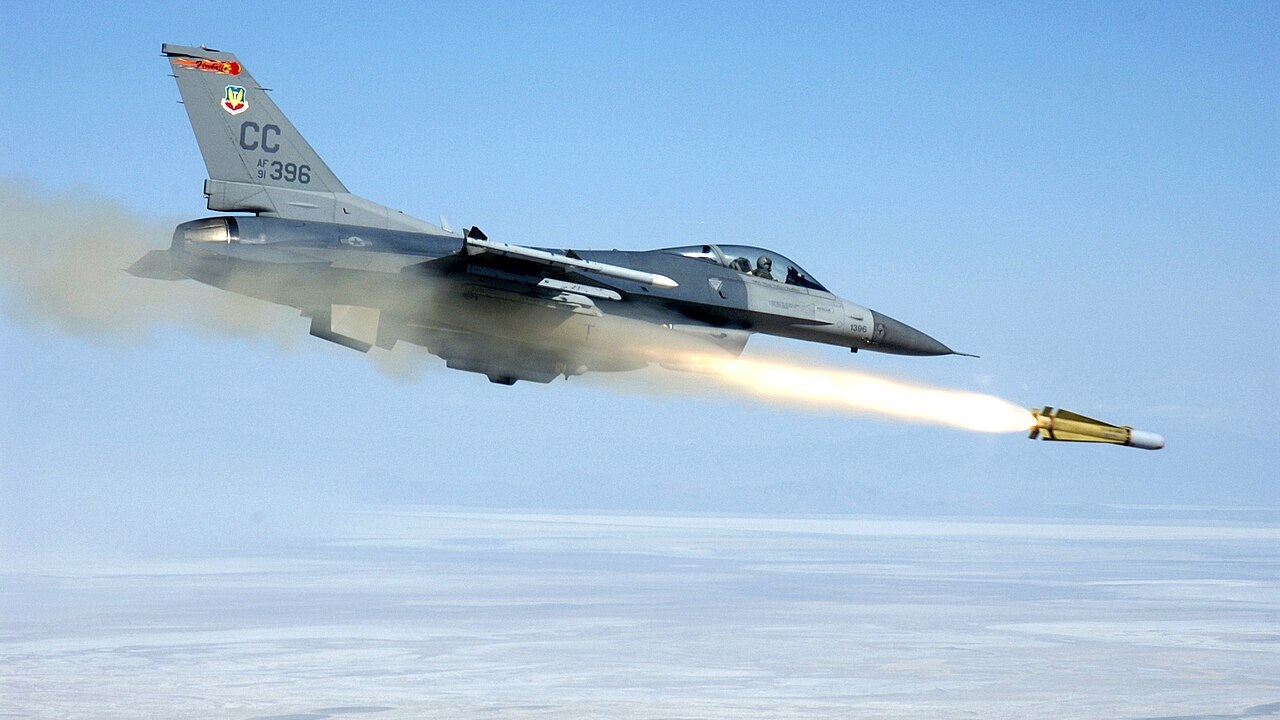
Yet despite the gun’s mandatory inclusion in modern fighter platforms, the game has changed. Today, air-to-air kills are rarely achieved with guns. The majority of kills occur at significant distances with radar-guided air-to-air missiles such as the AIM-120 AMRAAM, the European Meteor, or China’s PL-15. Meanwhile, high-off-boresight infrared missiles like the AIM-9X, ASRAAM, and IRIS-T can track and maneuver with such precision that close-in turning fights seldom last long enough for a pilot to need to fall back to guns. Stealth further complicates the use of guns; fifth-generation jets like the F-22 and F-35 often see the enemy first, fire first, and disengage before being visually identified, meaning there is no opportunity for gun engagement. The result is that the gun has been relegated to a much more specialized role than in the past.
Still, the gun is indispensable as a vital insurance policy that can operate independent of radar, battery, data fusion, or infrared guidance. In a situation where electromagnetic interference or sensor failure or missile depletion takes missiles off the board, the gun is the only fallback a pilot can rely on. And while close-in dogfighting happens rarely, the possibility still exists; under such circumstances, a gun is necessary.
The area where guns are still most relevant in air warfare today is in air-to-ground missions, where fighters conduct strafing runs against soft targets, vehicles, or fortified positions. In 21st century conflicts between the United States and various lesser adversaries, modern aircraft (F-16s, F/A-18s, and especially A-10s) used their guns regularly against ground targets.
Strategically, the gun has been reduced—yet its relevance endures, a device that can fill the gaps that more advanced weapons leave. As air combat becomes more software-defined and more and more reliant on networks, sensors, and electronic equipment, it’s still nice to have an analog weapon in the back pocket.
About the Author: Harrison Kass
Harrison Kass is a senior defense and national security writer at The National Interest. Kass is an attorney and former political candidate who joined the US Air Force as a pilot trainee before being medically discharged. He focuses on military strategy, aerospace, and global security affairs. He holds a JD from the University of Oregon and a master’s in Global Journalism and International Relations from NYU.
Image: Wikimedia Commons.