As time has gone on, innovations in fighter jet technology have made “bubble cockpits” steadily more useful to pilots—and more expensive to maintain.
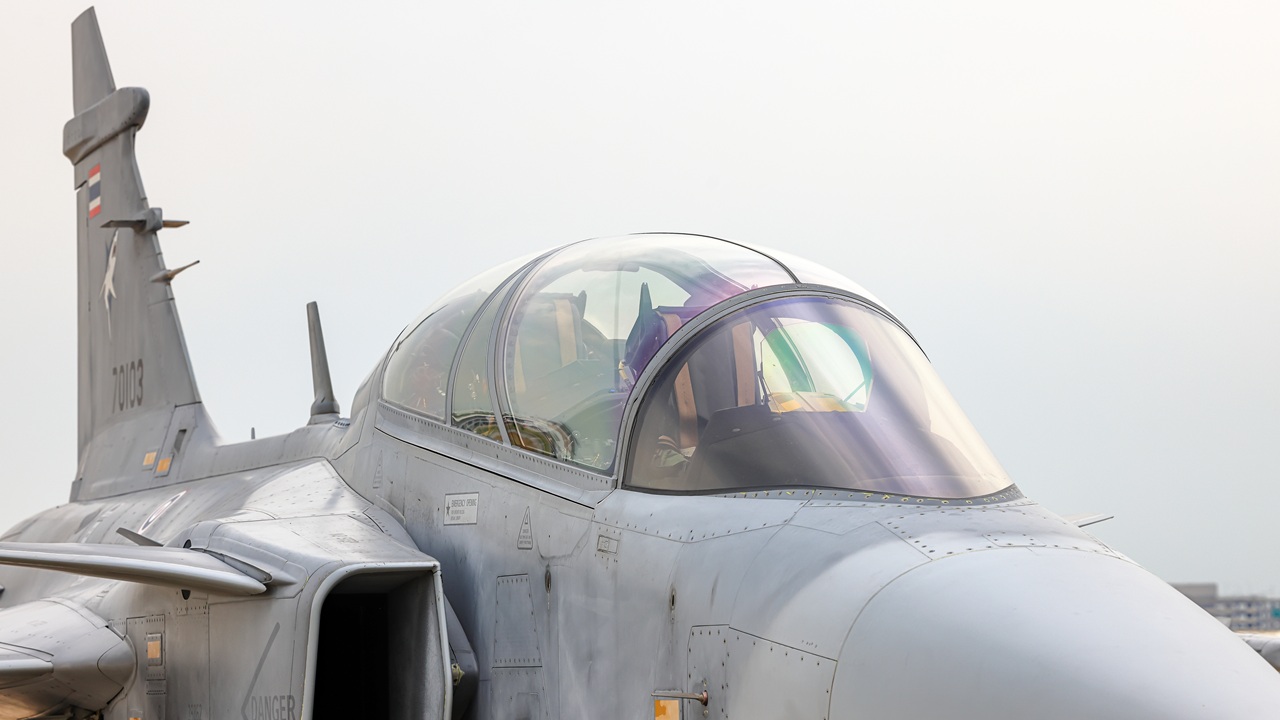
To an untrained eye, the canopy of a fighter jet looks like a simple bubble. In truth, it is a high-stakes engineering component attempting to balance competing needs: visibility, aerodynamics, survivability, stealth.
The simple interpretation is basically correct; at its core, a canopy is simply a transparent enclosure over the cockpit, giving the pilot a wide view outside the aircraft. However, that enclosure must be built to withstand all the hardships of operating a fighter jet, from temperature extremes to UV exposure to bird strikes to ejection-seat compatibility. Like the rest of the plane, the canopy has evolved from humble beginnings to the advanced tech enclosures used today.
How Were Aircraft Canopies Developed?
The earliest fighter aircraft, deployed during World War I, are notable because they were without canopy at all. Open cockpits were more feasible when the early fighters flew at relatively slow speeds, granting the pilot maximum awareness and ease of movement. Still, the open cockpit offered no protection from the elements—making aircraft brutal to fly at high altitudes and during hostile weather.
As aircraft gained speed, early enclosed canopies appeared, reducing drag, increasing pilot comfort and endurance. These early canopies had drawbacks, too; they were heavily framed, relying on acrylic and Plexiglas-type transparencies, and often degraded pilot vision.
By World War II, dogfighting had become central to aerial combat, and rear-quarter visibility had become a life-or-death need. The heavy framing canopies, which provided excellent structural strength, also had massive blind spots, putting their pilots at a distinct disadvantage in close-quarters combat. To increase pilot visibility, particularly in the rear-quarter, the “bubble” canopy was developed. The visibility was excellent, although the new designs, like those found on the Spitfire and P-51, were structurally complex and posed a manufacturing challenge.
The Modern Canopy Is a Product of the Cold War
In the late 1940s, into the 1950s, the emergent jet age pushed the speed and altitude envelope relentlessly. Pressurization became a normal fixture, and canopies were designed to withstand higher aerodynamic loads. Still, canopies remained relatively framed and smaller because designers needed to optimize for speed and structural strength. The result was that cockpits were often tighter. And because of the predominant intercept doctrine of the time, visibility was not always a priority.
But lessons learned about the importance of air combat re-emphasized the need for visual acquisition and maneuvering—which required a canopy from which the pilot could see his surroundings. In the 1960s and 1970s, canopy shapes shifted towards incorporating a wider field of view, with “bubble” profiles emerging on some fighters. Simultaneously, bird strike and debris requirements tightened, requiring the construction of stronger canopies with thicker transparencies. And as sorties got longer, at higher altitude, through all kinds of weather, better canopy sealing and environmental control was required. And critically, the development of the canopy jettison system was tuned to allow reliable ejection at high speeds.
The F-16 Fighting Falcon Set the Standard for Modern Canopies
The F-16’s one-piece bubble canopy incorporated pilot visibility as a design statement, setting a new standard in canopy design. Other jets of the era, like the F-14 and F-15, still relied on framed canopies, but they were improved relative to earlier jets, taking account of human factors like seat height and cockpit layout and HUD line-of-sight.
The rise of stealth as a design crux introduced new canopy concerns. Canopies can reflect radar. To solve this problem, modern canopies often include a thin conductive coating, typically tinted gold, to reduce radar returns from the cockpit. Modern canopies are also integrated with avionics, as HUDs evolve and helmet-mounted displays and sensor fusion arise, changing what “visibility” means.
As with all things, the newer canopies are structurally complex and therefore far more maintenance-intensive. Coatings are delicate and costly. Cleaning and scratching becomes an operational issue. Yet, despite the drawbacks, modern canopies offer pilots extraordinary outward visibility, better pressurization, comfort, and survivability—all while reducing detectable signatures.
About the Author: Harrison Kass
Harrison Kass is a senior defense and national security writer at The National Interest. Kass is an attorney and former political candidate who joined the US Air Force as a pilot trainee before being medically discharged. He focuses on military strategy, aerospace, and global security affairs. He holds a JD from the University of Oregon and a master’s in Global Journalism and International Relations from NYU.
Image: Shutterstock / MMXeon.