A professor who rolls his own cigars and is a bagpiping enthusiast? Meet Dr. Daniel Guernsey, senior fellow at the Cardinal Newman Society and associate professor of education at Ave Maria University, FL. In a phone interview with Catholic Exchange, Dr. Guernsey argued that good Catholic education is uniquely suited to strengthen students’ intellect and leadership abilities within U.S. society. Following are some of the highlights of our conversation.
Emily Chaffins: Tell me about what makes Catholic education distinct—and vital—to the future of the Church and society as a whole.
Dr. Guernsey: We educate the whole person, mind, body, and spirit, and we’re educating them for eternity, for their ultimate end in Christ. And we’re also teaching them to serve the common good. The Catholic understanding of the common good is the fulfillment of the human person as modeled by Christ. So really, we’re about something so much bigger than where modern public education has fallen into…
We provide a more complete education because we teach math and reading and science in the context of the whole human person, [their] destiny, and God’s plan. We’re just doing so much more, and that requires a lot more from our teachers and our schools.
Emily Chaffins: Would you be able to give me an example of what this looks like in the classroom?
Dr. Guernsey: Ultimately, even in mathematics—which one might think, “Well, what does that have to do with God?” Plato…saw mathematics as the gateway to the eternal, as a gateway to the transcendent…When we’re teaching mathematics, we’re also teaching in the context of, “Isn’t mathematics wonderful, because God created it, and the world can be articulated in terms of mathematics in fascinating ways?” In math, we don’t just count the Apostles. We’re actually exploring the idea of number and infinity and objective truth and reason and logic. All of those are part of the Divine wisdom…
That kind of makes math more exciting. Maybe not for everybody. But if you ask a mathematician why they’re studying math, they’re going to do it because they find it beautiful and spiritually rewarding.
Emily Chaffins: What is the state of Catholic education in the U.S. currently?
Dr. Guernsey: The positive thing that’s happening is that a lot of our young priests are coming from a homeschool environment or from a Catholic school environment, and they tend to be more focused on religious orthodoxy. With that kind of change on its way, there’s hope that new bishops and new pastors will be looking for something that resonates with the actual needs of the Church, which is a radical Catholic formation in the love of Christ and in His truth….
And then we’re seeing school choice. In almost half the states, Catholic schools are becoming essentially free to parents. That’s opening up a real opportunity for Catholic schools to reopen or to be [established, as well as] taking some of the funding burden off parents.
Every parish was supposed to aspire towards having its own Catholic school back in the early 1900s. Before Vatican II and the radical changes of the 60s, Catholic schools were flourishing. There were over five million students in Catholic schools, and most Catholic students did attend a Catholic school at that time. But they were also essentially free because the parishes were supporting them.
And then back in the 60s, with the Cultural Revolution and the Sexual Revolution and the craziness around misinterpretations of Vatican II happened, Catholic schools just absolutely plummeted through the 70s and 80s…
Now we’re leveling off. And I think we’re in a good place to get better…
Catholic education has been around in its current context since the 1400s. We’ve got a lot of time and expertise to offer.
Emily Chaffins: For parents who are considering Catholic education for their kids, are there any resources that you’d recommend?
Dr. Guernsey: They can look for a list of vetted Catholic schools through the Cardinal Newman Society…They can look for groups that are working with the Institute for Catholic Liberal Education or the Chesterton Schools Network…[Or] they can go to their local Catholic school and get involved there.
The Cardinal Newman Society has multiple resources to assist Catholic schools with recovering their Catholic identity. If they want to go to their local Catholic school and start helping it reform, there’s lots of material on the Cardinal Newman Society website for educators, including resources for assessing your school’s Catholic identity [and] for assisting schools to enhance their Catholic identity.
Emily Chaffins: What do you think is the future of Catholic education? Do you think it’s classical education, or do you think it’s something else?
Dr. Guernsey: When you think about, “What did the Greeks and Romans and people in the Middle Ages call classical education?” They didn’t call it classical education. What they called it was essentially a liberal arts education: an education to free the person.
The future of education lies with our fundamental humanity, and our fundamental humanity is designed to know and to know for its own sake. And our fundamental mission as a culture is to train our youth so that they can lead the culture and the next generation into the truth and fullness of humanity…
Back with the ancient Greeks…they wanted to educate their students to be good people, and they wanted them to know a broad array of subjects so that they could articulate and take care of the city in various capacities…
The idea is, we’re searching for knowledge for its own sake, and for goodness, and to raise [up] the culture around us…That’s basically liberal arts education, and that’s where the Catholic Church has its distinct advantage, because we know what the fullness of humanity is…We can present this comprehensive vision of humanity and goodness. It’s the vision of God, of Christ.
The challenge in the modern age is, we’ve distilled things down to pragmatism, materialism, using knowledge to gain personal powers to fulfill personal desires in an isolated, disenchanted, disembodied universe. And that’s just not going to wind up working. But the human being, fully alive, will wind up working.
So, is [the future of] Catholic education going to be classical? Well, not really. It’s going to be what it’s always been, which is a formation of the human person for his destiny in God, and for his calling to serve the common good so that the world can be as robust and faithful as possible in this valley of tears.
We’re not trying to create heaven on earth. We’re trying to create an environment where the people of earth can make their way to heaven.
Author’s Note: Take a look at Dr. Guernsey’s recently released “The Foundations and Future of Catholic Education” course, free of charge from Ave Maria University.
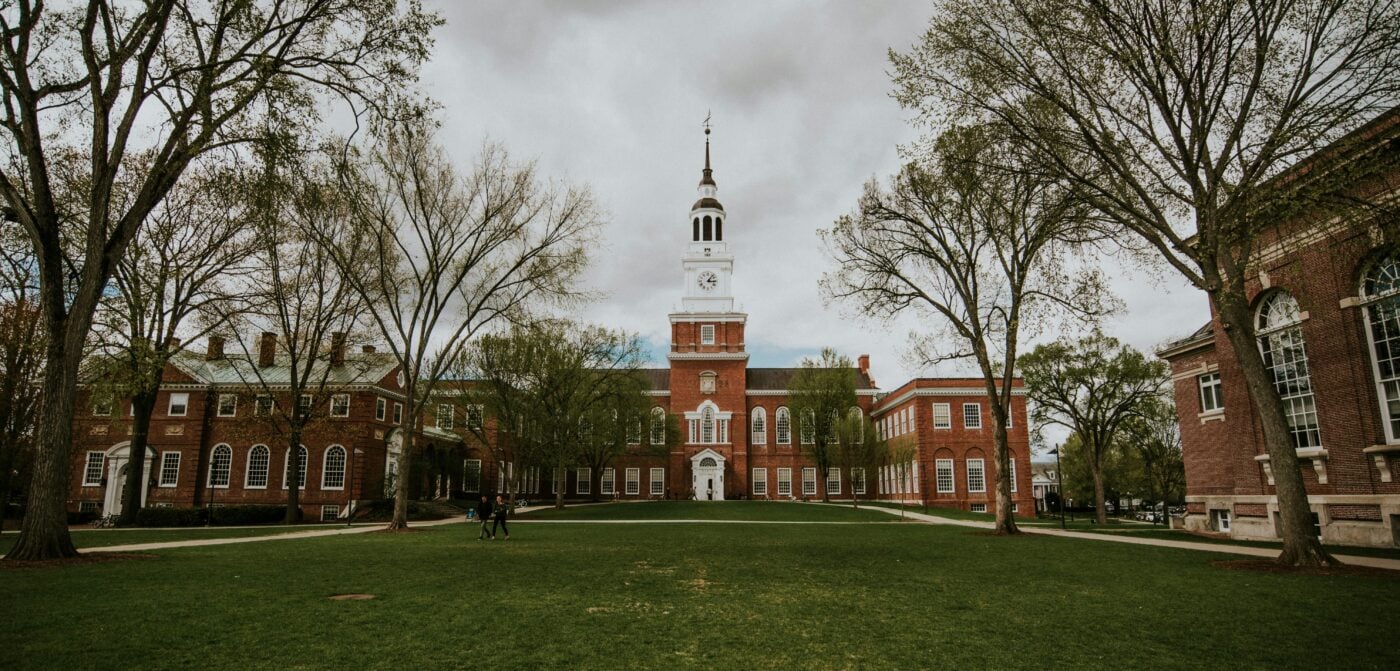
Photo by Ronni Kurtz on Unsplash