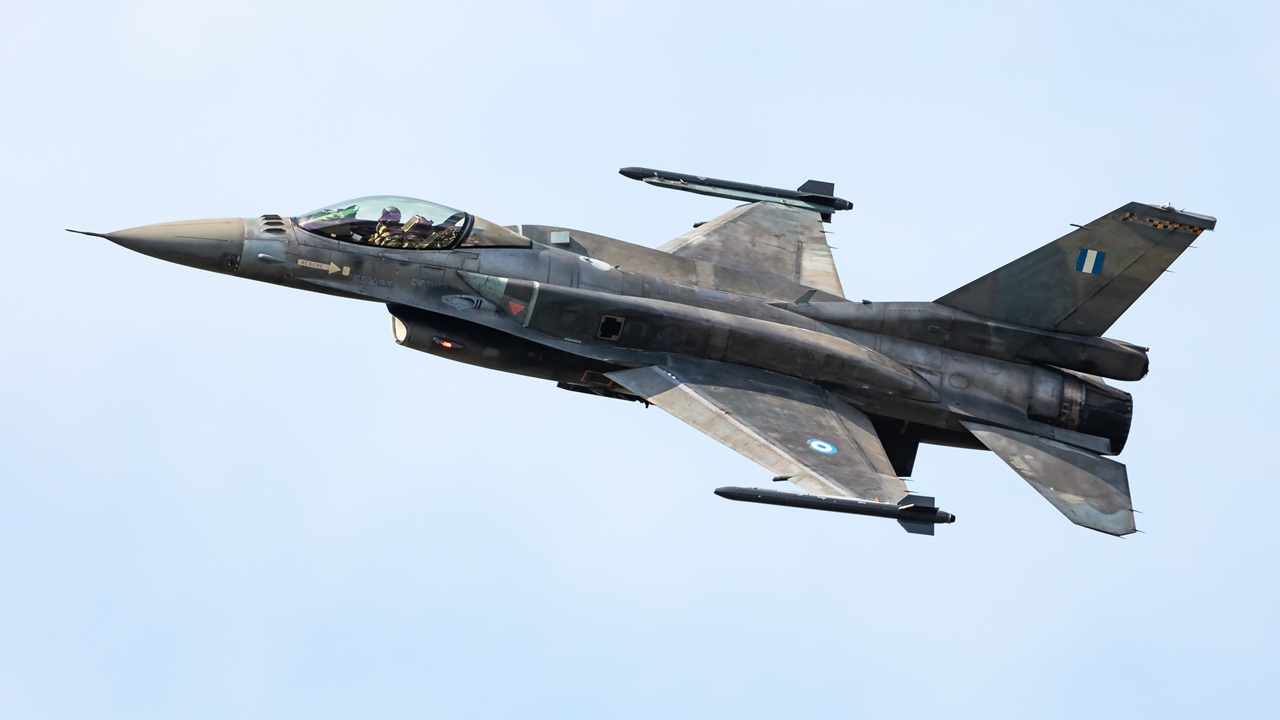
As fighter jets have grown more and more expensive, pressure has mounted on modern air forces to enable those aircraft to carry out multiple distinct missions.
The term “multirole fighter” is thrown around a lot in the modern era, one of the most common levels applied to modern combat aircraft, often without much precision. Many assume the definition applies to any fighter that can also drop bombs, giving it a semblance of ground attack capability as well as its more traditional role as a dogfighter. In fact, the true definition reflects something deeper: a multirole fighter is designed from scratch to perform multiple, distinct mission sets with equal (or near-equal) competence.
This design philosophy contrasts sharply with the Cold War tendency to design aircraft that were highly specialized, as interceptors or dogfighters or ground support aircraft. Although some platforms from that era survive, multirole aircraft are far more common today, when taxpayers want versatility from their extremely expensive fighter jets.
How the US Air Force Transitioned Away from Specialized Planes
The early jet fighters were highly specialized. Aircraft designers built interceptors that could intercept extremely well, bombers that could drop bombs with pinpoint accuracy, and fast and maneuverable dogfighters. Electronics of that era were limited, and aircraft could not carry the radars and weapon suites required for different missions at the same time—so designers had to pick a mission and outfit the jet accordingly.
Multirole platforms began to appear in the 1970s. Advances in avionics, radar, and missile tech allowed aircraft like the F-4 and the F-16 to handle an increasing number of diverse roles. By the 1990s, “multirole” had become a formal doctrinal category of aircraft. Today, nearly all non-stealth fighters are inherently multirole.
So what does a “multirole” plane actually do? As the name suggests, multirole aircraft can perform any combination of the following, depending on the platform:
- Air superiority missions, where air-to-air combat is emphasized, i.e., patrolling airspace, escorting strike aircraft, engaging enemy fighters in BVR or WVR combat.
- Ground attack and close air support (CAS), requiring precision strikes on ground-based targets, often used JDAM or laser-guided bombs or auto cannon. Ground attack is a more general term for attacking ground targets, while CAS missions directly support troops on the ground through the suppression of enemy forces and armor, which is typically in direct contact with the friendly troops on the ground.
- Suppression/Destruction of Enemy Air Defenses (SEAD/DEAD), in which aircraft deploy anti-radiation missiles, like the AGM-88 HARM, or launch electronic attack missions, to counter enemy air defenses. Historically, this task fell to specialized aircraft but has since become integrated into multirole platforms like the F-16 and F/A-18.
- Maritime strike, using anti-ship missiles, often conducted while on naval patrols. This, naturally, is an essential mission profile for nations with coastal defense needs, i.e., the United States, China, Brazil, United Kingdom.
- Reconnaissance and ISR: Multirole fighters can be outfitted with the pods necessary for mapping, infrared scanning, and battlefield monitoring. Digital sensors allow for easy swapping of mission payloads.
All the Greatest Air Force Platforms Are Still Specialized
Multirole fighters have strategic upside because of their cost efficiency, flexibility, survivability, and export appeal. The downside of course is that these aircraft are jacks of all trades, rarely the best at any one category. For example, no multirole fighter can keep pace with the F-22, which is optimized exclusively for air superiority missions, in an air-to-air engagement. Nor can any multirole fighter perform CAS as well as the A-10 Warthog, which was designed solely for CAS.
Still, the future of aircraft design will continue to rely heavily upon multirole principles. Future aircraft will be multi-domain nodes that can handle air combat, strike, EQ, command-and-control, and drone teaming with relatively equal performance between each of these roles. If anything, the roles that a single aircraft is expected to perform may only continue to expand.
About the Author: Harrison Kass
Harrison Kass is a senior defense and national security writer at The National Interest. Kass is an attorney and former political candidate who joined the US Air Force as a pilot trainee before being medically discharged. He focuses on military strategy, aerospace, and global security affairs. He holds a JD from the University of Oregon and a master’s in Global Journalism and International Relations from NYU.
Image: Shutterstock / Soos Jozsef.