The nature of Iran’s retaliation and the regional reaction to US strikes on Iran will be very different from that of June 2025.
The United States finds itself in an odd foreign policy interregnum at the moment, with the street protests against the Iranian regime and its murderous repression having ebbed for now, but with the Donald Trump administration moving military assets into place to provide the muscle for a range of military options. While the Iranian regime has held onto power by brute force for the moment, it is becoming clear to most observers that its hold on power is weakening and that some form of fundamental political change will eventually take place.
Pressure has built on the Trump administration to administer a military coup de grace to the regime, but that would be unwise given the lack of appropriate military tools to bring about a positive outcome, the likely more robust Iranian military response compared to the June 2025 Israeli-US military campaign, and the negative regional repercussions. This latter factor would be exacerbated by the rise in Arab resentment of Israeli regional primacy and the widening rift between Saudi Arabia and the United Arab Emirates (UAE). The United States also should be wary of blurring the lines between nuclear weapons and conventional missiles as a threshold for military action, as it is unlikely that any government in Iran would accept being effectively defenseless against other regional powers.
Iran will continue to pose challenges to US interests for the foreseeable future, with its nuclear ambitions, growing missile capabilities, and atrocious repression. But the United States would be better advised to recognize that the desire for change in Iran rests on the aspirations of the Iranian people, not the need for an American deus ex machina to intervene. Political change will eventually come to Iran, but it may not provide a neat resolution for all of these issues—the former Shah had nuclear ambitions well before the clerical regime came to power.
Protecting American national interests in the Middle East will continue to involve managing a complex set of power balances among competing regional powers, rather than a cathartic denouement in which a “prime mover” is finally vanquished and solutions to other regional issues fall into place. A rational and realistic approach to US policy in the region needs to acknowledge this, and thus evaluate the costs and benefits of potential near-term military action in that light.
The Iranian Interregnum and Donald Trump’s Air Strike Decision Point
Little more than a week ago, around January 12–14, many were expecting that US military action against Iran was imminent. President Trump had publicly laid down “red lines” around the mass killing of protestors by the regime, and had at one point stated to the protestors that “help is on the way.” The scale of the repression by the Iranian regime is truly staggering, with even the Iranian government admitting over 3,000 had died and some independent groups putting the death toll much higher. However, he was hearing from both American officials and Prime Minister Benjamin Netanyahu of Israel that the United States needed to wait for additional military assets to move to the region, to make the strikes more effective, to ensure better protection for US military bases in the region, and to assist Israel with missile defense against likely Iranian retaliation.
In the end, Trump decided to hold off. In part, that was due to the ebbing of the protests and communications from Iranian foreign minister Abbas Aragchi to US envoy Steve Witkoff, suggesting that Iran would “stop the killing” and hold off on executing detained protestors, alongside the practical military considerations.
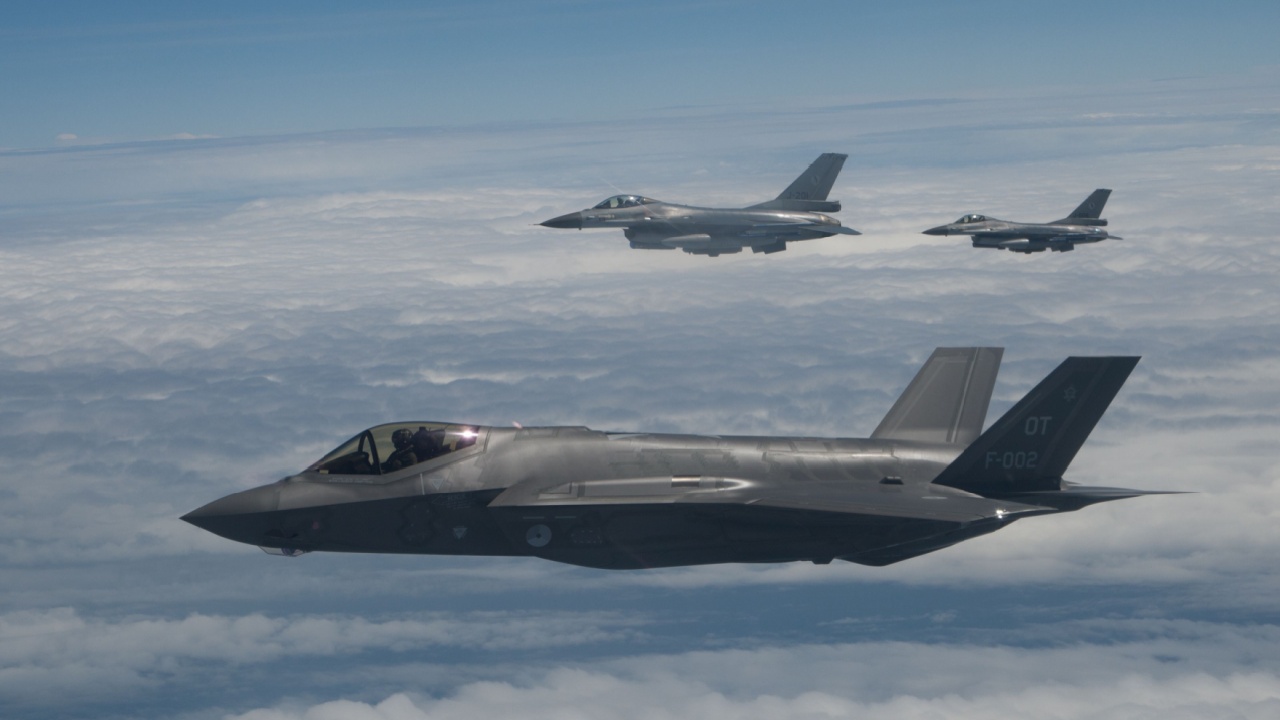
The discussion of military options within the Trump administration has not ceased; however, the US military began rapidly moving the assets required to prepare for a major strike into the region, including the aircraft carrier USS Abraham Lincoln, additional strike aircraft, and missile defense systems. The carrier will arrive in the Arabian Sea within the next few days. Trump administration officials are also reported to expect that, despite the protests having been suppressed for now, they will resume soon. Trump also has reportedly been asking staff for “decisive” military strike options that would achieve the desired results quickly.
It is probable that contacts continue between Trump administration officials and the regime in Tehran, whether through the Witkoff-Aragchi channel or Gulf Arab intermediaries. President Trump said on January 22 in Davos that “Iran does want to talk, and we’ll talk. But they have to give up their weapons, and if they don’t do that, it’s just going to be the end of them.” It is right for the Trump administration to keep these contacts going despite the obvious distaste for a regime that has killed thousands of its own people. But there is no indication that either the Trump administration or Iran has modified its bottom-line positions sufficiently to provide a basis for success.
Under the current strain, the regime might be willing to make further concessions than it would have after the June 2025 strikes ended. Still, there is no indication that the Trump administration would accept anything short of complete capitulation. That probably extends to Iran’s missile forces, not just uranium enrichment, based on the outcome of Trump’s meeting with Prime Minister Netanyahu in late December. In this context, it seems likely that President Trump will decide on new strikes against Iran within the next couple of weeks.
The Iranian Regime Held Through the Protests; Air Strikes Won’t Change That
While the wave of protests that began in December appears to have been the most significant unrest since the Iranian Revolution, it failed to generate the sort of “elite fracture” typically seen in successful revolutions. There were no signs of significant splits with the security forces or of large-scale refusal of orders to fire on demonstrators. The methods used by the regime to end the protests were abhorrent, but, in the short term, they worked.
On a longer time horizon, it is clear that the clerical regime brought to power by the Iranian Revolution is on a declining trajectory. It does not have the means to solve the country’s economic problems, and making any headway on that front would require some form of sanctions relief. The regime also clearly does not have the support of a majority of the population, and a cycle of large-scale protests countered by brutal repression will likely continue. Something eventually has to give way, but it is extremely difficult to forecast when such a tipping point will be reached, where the regime is no longer able to suppress the will of the majority through violence.
In the meantime, though, US policy confronts the choice between continuing to pursue negotiated limits on Iran’s nuclear program and potentially other activities or intervening in the hope that we can accelerate the downward trajectory of the regime and cause its collapse. It seems the Trump administration will lean toward the latter, but there is little reason to expect much success. Initiating a US military strike will likely be counterproductive for US interests, for many reasons.
The military tools most easily available to the United States—air and missile strikes, along with cyberattacks—are not suited to degrading the main pillar of regime cohesion, which is the rank and file units of the IslamicRevolutionary Guard Corps (IRGC) and Basij, which have carried out their orders and been willing to kill to suppress dissent. Given these limitations, the United States would likely aim to target both command-and-control infrastructure and senior leadership. That might include a decapitation strike against Supreme Leader Ali Khamenei himself. Trump clearly would prefer not to see this become an extended campaign.
Still, there will be pressures to go back and hit additional elements of the nuclear program and also Iran’s ballistic missiles, both manufacturing sites and storage and launcher sites, to interdict Iran’s ability to retaliate. Conflict termination could become difficult if Iran absorbs the strikes, retaliates, and remains militarily cohesive. Would Trump be able to walk away without any tangible signs that the Iranian regime was on the way out, or would he feel compelled to keep up the pressure?
In the event of Khamenei’s death, several Iranian officials, including President Mahmoud Pezeshkian, have warned that the result would be all-out war. Many observers have pointed out that the result of such a decapitation strike in the short term would be to empower the IRGC further, with either a de facto junta being set up or the IRGC steering the Assembly of Experts, which is responsible for choosing a new Supreme Leader, toward a hardline candidate. Others have argued that this would lead to a mass uprising which would topple the regime, perhaps rallying around the former Shah’s son Reza Pahlavi, but that seems quite a stretch. Prime Minister Netanyahu seemed to be aiming for that last June, per his public remarks.
In the likely event that US strikes do not quickly undermine the regime, the Trump administration will find itself in an awkward place. Does it continue strikes or escalate in the hopes of being able to show some sort of success, or does it say that Iran has been punished for its atrocities against the protestors and eventually stand down? Trump would be well advised to consider the Powell Doctrine here.
Iran’s Retaliation to US Strikes Will Be Very Different from What It Was in June 2025
Iran’s retaliation is likely to be very different from what it was during the June 2025 conflict, because the circumstances would be very different. In that instance, the Operation Midnight Hammer against Iran’s nuclear sites only lasted one night. The stated objective of the campaign, particularly by the United States, was to address Iran’s nuclear program, not regime change. President Trump also leaned on Netanyahu to end Israel’s campaign directly after the limited US strikes, while he would have preferred to continue. Thus, most of the Iranian retaliation was aimed at Israel, and the one missile strike against the US base at Al Udeid in Qatar was a token, choreographed affair. A new round of strikes would have the United States in from the start with the explicit intention of undermining the clerical regime.
If the initial strikes do not aim for the supreme leader, Iran would likely be somewhat cautious and limit its retaliation to US bases in the region and other military assets. Iran values the improved relations it has cultivated in recent years with its Arab neighbors and would likely avoid hitting Saudi oil assets or other civilian infrastructure in the Gulf Arab states. However, if Khamenei is targeted, or if the strikes continue and the regime thinks its back is truly to the wall, many of these incentives for restraint could give way.
Iran does have plenty of reasonably accurate and road-mobile short-range ballistic missiles as well as cruise missiles and drones, which could pose a threat to Gulf Arab oil and LNG export infrastructure, as the Iranian attack on Abqaiq in 2019 demonstrated. These sites are, in many cases, better defended now, but those defenses are far from airtight. The key question is whether Iranian decision-makers reach the tipping point at which they no longer see a cautious approach as serving their interests.
The US Is Running Out of Interceptor Missiles
While the exact number of US THAAD interceptor missiles fired in the June 2025 conflict has not been made public, press reports put it at about 100–150 expended, as much as 25 percent of the entire US stockpile in 12 days. The SM-3 version of the Standard missile, on which the Aegis naval defensive system relies, also seen about 80 expended.
The Israel Defense Forces (IDF), according to press reports, said that over 500 Iranian missiles were launched at Israel, of which 86 percent were intercepted, with 36 striking built-up areas. Israel’s missile defenses are strongest in relation to short-range threats, but it is heavily dependent on US back-up to deal with the longer-range missiles from Iran. While the United States aims to increase production rates, it delivered only 12 THAAD missiles last year.
The necessity of American help to back up Israel’s Arrow 2 and Arrow 3 systems, which were heavily depleted as well, was part of the reason Netanyahu asked Trump to delay striking Iran last week. But another clash of the same magnitude as the last would push the US stockpile to levels that would necessitate painful sacrifices of capabilities we could need in other theaters, particularly to defend bases in the Asia-Pacific region.
In short, while we held the line in June 2025, Iran’s “mass” is overwhelming US and Israeli technical sophistication in this case—cheap missiles versus expensive missiles. Some of Iran’s systems are also beginning to feature multiple conventional warheads and decoys, making interception more difficult. This is an absolutely critical issue, and American decision-makers should not avoid considering it.
Benjamin Netanyahu Convinced Donald Trump to Lower Threshold for Strikes
In a very closely related issue, when Trump and Netanyahu met in late December in Washington, Trump agreed in principle to greenlight another round of Israeli strikes at some point to deal with Iran’s growing missile production, which has bounced back quickly after the damage done last June. Netanyahu’s argument was that Iran’s missiles, even with conventional warheads, were becoming so numerous as to pose a major threat to Israel. That came as Iran has seemingly been cautious about restarting its nuclear enrichment program after the June strikes. No “smoking guns” have emerged since June, which would potentially underpin an argument for another round of strikes.
The outcome of the meeting effectively moved the goalposts for what Iranian conduct the United States will be willing to intervene over, given Israel’s need for US backup on missile defense. It also effectively requires Iran to remain without any deterrent options against Israel, which certainly does not seem like something Iran would be willing to do under a deal. Of course, a world in which Israel’s foes were disarmed and it had complete freedom of action in the region would be good for them.
Still, this moving of the goal posts is inevitably raising the question of whether it will be realistic to ask for or provide American backup for what would probably be a futile Israeli campaign to prevent Iran from building systems in a technological realm it has already mastered. The hope for a regime change that brings in an Israel-friendly Iranian government would seem to be the only way out of this dilemma, leaving aside, for a moment, the question of whether it is realistic.
There needs to be a greater debate in the United States about how much of a commitment we are willing to take on in the region beyond the narrower issue of nuclear proliferation. Given resource constraints, it inevitably involves trade-offs with other geographic theaters, which the Trump administration has said are higher priorities.
The New Middle East Regional Alignments Are Not Driven by the US
Another complicating factor in the background is how renewed conflict with Iran would affect crucial US partnerships with the Gulf Arab states. Complicating this is the acute but seemingly durable rift between Saudi Arabia and the United Arab Emirates (UAE), which began over Emirati ambitions to promote the secession of South Arabia (South Yemen) but has since encompassed differences over several other issues in the Gulf and Northeast Africa.
The sharp change in the perceived regional distribution of power, with Israel ascendant and Iran diminished, is also contributing to shifts in regional geopolitical alignments that cut across American partnerships. In this context, Israel’s strike against Hamas leader on Qatari soil on September 9, 2025, also has reverberated, causing several Gulf Arab states friendly to the United States to say they perceived Israel now as a security threat.
Israel’s recent diplomatic recognition of Somaliland, a breakaway region of Somalia with close ties to the UAE, has been seen as a play for strategic access to the Bab al-Mandeb Strait to counter the Houthis, leading to perceptions of a nascent Israel-UAE-Somaliland alignment. Opposed to that is the fact that the existing close partnership between NATO ally Turkey and Qatar is now appearing to align more closely with both Saudi Arabia and Egypt in their opposition to recent Emirati and Israeli moves. Saudi Arabia signed a defense treaty with Pakistan only eight days after the Doha strike, anchoring an existing Saudi relationship with the nuclear power, and now Turkey has reportedly begun discussions about joining in a trilateral pact.
Much of this is the sort of classic balancing behavior that one would expect given the rise in Israeli power and the decline in Iranian power. Gulf Arab states all accept Israel’s existence, but an empowered Israel with complete freedom of action in the region—even in seemingly peaceful places like Doha—clearly does not sit well with them. None of this would be likely to impact the American ability to use bases in the region in an attack on Iran. Still, Saudi Arabia has said it would not allow its airspace to be used, which could be a moot point with no US intention to use Saudi bases to launch strikes, just to help the Saudis defend themselves against potential missile threats. But it would be immensely foolish for the United States to fail to take into account these nascent alignments and Gulf Arab security concerns in our dealings with both Iran and Israel.
US Strikes on Iran: A Known Unknown
Whenever we embark on any military action, there are always unknowns. But in this case, taking all of these factors into consideration, the probability of quickly and cleanly achieving our objective—bringing down the clerical regime in Iran—seems remote, while the prospect of getting drawn into an extended campaign which becomes a wider regional conflict seems quite possible.
The notion of a regional conflagration with Iran has always been the dog that did not bark. Still, the United States has never attacked Iran before with the stated objective of breaking the clerical regime’s hold on power. Balanced against the likelihood that the regime will weaken and eventually be replaced or fundamentally change, trying for a very risky Hail Mary play to speed that up seems like a bad tradeoff.
About the Author: Greg Priddy
Greg Priddy is a senior fellow for the Middle East at the Center for the National Interest. He also consults for corporate and financial clients on political risk in the region and global energy markets. From 2006 to 2018, Mr. Priddy was director, Global Oil, at Eurasia Group. His work there focused on forward-looking analysis of how political risk, sanctions, and public policy variables impact energy markets and the global industry, with a heavy emphasis on the Persian Gulf region. Prior to that, from 1999 to 2006, Mr. Priddy worked as a contractor for the US Energy Information Administration (EIA) at the US Department of Energy. Mr. Priddy’s writing has been published in The New York Times, The National Interest, Barron’s, and the Nikkei Asian Review, among others.
Image: Joris Van Boven / Shutterstock.com.