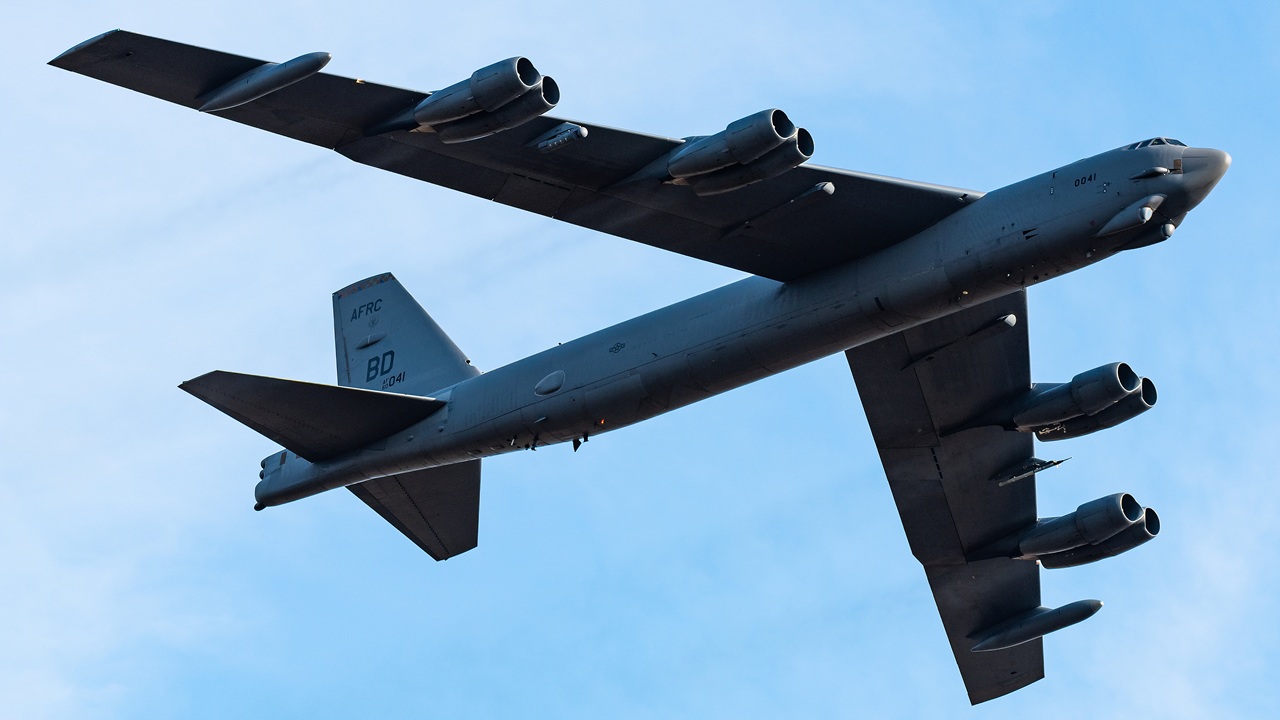
In the near future, the US Air Force’s B-52 bombers will be equipped with Rolls-Royce F130 turbofan engines, dramatically expanding their range.
The B-52 Stratofortress first flew in the 1950s, yet it remains a cornerstone of US long-range strike capability. Despite its advanced age, the B-52’s payload, range, durability, and relatively low operating costs compared to other bomber aircraft make the platform enduringly relevant—and still valuable for modern war fighting. Indeed, the US Air Force plans to fly the B-52 into the 2050s or 2060s.
To facilitate such longevity, however, the new B-52J variant will require an upgraded engine—arguably the most significant upgrade in the bomber’s history.
The B-52J’s Specifications
- Year Introduced: Early 2030s (B-52J conversion)
- Number Built: 76 airframes (all B-52s remaining in service) planned for conversion
- Length: 159 ft (48.5 m)
- Wingspan: 185 ft (56.4 m)
- Weight (MTOW): ≈488,000 lb (221,353 kg)
- Engines: Eight Rolls-Royce F130 turbofans (replacing existing TF33s); ~17,000 lbf thrust each
- Top Speed: ≈650 mph (≈Mach 0.86)
- Range: ≈9,000+ miles (significantly increased with F130 efficiency)
- Service Ceiling: ≈50,000 ft
- Loadout: Up to 70,000 lb of weapons; optimized for JASSM-ER, LRASM, nuclear ALCM replacement (LRSO), hypersonic weapons, maritime strike systems
- Aircrew: 5 (pilot, copilot, EW officer, weapons officer, navigator)
What’s So Great About the B-52J’s New Engines?
The B-52’s existing TF33-PW-103 engines—of which the enormous bomber features eight—date back to the 1960s and are no longer in commercial production. The aging engines therefore cannot be replaced, and require extensive maintenance hours, increasing platform downtime and cost. The engines impact performance, too—impacting fuel efficiency, mission radius, reliability, and takeoff/climb performance. Spare parts are scarce, and sustainment often relies on cannibalizing engines from older B-52s no longer in service.
For these reasons, an upgraded B-52 engine is not a matter of if, but when. The upgraded engines will lower life-cycle costs, reduce logistics burdens, and offer performance more appropriate for 21st-century war fighting.
The new engine is slated to be the Rolls-Royce F130, which is based on the proven BR700 family used in Gulfstream and regional jets. Selected in 2021 after a competitive evaluation, the F130 boasts high reliability, long time-on-wing, strong commercial sustainment base, lower fuel burn, and a mature, low-risk design. Each B-52J will receive eight of the F130s, replacing the TF33s.
The results should be profound. It is projected that the B-52Js will have a gain of 25-30 percent fuel efficiency, leading to increased unrefueled range and loiter time. The new engines should likewise have lower maintenance requirements, a longer engine lifespan, and fewer overhauls needed. They will also feature digital engine controls, which the current TF33-PW-103s do not have. Although the upgraded B-52s’ exteriors will remain mostly the same, within, they will be like new aircraft—especially when factoring in other overhauls, including a radar replacement (APG-79 AESA), internal weapons bay, and new communications/networking suite.
The Operational Implications of Better B-52s Could Be Profound
The longer range accompanying the new engines will reduce tanker demand, which could be critical in Indo-Pacific operations—where China’s A2/AD network specifically targets vulnerable tanker aircraft. The B-52J’s greater fuel efficiency improves persistence for standoff missile patrols, maritime strike, and nuclear deterrence sorties. The engine’s improved reliability should increase sortie rate and mission availability. And better high-altitude performance should enhance standoff weapons delivery.
Strategically, the engines will extend the B-52’s life by at least 30 years, ensuring a continuous heavy bomber presence while the US Air Force procures B-21 Raiders. The persistence of the B-52 also ensures a diversified bomber force structure, within which the B-2 and B-21 can provide stealth penetration, while the B-52 can provide standoff mass strike. The B-52 also hardens the US’s nuclear triad, offering a variety of air-based options. And of course, there is a cost advantage to updating a legacy system, rather than starting from scratch to create a replacement.
Full fleet conversion to the new engines is expected by the early 2030s. Once completed, the B-52Js are expected to serve in their current configuration through the 2050s—during which the venerable bomber will hit its 100th birthday in active service, a remarkable achievement.
About the Author: Harrison Kass
Harrison Kass is a senior defense and national security writer at The National Interest. Kass is an attorney and former political candidate who joined the US Air Force as a pilot trainee before being medically discharged. He focuses on military strategy, aerospace, and global security affairs. He holds a JD from the University of Oregon and a master’s in Global Journalism and International Relations from NYU.
Image: Shutterstock / BeAvPhoto.