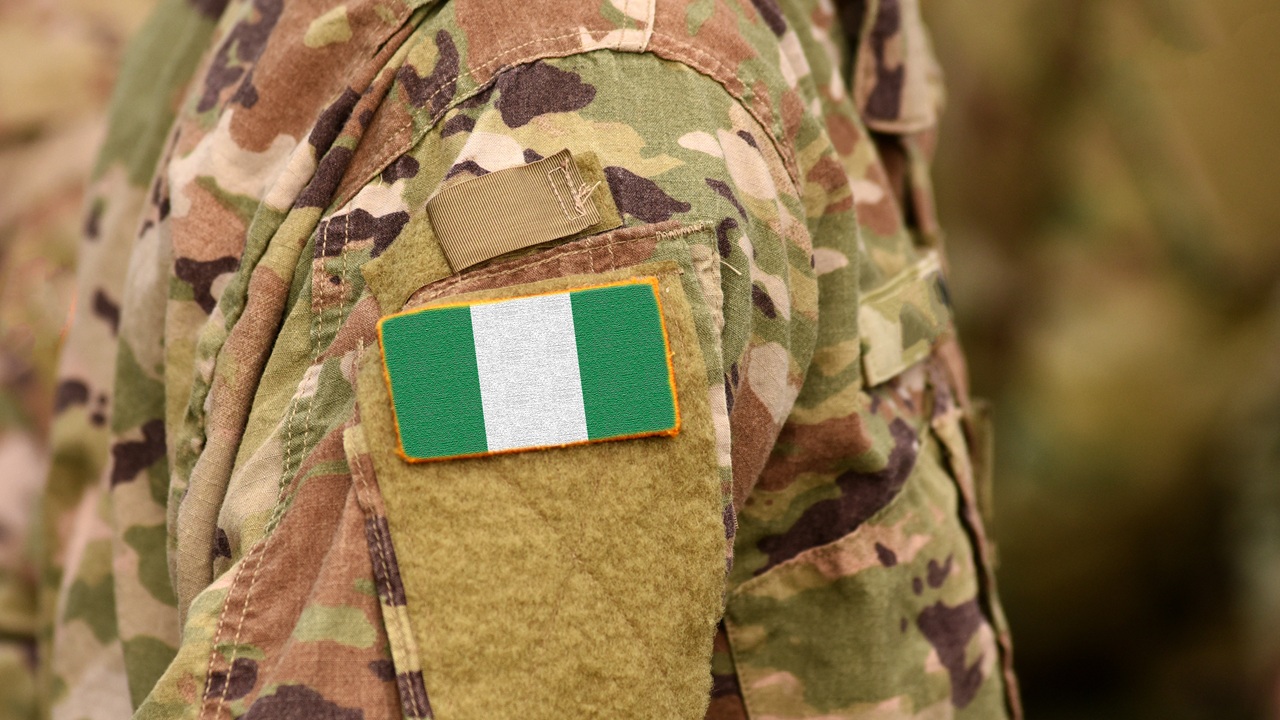
The Trump administration has a range of options to confront terrorist groups in northern Nigeria, although the wisdom of such operations is far from clear.
Even though the Trump administration has been banging the war drums off the coast of Venezuela, in recent days, it has also issued threats directed toward Nigeria, Africa’s most populous nation.
While Trump and his advisers insist they are merely concerned about the plight of Nigeria’s besieged Christian community, the cynic cannot help but to see that Trump is only interested in attacking Nigeria after the Russians and Chinese have both plied Venezuela with enough advanced air defenses that the cost of US military action becomes too high for an American president who is inherently squeamish about combat losses of any kind. Nigeria, unlike Venezuela, does not have advanced Russian air defense systems or other aid from places, like China, that Venezuela currently enjoys. So it is low-hanging fruit, as far as military interventions go.
Plus, Nigeria has natural gas, oil, and rare earth minerals—just like Venezuela—that make it attractive to an American government that seems intent on dominating those commodity flows. And moving the US Navy flotilla away from Venezuela and over to Nigeria would not be difficult.
Of course, all this talk about hostile action in Nigeria could be a feint by President Trump, who might just be planning to pull the trigger on attacking Venezuela and wants people to think otherwise. Nigeria becomes a bit of a red herring.
It is crucial to note that the chances of the United States staging an outright invasion of Nigeria are virtually zero. Nigeria is a (mostly) stable country with a population of 230 million, and is a victim of terrorism and instability rather than an exporter of it. Launching an unprovoked attack on Nigeria would embroil the United States in a far larger calamity than either of its misadventures in Afghanistan or Iraq. A far more likely outcome is a low-level counterinsurgency campaign in the north with the tacit permission of Nigeria’s political leaders (even if they find it a useful foil in public). This would not be unlike the United States’ military involvement in Pakistan during the War on Terror, where Islamabad publicly railed against US drone strikes in its territory while privately cooperating.
There are many different forms that hostile action could take, from relatively small-scale assistance mission to large escalation levels:
A “Light” Military Option: Drones and Special Forces
The US military’s Africa Command (AFRICOM) would oversee any operation against Nigeria. Thus, the AFRICOM task cell would be elevated to a Joint Task Force (JTF) headquarters to coordinate air, Special Operations Forces (SOF), and partner activities. They’d coordinate what’s known as a “surgical/enabling” package, which might involve intelligence, surveillance, reconnaissance (ISR) and electronic warfare (EW) mission sets, utilizing MQ-9 Reaper or MQ-9B and ISR drones, wide-area satellite ISR, along with airborne command-and-control (C2) surveillance to locate key targets.
On top of drone activity, small JSOC/US Army Special Forces teams, Navy SEAL platoons, and US Air Force Combat Controllers would be deployed to conduct direct action, capture/kill raids, target-acquisition, and partner training and advising missions.
Armed drones and/or cruise missiles (launched from ships or long-range aircraft) for limited strikes would be used for small strike packages (these would be shaping operations).
C-17 and/or C-130s would be used for airlift of those small SOF units.
A “Medium” Option: Light Ground Forces
In this instance, the US military might seek to degrade insurgent operational capability across a region, like northern Nigeria, and to sustain an operational tempo for weeks. Multiple SOF companies would be working together for hunter-killer missions. There’d be conventional airstrikes along with strikes from the sea against known insurgent groups, and even the infrastructure they are using to engage in mass violence against their Christian neighbors.
An amphibious Marine Corps element, much like the one off the coast of Venezuela right now, would be used to insert a light ground force that would, in turn, conduct raids, hold small territory, and enable partner operations. Tankers and land-based fighters would be part of deep precision strikes.
This would be a weekslong campaign of strikes and partnered raids to blunt an insurgent campaign.
A “Heavy” Option: Sending in the Aircraft Carriers
As the name suggests, this would be the highest-intensity option (short of full invasion) for handling Nigeria. It would employ wide-area bombing, persistent airpower, and potentially deployment of large numbers of ground forces. Therefore, a carrier strike group would be sent. Already, the USS Gerald R. Ford is underway and is believed to be moving toward Venezuela.
But it wouldn’t take much to redeploy it over to Nigeria’s coastline.
Just as we’re seeing with Venezuela, there would be significant bomber tasking, likely involving B-52 Stratofortress, B-1 Lancer, and B-2 Spirit bombers. Cruise missiles would be launched from submarines, too.
Meanwhile, Army brigade combat teams (BCTs) or an airborne brigade would be staged to seize and hold key terrain or to conduct larger clearing operations; this would be a major escalation in the region.
Bottom Line: Invading Nigeria Is a Terrible Idea
There are numerous problems with any US military action in Nigeria. First, what would the US military be attempting to accomplish? Going into a war on the basis of humanitarian rights sounds like the least Trump thing to be doing. Sending US forces to wage war in the name of the responsibility to protect the benighted Christian community of Nigeria seems excessive.
If the US did, in fact, move beyond planning in action, a limited intervention would most likely start with SOF + ISR, as well as standoff strikes, backed by sea-based airpower (and airlift/tanker support). Escalation would add landed conventional forces and bomber taskings—but those carry big logistics and political costs and would require access to basing or a long sea-based sustainment line.
About the Author: Brandon J. Weichert
Brandon J. Weichert is a senior national security editor at The National Interest. Recently, Weichert became the host of The National Security Hour on America Outloud News and iHeartRadio, where he discusses national security policy every Wednesday at 8pm Eastern. He is also a contributor at Popular Mechanics and has consulted regularly with various government institutions and private organizations on geopolitical issues. Weichert’s writings have appeared in multiple publications, including The Washington Times, National Review, The American Spectator, MSN, and the Asia Times. His books include Winning Space: How America Remains a Superpower, Biohacked: China’s Race to Control Life, and The Shadow War: Iran’s Quest for Supremacy. His newest book, A Disaster of Our Own Making: How the West Lost Ukraine is available for purchase wherever books are sold. He can be followed via Twitter @WeTheBrandon.
Image: Shutterstock / Bumble Dee.