The Taliban’s refusal or inability to control terrorism within its borders is exposing the region to instability.
Over the past several months, relations between Afghanistan and Pakistan have deteriorated to one of their lowest points in years. Escalating border tensions, a surge of militant attacks inside Pakistan, and Islamabad’s ongoing statement that the Afghan Taliban are providing sanctuary and support to the Tehreek-e-Taliban Pakistan (TTP), also known as the Pakistani Taliban, have brought the two neighbors into direct confrontation.
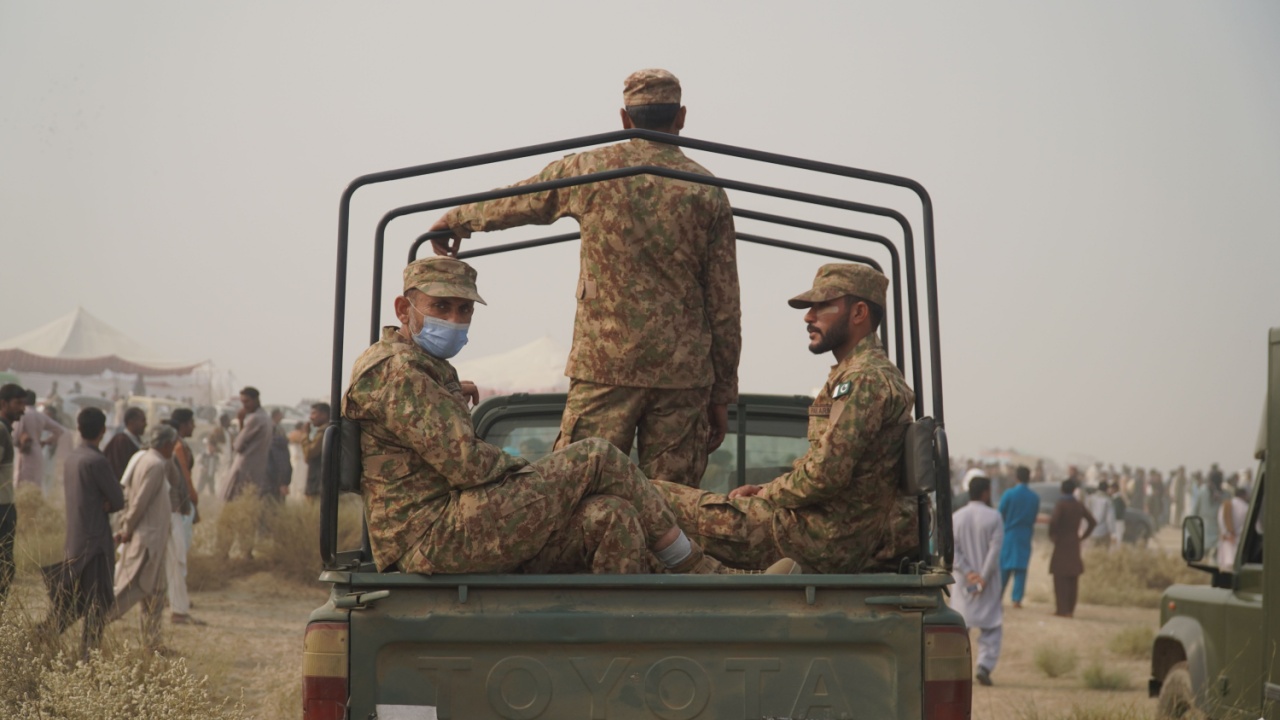
On February 27, Pakistan launched airstrikes targeting Kabul, Kandahar, and Paktia of Afghanistan, the action as a response to a surge in deadly attacks carried out by the TTP inside Pakistan. Pakistan alleges that these attacks, including an attack on a Shia mosque in Islamabad earlier in February, were supported by the Afghan Taliban in Afghanistan.
This latest escalation did not emerge suddenly. Rather, it is the culmination of tensions that have been building for several years, particularly since the return of the Taliban to power in Kabul in August 2021.
The relationship between the Afghan Taliban and the TTP is rooted in shared ideology, historical cooperation, similar organizational structure, and personal networks forged during decades of conflict. The TTP has often been described as the “Pakistan wing” of the broader Taliban movement.
Over the past few years, TTP attacks inside Pakistan have increased significantly. Islamabad continuously stresses that these attacks are being planned and facilitated from Afghan territory, alleging that the Afghan Taliban provide safe havens, logistical support, and ideological backing to the TTP.
The Afghan Taliban, however, reject Pakistan’s accusations. The Taliban authorities insist they do not allow Afghan soil to be used to threaten other countries and argue that Pakistan’s internal conflict is a domestic issue. From their perspective, rising militancy in Pakistan is the result of domestic policy failures rather than cross-border sponsorship.
Pakistan’s Strategic Miscalculation in Afghanistan
The crisis cannot be understood without examining Pakistan’s long and complex relationship with the Taliban movement. During the 1990s, Pakistan was one of the principal backers of the Afghan Taliban, supporting their rise to power in 1996. After the US-led intervention in 2001, the Pakistani establishment continued to provide support to Taliban factions as part of a broader strategy aimed at securing strategic depth in Afghanistan.
When the Afghan Taliban retook Kabul in 2021, Pakistan was among the countries that publicly welcomed the Taliban, seeing it as the emergence of a friendly government on its Northwestern border. However, this strategic calculation has backfired. The Taliban’s ideological and operational links to other militant organizations, including the TTP, have created a security dilemma for Pakistan.
Moreover, the Taliban, widely recognized as a militant and terrorist group, continues to maintain close ties with transnational terrorist organizations such as Al Qaeda. According to reports, terrorist groups, including TTP, Jamaat Ansarullah, and the East Turkestan Islamic Movement (ETIM), are also present in Afghanistan, where they are reorganizing and strengthening their operations. Thus, while Islamabad’s accusations against the Afghan Taliban are not entirely baseless, given the historical connections among these groups, they also reflect the unintended consequences of decades of regional proxy politics.
Another cause of tension stems from Afghanistan’s evolving regional relationships. Pakistan has expressed concern over the Afghan Taliban’s upgraded relationship with India. The relationship has evolved from minimal or no engagement to formal diplomatic ties. Islamabad fears that New Delhi could leverage its engagement with Taliban authorities to undermine Pakistan’s security interests. According to this narrative, rising militant attacks inside Pakistan are part of a broader regional power contest.
Whether or not this perception of threats accurately reflects reality, it significantly shapes Pakistan’s strategic calculations and contributes to its increasingly confrontational posture toward the Afghan Taliban.
Recent statements by senior Pakistani officials suggesting that Pakistan has declared an “open war” with Afghanistan indicate a willingness to escalate. From available evidence, Pakistan appears intent on pressuring or weakening the Afghan Taliban to compel action against the TTP.
On the other hand, the Afghan Taliban have framed their cross-border responses as retaliatory. Taliban authorities have emphasized that their actions are in retaliation for deadly Pakistani airstrikes on Afghan border areas. Nevertheless, cycles of retaliation risk spiraling into broader conflict.
Central Asia Could See a New Wave of Terrorism
If tensions continue to escalate, the consequences could extend far beyond the Afghanistan–Pakistan border, especially amid the ongoing US-Iran war. Prolonged instability would create opportunities for militant groups across South and Central Asia to regroup, reorganize, and expand, particularly in areas where state authority is weak.
It would also embolden terrorist groups such as the Islamic State Khorasan Province (ISIS-K) to intensify recruitment efforts and facilitate cross-border weapons movements. Furthermore, it would create ungoverned spaces that terrorist networks could easily exploit. A breakdown in border security could enable the movement of fighters, weapons, and illicit financing across the region, increasing the risk of coordinated attacks.
Additionally, the Taliban could use this war to generate nationalist sentiment within Afghanistan, allowing them to consolidate internal support by framing Pakistan as an external aggressor, beginning another prolonged insurgency. Historically, external conflict has often strengthened hardline factions within insurgent movements. Moreover, as a New York Times report put it, “militant groups supporting the Taliban may launch more attacks on security forces inside Pakistan.”
Ultimately, the current crisis reflects deeper structural issues: unresolved border disputes, militant sanctuaries, regional rivalries, and the long shadow of proxy warfare. Without sustained diplomatic engagement and credible counterterrorism cooperation, the risk is not only bilateral confrontation but also broader regional destabilization.
The strategic question now is how to deal with the Afghan Taliban, whose role as rulers in Afghanistan poses an existential threat to both the country and regional stability. They have failed to bring security or governance to Afghanistan, and continue to maintain ties with transnational terrorist networks. Addressing this challenge is critical, as allowing the Taliban’s unchecked influence could further destabilize the region, embolden extremist groups, and threaten regional security.
About the Author: Nilofar Sakhi
Dr. Nilofar Sakhi is an associate research professor of International Affairs at the Elliott School of International Affairs at George Washington University. She also directs the Andiana Foundation, a public policy and research organization focused on peace and security. Additionally, she is a nonresident senior fellow at the Atlantic Council. Dr. Sakhi’s work has appeared in Foreign Policy, The Hill, and The National Interest. She is also a frequent media commentator, with appearances on CNN, BBC, and NPR.