There are a number of potential explanations for the Trump administration’s recent activities in the Caribbean. None of them are strategically compelling.
There is no popular support among the American people for attacking Venezuela. Yet the Trump administration—though it campaigned explicitly against regime-change wars—appears poised to undertake the largest such operation since Iraq in 2003.
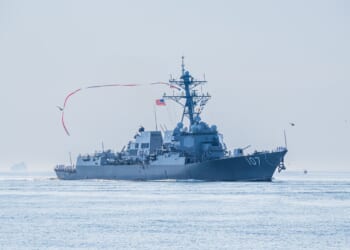
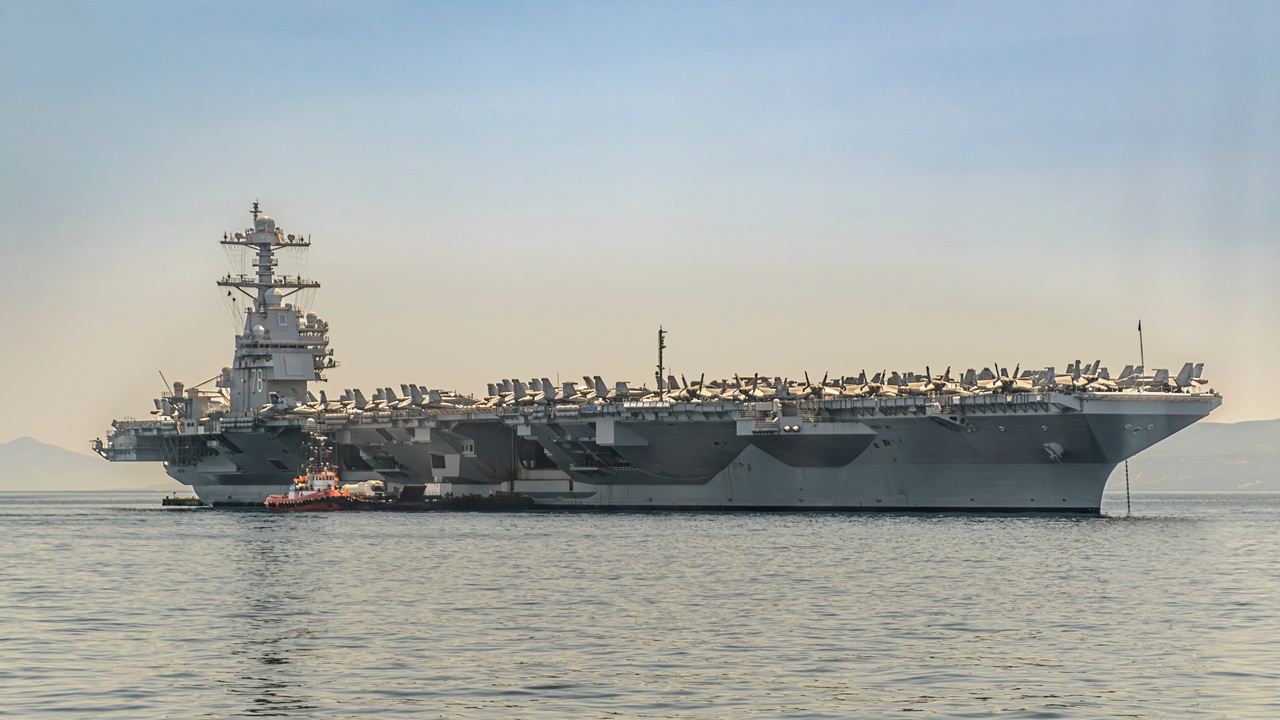
Roughly 16,000 Marines and an estimated 25 percent of America’s naval power have been assembled off Venezuela’s coast. At the same time, Washington is engaging in actions that some observers have characterized as war crimes, targeting suspected drug-running speedboats and Iranian oil tankers linked to the shadow fleet sustaining the global black market.
Adding to the confusion, Maria Machado—widely regarded by her supporters as Venezuela’s legitimate, democratically elected leader—quietly left Venezuela last week and traveled to Europe. The purpose of her visit was to receive the Nobel Peace Prize, an award made somewhat ironic by her calls for foreign military intervention in her own country.
Although betting markets place only a 22 percent chance on a US invasion before year’s end, all of this activity strongly suggests a coordinated regime-change strategy. As the world struggles to understand why Washington is so fixated on Venezuela, several alternative explanations are being offered—none entirely convincing.
Reason #1: Stop Drugs from Reaching America
This is the most cited justification for the Trump administration’s regional activities. Venezuela is portrayed as the hub of international drug trafficking that threatens American lives. With roughly 110,000 US overdose deaths annually in the United States, the argument is that Caracas bears, at least, indirect responsibility.
But this claim is shaky. Reporting—including from the New York Times—suggests that perhaps only 10 percent of fentanyl entering the United States originates from Venezuela, with most of the country’s drug production headed for Europe by way of Africa. Mexico and Colombia remain far greater threats to US drug security.
That said, Venezuela does host one of the world’s most notorious state-linked drug networks, the Cartel of the Suns, which functions as a coordinating body for regional cartels such as Mexico’s Sinaloa Cartel and Colombia-based groups, including remnants of the notorious Marxist insurgent group FARC.
There is also Tren de Aragua (TdA), a brutal prison gang that Venezuelan expatriates and multiple whistleblowers allege was created under Nicolás Maduro to serve as a transnational paramilitary force. Several hundred members of TdA are known to have crossed into the United States under the Biden administration, and have since been targeted for arrest and deportation under Trump.
Still, even acknowledging these realities, Venezuela is not the primary narcotics threat to the United States today. Yet drugs remain the administration’s main public justification for hostilities with Venezuela—particularly its military strikes on Venezuelan boats in the Caribbean.
Reason #2: Gain Control of Venezuela’s Natural Resources
Others argue Trump is motivated by Venezuela’s oil, natural gas, and rare earth mineral reserves. This story collapses under scrutiny, though. Earlier this year, Maduro reportedly offered Trump a deal: safe passage to a country of his choice and payment—as well as blanket immunity for any past crimes—in exchange for exclusive US access to Venezuela’s resources. But Trump declined that offer.
To understand why, it is vital to understand the deeply risk-averse nature of the energy business. A retired Chevron engineer told me his opinion that there is “no way” American companies, like Chevron, would reliably develop Venezuelan energy fields after a US invasion. Maduro may be brutal, but he is stable and predictable. A post-Maduro Venezuela would be chaotic, making investment far riskier—just as Iraq proved after Saddam’s fall.
As in Iraq and Afghanistan—which has an abundance of rare earth minerals, but struggled to gain international investors throughout America’s 20-year war—American firms would likely stay away out of fear of risk, giving Chinese, Russian, Brazilian, or other European companies an opportunity to exploit the resources instead.
A wilder theory speculates that, if Venezuela could be secured, its resources could be used to help improve the financial position of the United States. With US national debt exceeding $38 trillion, some speculate that seizing Venezuela’s resources could help pay it down. Even in the best-case fantasy, however, this would require direct control over resource extraction in a violently unstable country—an idea that borders on delusion. Moreover, such an action would amount to a policy of naked imperialism—in which America conquered another country and stole its resources simply because it had the military might to do so.
And even in the best-case scenario, the US national debt would not be erased. It would simply be brought down to around $20 trillion. Congress is not going to stop overspending anytime soon, either, so the United States will be back in its current position in another decade or so if spending patterns persist.
Reason #3: Defend the Western Hemispheric from Adversaries
Refocusing on the Western Hemisphere is long overdue. China, Russia, and Iran have made alarming inroads close to home, and Venezuela has played a central role in that effort.
Geopolitically, though, Venezuela is not the hemisphere’s true center of gravity. It is instead the Panama Canal Zone, which the Trump administration has made noise about reclaiming from Panama following its return in 1999.
Despite Trump’s rhetoric, however, the White House has advanced no serious plan to reassert US control over this vital artery. Claims that invading Venezuela would help secure the canal seem like an enormous and unnecessary gamble, especially given the lack of public support. Worse, a war in Venezuela could alienate the rest of Latin America, strengthening—rather than weakening—the appeal of Beijing, Moscow, and Tehran.
Reason #4: Ensure Future Election Integrity
A fringe theory circulating within some MAGA circles alleges that Venezuela is at the center of a global election-rigging scheme tied to Trump’s disputed 2020 loss. Trump has obliquely referenced this idea—most notably by sharing an interview featuring journalist Lara Logan, former CIA officer Gary Berntsen, and New York Times bestselling author Ralph Pezzullo.
Pezzullo has alleged that Berntsen had briefed senior White House officials on these claims.
But the administration has offered no public evidence in their defense. Nor has it formally embraced this justification.
None of These Explanations Is Satisfactory for Trump’s Actions
None of these explanations fully hold up. It is possible Trump is bluffing, hoping a blockade will slowly strangle Maduro’s regime that would force him to flee without any kind of guarantees that he’d be given immunity, money, or safe passage. But the blockade approach could take years, military deployments are expensive, and public patience is finite.
Whatever the issues at hand here—narcotics flows, natural resources, fears of stolen elections, and the crushing pressure of US debt—all these issues can be handled internally by the United States. No one needs to die. No invasion needs to occur.
America can address its horrible demand for drugs. It can develop greater amounts of its bountiful natural resources in North America. Election integrity can be defended through legal means. As for collateralizing the debt, the primary task of US policymakers should be to fundamentally reform the way it prints and spends money.
There’s something very dark about initiating a war to address any of the concerns listed above—especially since those problems can be ameliorated by looking at our own excesses.
Unless Trump can convincingly explain to Americans why war in Venezuela is necessary, this foreign policy gamble risks becoming the very kind of foreign adventure Trump repeatedly campaigned on ending—and one that could ultimately cost him his presidency.
About the Author: Brandon J. Weichert
Brandon J. Weichert is a senior national security editor at The National Interest. Recently, Weichert became the host of The National Security Hour on America Outloud News and iHeartRadio, where he discusses national security policy every Wednesday at 8pm Eastern. Weichert hosts a companion book talk series on Rumble entitled “National Security Talk.” He is also a contributor at Popular Mechanics and has consulted regularly with various government institutions and private organizations on geopolitical issues. Weichert’s writings have appeared in multiple publications, including The Washington Times, National Review, The American Spectator, MSN, and the Asia Times. His books include Winning Space: How America Remains a Superpower, Biohacked: China’s Race to Control Life, and The Shadow War: Iran’s Quest for Supremacy. His newest book, A Disaster of Our Own Making: How the West Lost Ukraine is available for purchase wherever books are sold. He can be followed via Twitter @WeTheBrandon.
Image: Shutterstock / Cacio Murilo.