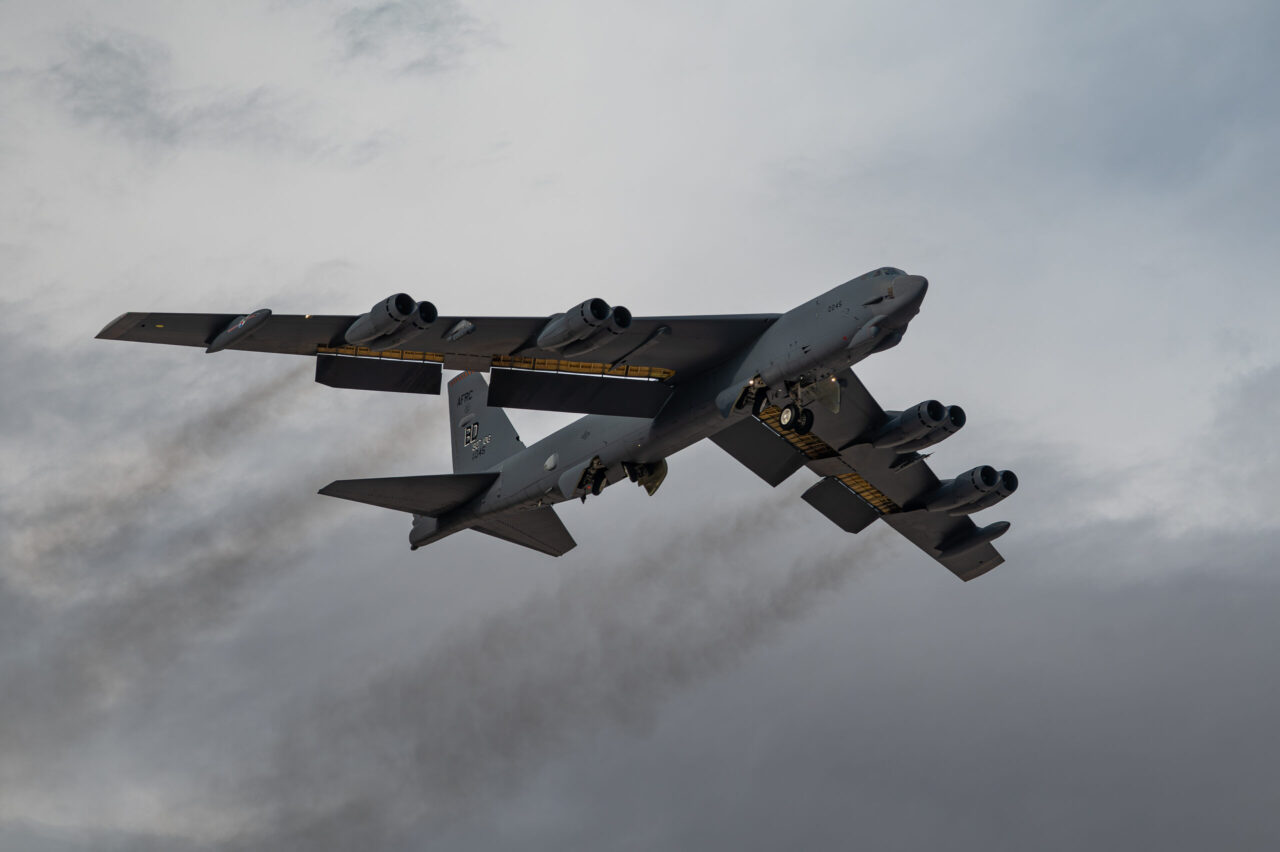
Considering geopolitical tensions in Europe, the B-52s’ presence in Spain is appropriate.
Earlier this month, the US Air Force dispatched an unknown number of B-52 bombers to southern Spain. According to the service, these Stratofortresses were deployed to carry out multilateral operations as part of Bomber Task Force Europe 26-1. Considering Spain is a close NATO ally, the B-52s’ presence is appropriate as geopolitical tensions in nearby Eastern Europe continue to escalate. Moron Air Base is located in Southern Spain and serves as a major base for the US Air Force, as it functions as a major transit point for aircraft en route to the Middle East. The Air Force detailed the bombers’ impact on joint operations with its allies. In a statement, the service said the deployment of the bombers “enables U.S. Air Force bomber aircrews to refine tactics, increase flexibility and strengthen coordination with Allies, increasing warfighting capabilities and readiness through exercising and operating side-by-side.”
About the B-52 Stratofortress
- Year Introduced: 1955 (the B-52 entered USAF service in February 1955)
- Number Built: 744 (all variants produced); 76 B-52H airframes remain in USAF service (approx.)
- Length: 159 ft 4 in (48.5 m)
- Wingspan: 185 ft 0 in (56.4 m)
- Weight (MTOW): ~488,000 lbs. (221,000 kgs)
- Engine: Eight Pratt & Whitney TF33-P-3/103 turbofan engines (~17,000 lbf / ~76 kN thrust each); planned/announced re-engining programs (e.g., Rolls-Royce F130/BR700 family derivatives) for future service life extension
- Top Speed: ~650 mph (1,046 km/h); about Mach 0.86 at altitude (approx.)
- Combat Radius: Mission- and load-dependent; typical practical combat radii vary widely (roughly several thousand miles / ~3,000–7,000 km depending on payload, routing, and aerial refueling)
- Service Ceiling: ~50,000 ft (15,240 m); varies depending on loadout
- Loadout: ~70,000 lbs. (~31,500 kgs) of mixed ordnance
- Aircrew: Five (pilot, copilot, weapon systems officer, navigator, electronic warfare officer); varies based on loadout/mission parameters
The Stratofortress platform may be well into its 75th year in service with the US military, but the tried and trusted platform continues to prove to be a valuable asset for the service. Nicknamed the BUFF (Big Ugly Fat Fella), the long-range subsonic jet-powered strategic bomber has received several facelifts over the years in order to retain an edge over newer competitors.
The latest B-52J iteration will be the most advanced Stratofortress model of its kind to fly the skies when introduced down the line. The new-and-improved bomber will feature Rolls-Royce F130 engines. This upgrade, known as the Commercial Engine Replacement Program, will give the platform the edge it needs to remain relevant in the modern era. As detailed by The War Zone, “The re-engining effort is set to give the bombers substantially better fuel economy and reduce maintenance demands, which, in turn, are expected to cut sustainment costs and provide operational benefits, including extended range.“ In addition to its new engines, the B-52J model will receive enhanced radar, avionics, and the Long-Range Standoff weapon. The B-52J will undoubtedly elevate the Air Force’s already dominant bomber fleet when introduced.
About the Author: Maya Carlin
Maya Carlin, national security writer with The National Interest, is an analyst with the Center for Security Policy and a former Anna Sobol Levy Fellow at IDC Herzliya in Israel. She has over 1,000 articles published over the last several years on various defense issues. Carlin has bylines in many publications, including The National Interest, Jerusalem Post, and Times of Israel. You can follow her on Twitter: @MayaCarlin.
Image: DVIDS.