Recent stories of note:
“Should America be Sparta or Venice?”
Daniel McCarthy, The Spectator World
Since the Renaissance, declinists of all stripes have been given to pointing out, with varying degrees of acuity, supposed parallels between the predicament of their own countries and the decline and fall of Rome—either the republic or the empire, take your pick. Like so much else, this genre of political rhetoric goes back to Machiavelli. Less well-known, however, is his discussion of two other possible republican trajectories, represented by ancient Sparta on the one hand and early modern Venice on the other. As Daniel McCarthy points out, although both governments were famous for their stability, they achieved this internal peace—notoriously rare in pre-modern republics—by opposite means: Sparta was a closed, highly militarized, and autarchic society, while Venice relied exclusively on trade with the outside world to prosper. Crucially, both polities tightly restricted citizenship and were ruined once they began expanding. There are lessons for the United States to be learned from previous republics, but, as the founders understood, the American experiment is unique due to the unusually large size of the country, both geographically and demographically an aberration from the classical and early modern republican norm.
“John Quincy Adams and the Fourth of July”
Christopher Flannery, Claremont Review of Books
As the nation’s semiquincentennial anniversary approaches, it is inevitable that we will all be treated to a variety of “takes” on the Declaration of Independence from Washington’s best and brightest. It is unlikely, however, that any in our current crop of politicians will quite match the rhetorical brilliance of John Quincy Adams. Delivering his first Independence Day oration in Boston in 1793—just as the French revolutionary Reign of Terror was getting going—Adams, aged twenty-five, described America as “the youngest daughter of Nature, and the first-born offspring of Freedom.” Almost thirty years later in 1821, he gave his second Fourth of July address, this time to Congress. By then a seasoned diplomat, Adams tempered his youthful enthusiasm for global revolution: America should not go “abroad, in search of monsters to destroy. She is the well-wisher to the freedom and independence of all. She is the champion and vindicator only of her own.” Although these are doubtless his most famous words today, “Old Man Eloquent” wasn’t done. On July 4, 1831, Adams gave one final defense of the Declaration, even as this “expression of the American mind,” as its author called it, was under attack from the South amid the nullification crisis. Today, as the country undergoes a new period of division, one hopes that the Declaration still has the power to unify.
“The Man Who Invented the Future”
Ed Simon, The Hedgehog Review
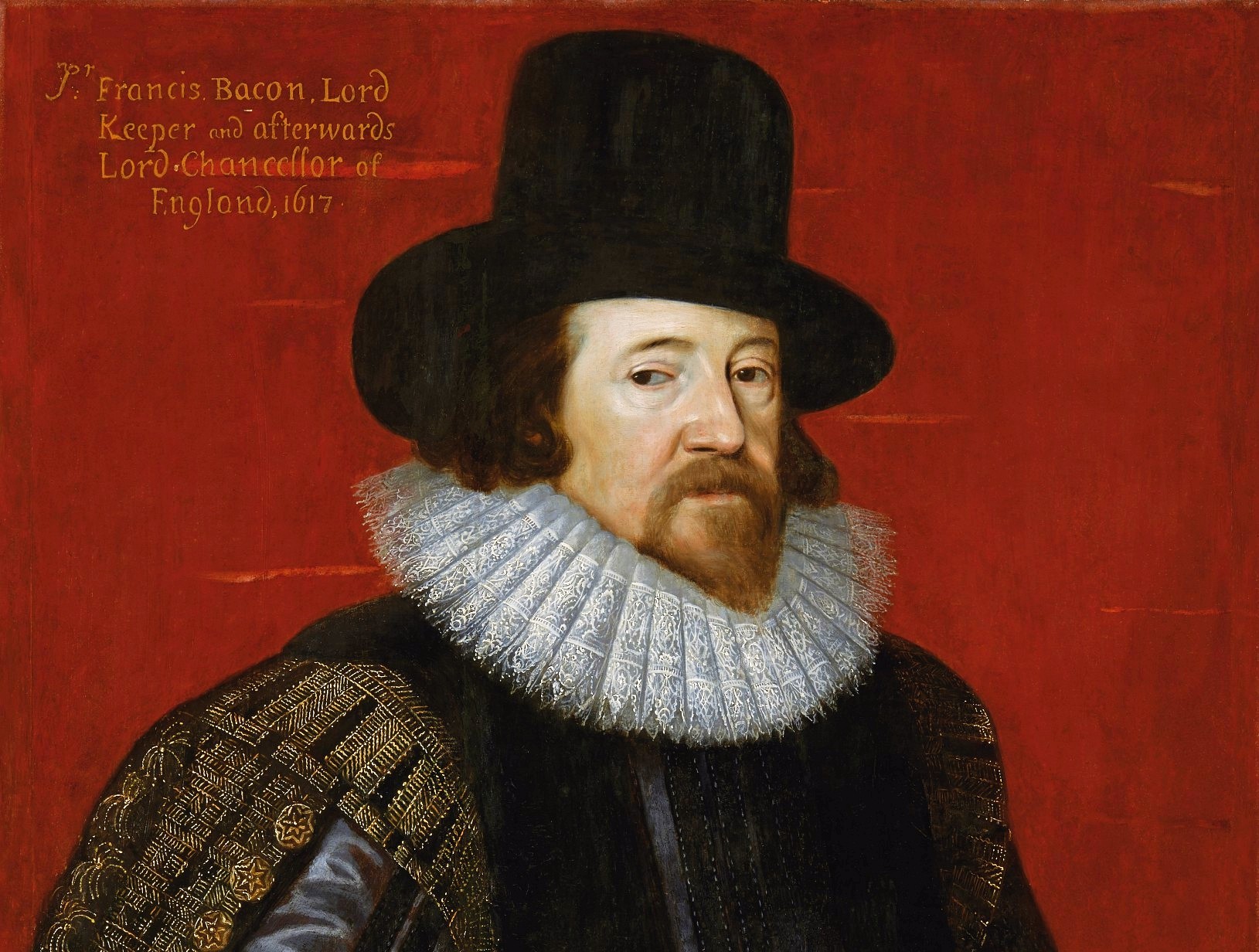
One of the least-discussed influences on Thomas Jefferson and the Declaration was Francis Bacon, whom Jefferson considered among the “greatest men the world has ever produced.” It is a doubly fitting compliment from the statesman, because as Ed Simon writes, Bacon was not only one of the greatest and earliest advocates for English colonization of the New World but also the progenitor of the specific kind of “technological capitalism” that defines the United States. Although Bacon’s empiricism and his belief in the power of knowledge were essential ingredients in the making of the American mind, too much Bacon is not healthy for the body politic, as Simon intimates: the philosopher’s love of science can easily slide into scientism, an ideology that eats away at the sovereignty of the people, as we saw during Anthony Fauci’s reign in the COVID pandemic.