Recent stories of note:
“The long shadow of Paul Ehrlich”
Darel E. Paul, Compact
Last week brought news of the death of Paul Ehrlich, the longtime professor of biology at Stanford University and “the world’s most famous Malthusian, second only to Malthus himself,” as Darel E. Paul dubs him. An obituary in The New York Times called Ehrlich’s predictions of mass starvation resulting from overpopulation—popularized by his best-selling book The Population Bomb (1968)—“premature,” which is only accurate if we take “premature” to mean completely, laughably wrong: the Earth’s population has more than doubled since 1968, but deaths from famine are at a historic low. Despite his manifest unseriousness, this particular prophet of doom has had an outsize influence on Western culture and politics: Ehrlich is the progenitor of the millenarian climate hysteria that in recent years has turned a whole generation of young people into anti-natalist fatalists. As Paul suggests, the enduring appeal of Malthusianism stems from “the anxieties of Western elites,” who have ceased to believe in the worth of their culture and have espoused a kind of civilizational death wish as a result.
“It has nothing to do with Michelangelo”
Dale Berning Sawa, The Art Newspaper
Of course, false prophets lurk in other corners of academia too. The Belgian art historian Michel Draguet made headlines recently when he published a six-hundred-page report on the Spirituali Pietà, which, he claims, is a long-lost Michelangelo painting. Yet you don’t have to be a connoisseur to see that this work is plainly not by Michelangelo: the color palette and the composition are more reminiscent of Tintoretto than Il Divino. Draguet bases his attribution on a monogram (“MA”) at the bottom of the painting, but as the art historian David Ekserdjian explains to The Art Newspaper, Michelangelo did not sign his works, apart from his early masterpiece, the Vatican Pietà. What’s more, Michelangelo famously preferred sculpture over painting, and he only completed a handful of pictures in his long life, all of which are very well attested in Renaissance sources. Although no one—not even the greatest of connoisseurs—is perfect, how could such an obviously spurious attribution have garnered so much attention? Academics come and go, but talking of Michelangelo will never cease.
“Mission impossible”
Tim Parks, The Times Literary Supplement
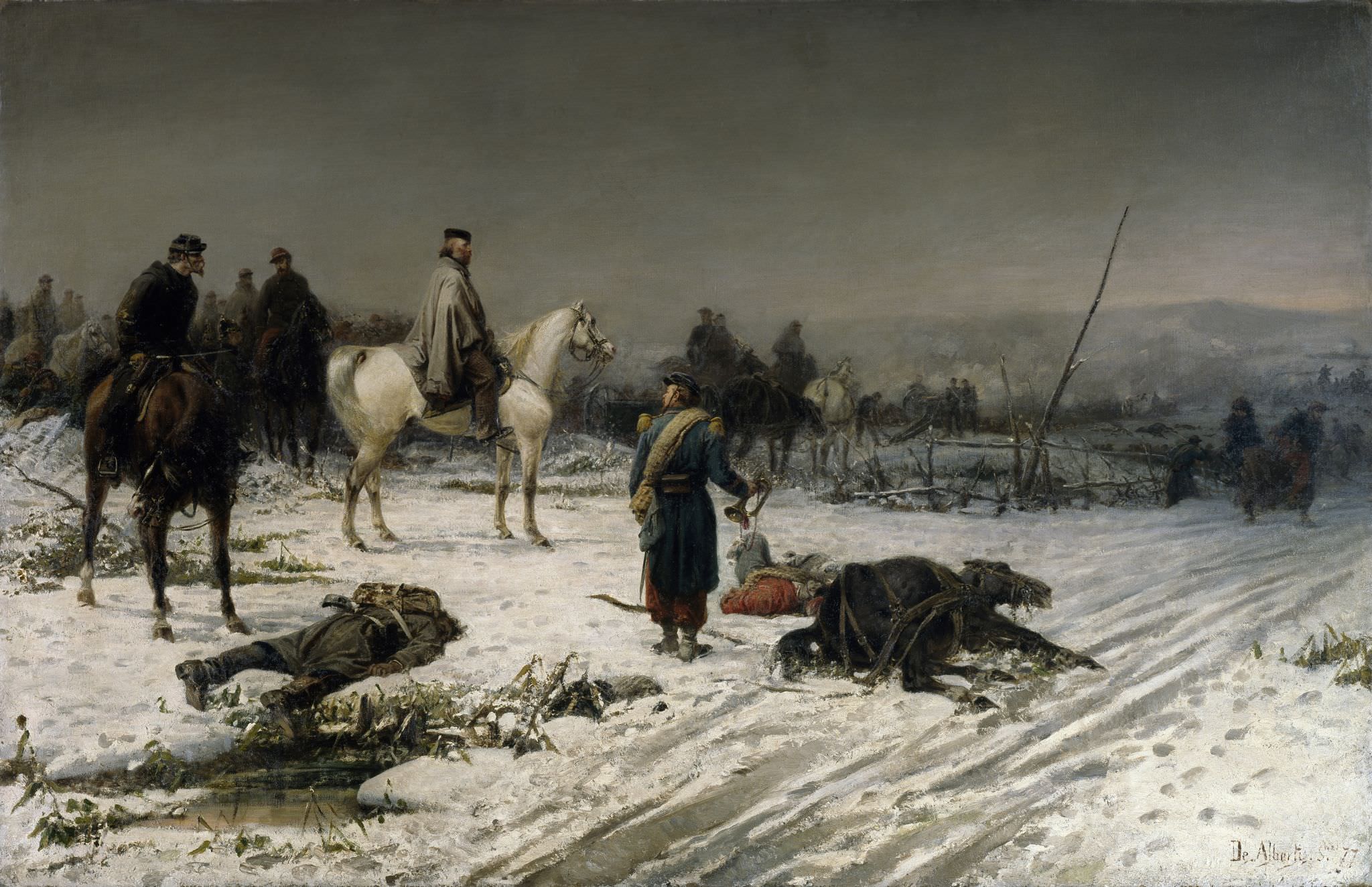
On May 11, 1860, Giuseppe Garibaldi and 1,089 volunteers disembarked in Marsala, on the westernmost tip of Sicily. In less than six months, Garibaldi and his redshirts managed to conquer the entirety of southern Italy, which at the time constituted the Bourbon-ruled Kingdom of the Two Sicilies. This triumph against overwhelming odds (the Bourbons fielded a standing army of 90,000 at the time of the disembarkation) made Garibaldi a household name the world over, but, as Tim Parks writes, the Expedition of the One Thousand has proven to be remarkably controversial in Italy. Many northern Italians today are fond of the saying, attributed to Garibaldi himself, that the great general didn’t unite Italy but divided Africa. Meanwhile, many southern Italians still maintain a fondness for the Bourbons and see themselves and their ancestors as the oppressed victims of northern colonizers. Parks dismisses these sentiments as ex post facto mythologizing—the Bourbon regime was genuinely corrupt, tyrannical, and widely hated—but these enduring attitudes do reveal how artificial a polity Italy really is.