Recent stories of note:
“British Museum acquires £3.5m golden pendant linked to Henry VIII after high-profile campaign”
Alexander Morrison, The Art Newspaper
In 2019, in a field in Warwickshire, an amateur metal detectorist unearthed the kind of buried treasure one normally finds only in commercial fiction. He had stumbled upon a gold heart-shaped pendant with the Tudor rose depicted on one side and the letters “H” and “K,” standing for Henry VIII and Katherine of Aragon, intertwined on the other. Scholars believe that the “Tudor Heart,” as it has come to be known, was created to mark the occasion of a tournament held in honor of the marriage of Henry and Katherine’s daughter, Mary, to the French Dauphin in 1518. The importance of the find is compounded by the fact that there are very few surviving artifacts from the early reign of Henry VIII, and the pendant has direct parallels in the chains worn by fashionable courtiers in Holbein’s portraits. Now, the British Museum has managed to raise the three and a half million pounds needed to secure this prize for its collection.
“The Ancient Greek Soul: A Guide for Modern Readers”
Christopher Tanfield, Antigone
The history of philosophy, literature, and ideas of ancient Greece can be approached through a single word: psȳchē. Conventionally translated as “soul,” the word, as Christopher Tanfield points out, in fact has three overlapping meanings: the life force itself, the spirit that can be separated from the body, and the emotions, thoughts, and character that make up the individual self. From the pre-Socratics to Aristotle to the Epicureans, each Greek philosophical school developed its own understanding of the relationship between body, mind, and spirit, ranging from models where the soul was completely separate from the body to ones where the two were inseparable. In all cases, however, the Greek concept of psȳchē, “a unified vision connecting biological life, subjective experience, and rational thought within a cosmic system” (as Tanfield writes), was the central concern of thinking men. In the age of artificial intelligence, when questions of consciousness have become more pressing than ever, Greek soulcraft offers a desperately needed corrective to the transhumanist ethics embraced by our tech overlords.
“The Dangers of a Little Learning”
Aaron Alexander Zubia, Law & Liberty
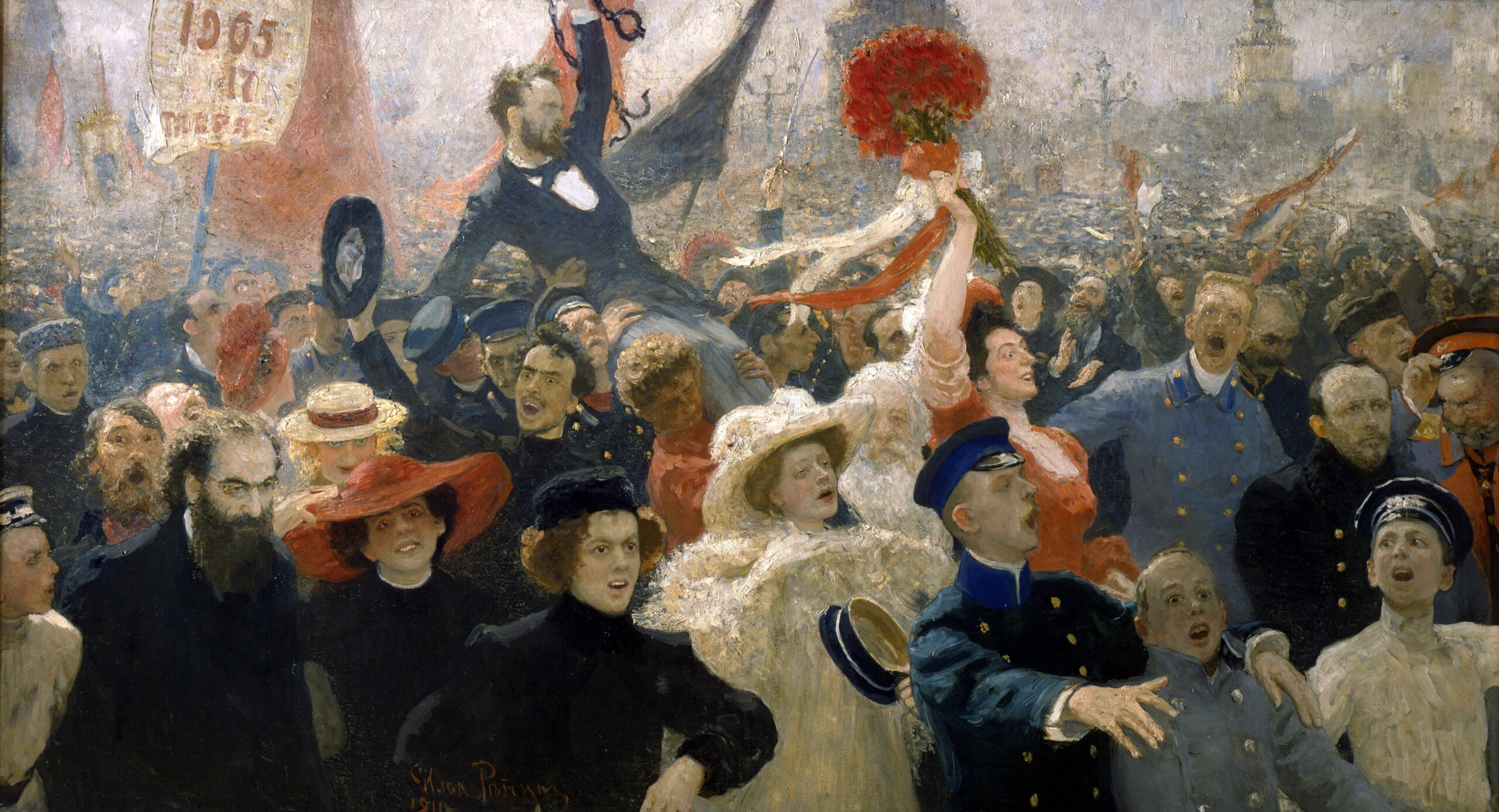
Dostoevsky, the greatest exponent of the “Russian soul,” was also one of the great modern thinkers of the soul tout court. If his whole oeuvre has a central guiding principle, it is this: absent an immortal soul (itself predicated on the existence of God), there is no basis for objective morality, virtue, or truth. This thesis plays out in particularly horrifying fashion in Dostoevsky’s novel Demons (1872), where, as Aaron Alexander Zubia shows in his essay, ideas are bandied about for their own sake and treated as diverting playthings by the Russian liberal atheist intelligentsia, to terrible effect: unmoored from principles of goodness and beauty, characters consumed by their materialist revolutionary ideas commit deliberately ugly acts as a way of destabilizing the foundations of decent society. As much of the American educated elite continues to fall prey to a similarly fashionable neo-Marxist ideology that reduces even the most sublime artistic works and historic deeds to raw, oppressive power dynamics, Zubia makes a compelling case for the necessity of classical education, which does not merely introduce students to various ideas and theories, but also actively orients them towards wisdom and virtue.