Recent stories of note:
“The Trump Administration Reclaims Washington’s Home”
Jeffrey H. Anderson, The Wall Street Journal
As the nation gears up for its summer birthday jamboree, some bitter clingers still cannot bring themselves to get into the festive mood. You see, the framers, unlike their current enlightened critics, were not perfectly virtuous and so neglected to resolve all of humanity’s problems in one fell swoop. The founders’ legacy remains up for grabs, as became apparent this week, when, in preparation for the semiquincentennial festivities, the National Park Service removed several informational plaques from the President’s House Site in Philadelphia, an open-air structure that memorializes the house where the first and second presidents lived while Philadelphia served as the temporary capital of the United States between 1790 and 1800. Since 2010 these panels have focused almost exclusively on the “injustice” and “immorality” of George Washington, who, in the words of the plaque, “mocked the nation’s pretense to be a beacon of liberty” by allowing slavery to continue. As Jeffrey H. Anderson shows, this character assassination does not represent Washington’s “actual views and actions regarding slavery”: the president was against the slave trade and, uniquely among the founders, provided for the freedom of his slaves in his will. A comprehensive redesign of the President’s House Site will now center Washington’s achievements in shaping the young republic, instead of only blackening his name, as the academic racialists would have it.
“The Anti-Classicist”
Spencer A. Klavan, Commentary
Ferreting out racism—real or imaginary—is the raison d’être not only of all self-respecting early modern historians but increasingly of any academic on the right side of history. In the field of classics, few scholars are as accomplished in “doing the work” as Curtis Dozier, who was last mentioned in these pages as a participant on a conference panel titled “Doing Classics in Dark Times.” Dozier wrestles with the current dark age in his recently published White Pedestal: How White Nationalists Use Ancient Greece and Rome to Justify Hate, in which he decries “how frequently ancient sources articulate ideas congruent with white nationalist thought.” Never mind that Greco-Roman authors were largely uninterested in questions of skin color, and when other races do appear in their works, it is quite often in a positive light: from Homer onwards, the Greek gods frequently jaunt off to party with the “noble” and “blameless” Ethiopians (a broad Greek term that denotes various dark-skinned peoples). Instead of encouraging genuine historical inquiry about underexplored topics, Dozier’s single-minded moralizing about the dangers of admiring ancient Greece and Rome risks emboldening the very far-right boogeymen that he is so obsessed with, as Spencer A. Klavan points out in his review.
“Portraits of the ‘Black Venus’”
Maria C. Scott, The Times Literary Supplement
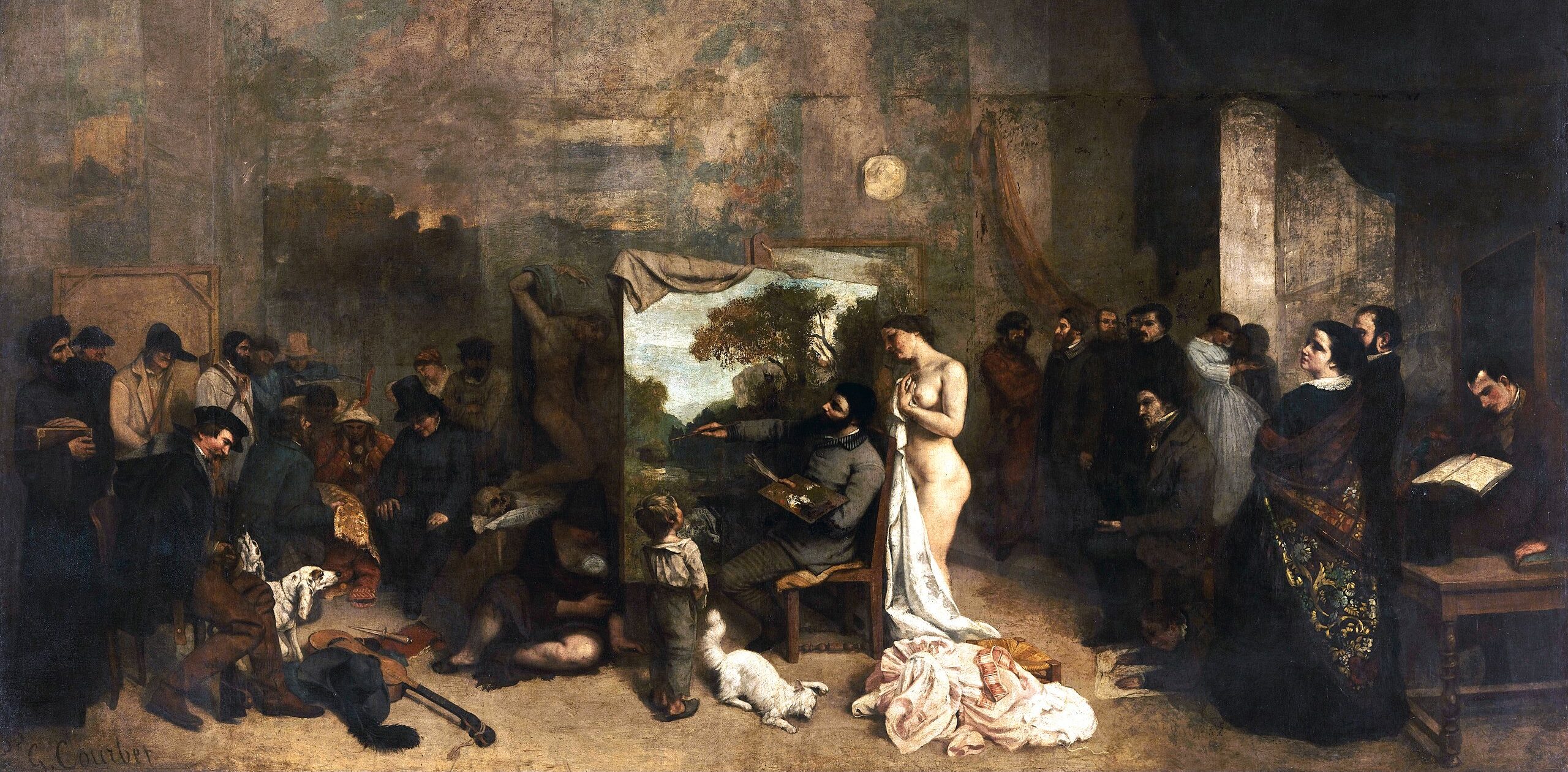
Of course, contemporary racialist fixations should not blind us to genuine cases of important individuals being overlooked or stereotyped because of their race. One such figure is Jeanne Duval. To the extent that she is known at all, it is in the role of Baudelaire’s muse, to whom many of the greatest poems of Les Fleurs du mal (1857) are addressed. Recently, two previously unknown pictures of Duval, taken by France’s greatest photographer, Nadar, have surfaced from the French National Library, giving us, for the first time, a sense of how “Languorous Asia and burning Africa” (as Baudelaire dubs her in “The Head of Hair”) actually looked. Moreover, as Maria C. Scott lays out, these two photographs allow us to identify conclusively the tantalizing figure in Manet’s Lady with a Fan (sometimes called Baudelaire’s Mistress, 1862) as Duval. Long condemned as “Baudelaire’s immoral and unfaithful tormentor,” the “Black Venus” now emerges as more than just the shadow on the wall in Gustave Courbet’s The Painter’s Studio (1855).