Recent stories of note:
“Huge Roman villa found under popular park dubbed town’s ‘Pompeii’”
Steffan Messenger, BBC
Geophysical surveys of a historic Welsh deer park have revealed the foundations of the largest Roman villa ever found in Wales, per the BBC. The fortified 6,157-square-foot Roman structure is particularly exciting to archaeologists because the level of preservation are expected to be unusually high: the villa’s location, underneath a former private estate now known as Margam Country Park, has spared the ruins from the violence of the plowshare, which archaeologists fear much more than the sword. The structure is already rewriting the history of Roman Wales, long thought to have been little more than a military occupation. Clearly, a villa of this size, inhabited over four centuries, must have been the home of important—and wealthy—dignitaries. The identity of the owners and the degree of their Romanization and sophistication cannot be determined, however, until physical excavations begin.
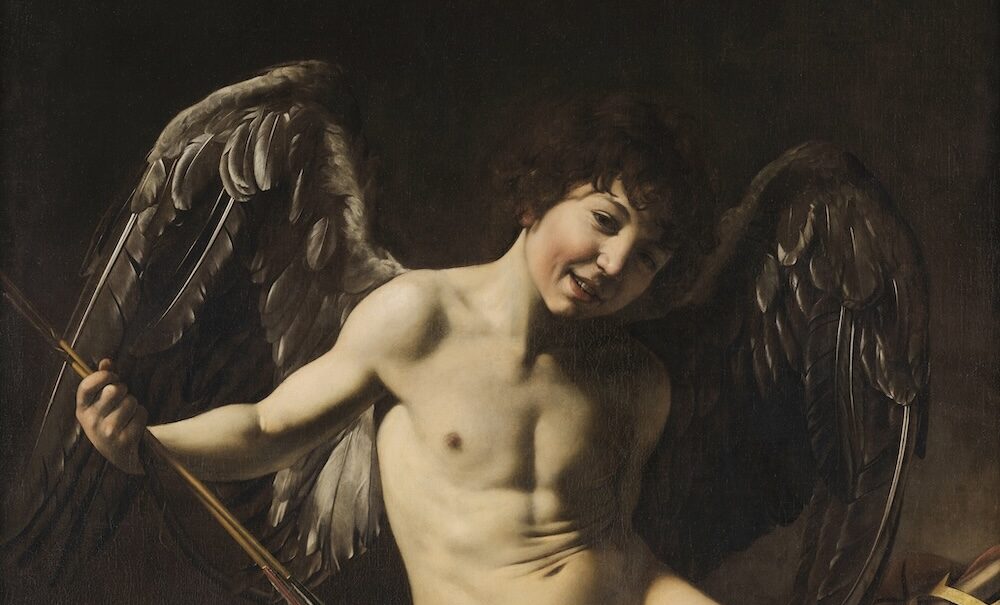
“Oh boy! Caravaggio’s Cupid is victorious at the Wallace Collection”
Breeze Barrington, Apollo
Caravaggio’s Victorious Cupid (1601–02), on loan from Berlin’s Gemäldegalerie, is at the center of a particularly well-conceived exhibition at London’s Wallace Collection, writes Breeze Barrington. In the painting, the completely nude boy stands in insolent triumph over the physical representations of various human pursuits, including music, war, and literary composition. The work itself is a showstopper, but the curators have enhanced our perception of it by recreating the original viewing context of Caravaggio’s masterpiece: the interior of the Palazzo Giustiniani, the home of the Roman banker and avid art collector who commissioned the Victorious Cupid. The exhibition draws attention in particular to the sculptural qualities of the work, which come into focus when juxtaposed with the numerous ancient statues that Vincenzo Guistiniani collected, some of which are on display at the Wallace. Indeed, as Barrington notes, just as love conquers all, so the aim of this painting was to defeat sculpture. Only through painting, Caravaggio seems to say, can one get to grips with love, and even then the meaning of Cupid’s mischievous, almost mocking smile remains elusive.
“A Muslim state loses faith in British universities”
James Price, The Critic
The year 2026 has already taken several world leaders by surprise, but, as far as portents of the future go, one “absolutely insane headline,” in the words of Vice President J. D. Vance, takes the cake: “the United Arab Emirates has cut off funding for its students to study in the United Kingdom, because of fears that their students will be brainwashed by radical Islamist extremists,” as James Price reports. You read that right: an Islamic tribal autocracy, not exactly known for being religiously moderate (sharia is the law of the land in the UAE), is admitting that Britain, which has well over forty thousand jihadists under MI5 surveillance, is too extreme and dangerous even by Middle Eastern standards. And the worst part? The UAE is not wrong. Since the October 7 attacks, Britain’s universities, if they’re not converting students to the millenarian cult of climate apocalypse or preaching gender metaphysics, are all but embracing Islamism as their creed du jour. From a Muslim UCL professor’s teaching the blood libel as historical fact, to the Oxford Union’s affirming that Israel is a greater threat to regional stability than—you guessed it—Iran, British universities have reverted to their ancient roots as divinity schools; only now the theology being taught is radical Islamo-leftism.