Recent stories of note:
“Turner and Constable”
Ferdinand Mount, The Times Literary Supplement
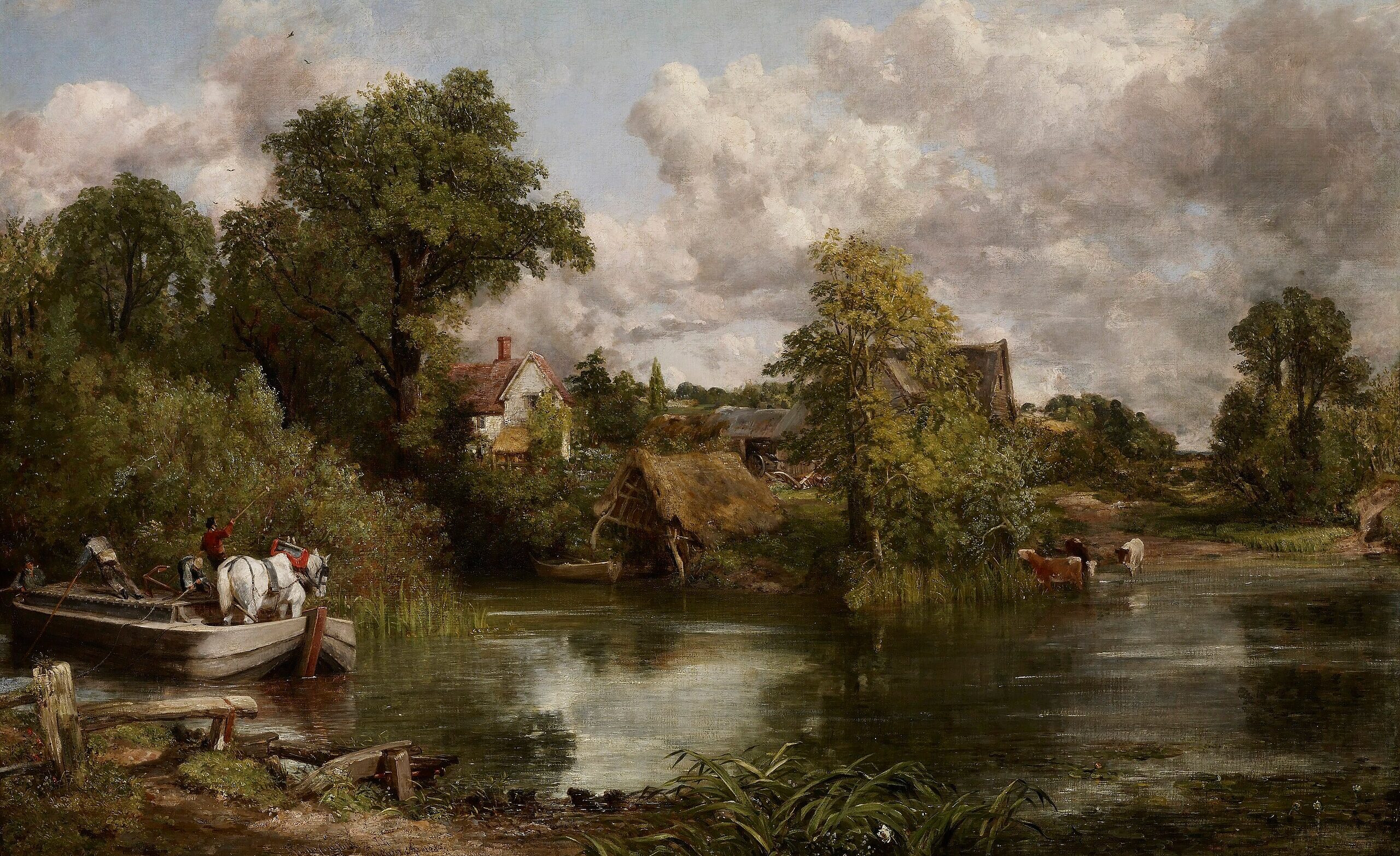
Tate Britain is playing host to the blockbuster exhibition “Turner & Constable.” Born within a year of each other—in 1775 and 1776 respectively—J. M. W. Turner and John Constable could not have had more divergent paths. As Ferdinand Mount notes, Turner was the archetypal Romantic, who “craved drama in his landscapes” but was also forensic in his depiction of contemporary events. He was immediately recognized and adored, elected Royal Academician at only twenty-six years old. By contrast, Constable was only elected to the Academy at the age of fifty-two in 1829, and even then he was far from the national paragon he is now: a painting of his was rejected from the annual Exhibition because it was perceived as too green. Perhaps this resistance to Constable indicates that he was the greater artistic innovator, and not Turner, for all his proto-Impressionism. Indeed, it was Constable who, in Mount’s words, took “history out of painting,” thus setting the stage for the confrontation with the Academy that defined the art of the latter half of the nineteenth century.
“‘The Nine Lives of Columbus’ Review: An Explorer Rediscovered”
Tunku Varadarajan, The Wall Street Journal
In a year where the Founding Fathers are the talk of the town, spare a thought for America’s “grandfather,” as Matthew Restall dubs Christopher Columbus in The Nine Lives of Christopher Columbus. As Tunku Varadarajan notes in his review, as much as America owes to Columbus, the explorer is equally indebted to the United States: his canonization by the Framers as the nation’s patron saint in Washington D. C. secured his place in popular memory. Restall’s book boldly brushes aside much of the “faithistory” (his coinage) that has always accompanied Columbus. For Restall, the explorer is simply a “typical merchant-seafarer of his time.” But if Columbus was just like everyone else, why did no one else brave the Ocean Sea before him? Indeed, the Portuguese had been in the business of long-haul sailing for decades prior to the fateful 1492 voyage but were in no hurry to cross the dread Atlantic. Demythologizing is all well and good, but the historicist, for all his contextualizing, can never explain that which transcends his own narrow view of human potential and greatness.
“What monuments stand to teach Americans about themselves”
Julia Friedman, The Spectator World
Julia Friedman has written a thought-provoking review of “MONUMENTS,” an exhibition of decommissioned, often vandalized Confederate statues co-organized by the Los Angeles Museum of Contemporary Art and The Brick, a “visual art space.” Friedman not only argues that the whole show is driven by a sense of grievance toward American history but also points out that the South’s sense of aggrieved bitterness about its military death was the reason that the Confederate statues of the likes of Stonewall Jackson were put up in the first place. Friedman goes on to urge Americans to abandon their “national habit” of not letting “history end.” These are wise words, but Friedman then proceeds to reject the proposed National Garden of American Heroes as “short-sighted” in seeking to “mint fresh icons for future dismantling.” But shared heroes are integral to fighting the politics of grievance Friedman decries. As Wilfred M. McClay writes in the January issue of The New Criterion, “a republican form of government cannot exist for long, let alone thrive, if it does not elicit and reinforce the loyalty and love of its citizenry.” And what better way to elicit loyalty than to present Americans with the likenesses and feats of the giants on whose shoulders we stand?