Recent stories of note:
“Heroic failure”
Daniel Beer, The Times Literary Supplement
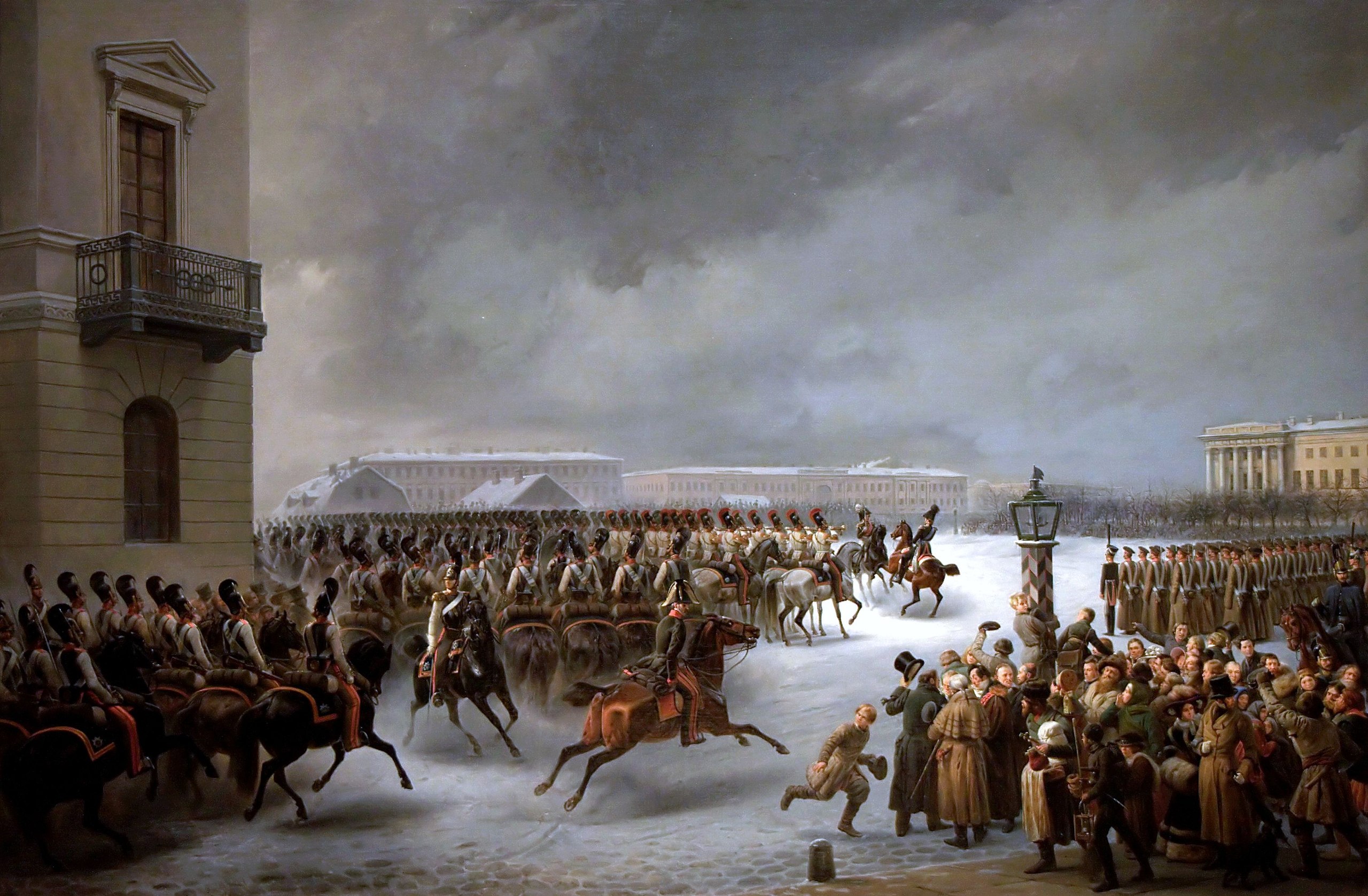
“Deep in the Siberian mines,/ Hold your heads up high;/ Your toils shall not have been in vain,/ Your noble thoughts not die.” So begins Alexander Pushkin’s “Message to Siberia,” written two years after the Decembrist revolt erupted in December 1825, when, in the power vacuum following the death of Tsar Alexander I, rebel army officers had led thousands of troops in mutiny to install a more liberal regime in Russia. While the attempted coup quickly turned into a fiasco, the ringleaders became celebrities and revolutionary heroes throughout Europe, eclipsed only by the fame of their wives, who voluntarily joined their husbands in harsh Siberian exile. In his review of two recent books on the Decembrists, Daniel Beer emphasizes just how unserious these Romantic revolutionaries were: they lacked any realistic plan for addressing Russia’s most pressing issue—the integration of ethnic minorities, who counted together made up a majority of the empire’s population. Perhaps there’s a reason why despotism is so ingrained in Russia. In a country where even today almost 30 percent of the population is not ethnically Russian, only the iron fist of an autocrat can keep the empire together.
“The King From the North: Three Books on James VI and I”
Michael O’Donnell, The Wall Street Journal
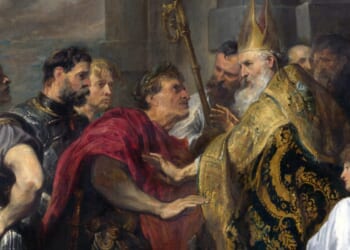
The year 2025 is not only the bicentenary of the Decembrist revolt but also marks the four hundredth anniversary of the death of England’s James I (Scotland’s James VI). His rule, awkwardly situated between the Elizabethan Golden Age and the cut-short reign of his son Charles I, has either often been overlooked or caricatured, largely because of the king’s notorious pedantry and his supposed effeminate weakness. Yet as Michael O’Donnell writes, “a learned monarch seems preferable to an ignorant one,” and it is surely no coincidence that the supreme masterpiece of English literature, the King James Bible, was commissioned by this king. As for his supposed effeminacy, while James’s homoerotic inclinations are beyond dispute (he and George Villiers called each other husband and wife in their correspondence), the king’s pacifist foreign policy was prudent; needless foreign wars were one of the main causes that led to the civil wars of his son’s reign. James was not a great king but deserves respect for maintaining the relatively stable peace that allowed Jacobean culture to thrive.
“Whig, Tory, and the Modern World”
Helen Dale, Law & Liberty
Nowadays it’s easy to be cynical and pessimistic about party politics, but the emergence of the two-party system in Great Britain at the turn of the eighteenth century is arguably one of the happiest political developments in Western history. As Helen Dale points out in her review of George Owers’s The Rage of Party, a study of the rise of the Whig and Tory parties between 1689 and 1725, the codification of regular, even if divisive and heated, parliamentary elections following the Glorious Revolution was much preferable to the traditional way of hashing out political differences—civil war. While some of the defining issues dividing Whigs and Tories, such as the precise ecclesiastical organization and liturgy of the Church of England, now seem to us arcane, others are strikingly familiar, including Whig enthusiasm for, and Tory backlash to, taking in masses of foreign refugees (German Protestants). It is comforting to know that some partisan feuds are as old as representative democracy itself.