Admiral Kevin Lunday denied recent claims by The Washington Post that the service was removing the ‘hateful’ designation from symbols such as the swastika and the Confederate battle flag.
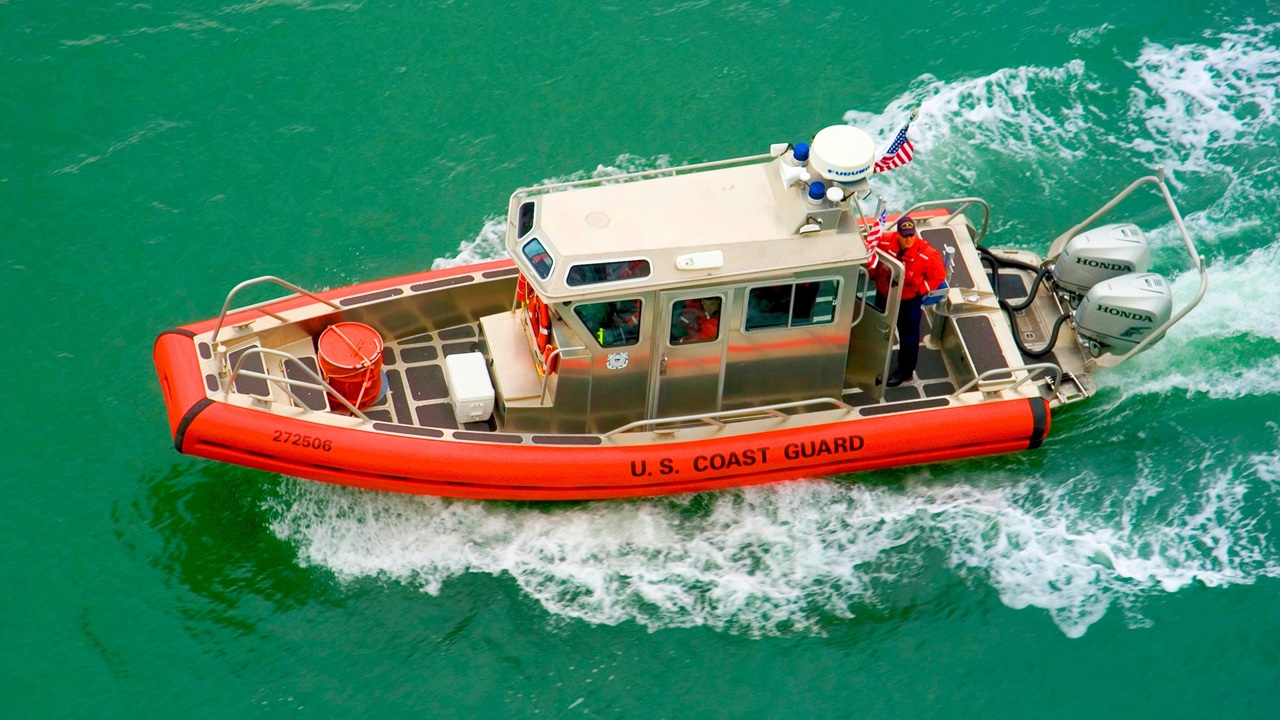
On Thursday evening, the United States Coast Guard (USCG) officially responded to a report from The Washington Post alleging that it had changed its policy to remove swastikas, nooses, and the Confederate battle flag from a list of proscribed hate symbols. The Coast Guard denied the report.
“The claims that the US Coast Guard will no longer classify swastikas, nooses or other extremist imagery as prohibited symbols are categorically false. These symbols have been and remain prohibited in the Coast Guard per policy,” Admiral Kevin Lunday, acting Coast Guard commandant, said in a statement.
The newspaper of record first reported this week that the Coast Guard, a branch of the US military but operated by Department of Homeland Security (DHS) rather than the Department of Defense (DoD), would no longer classify such items as “hate symbols.” Instead, they were to be reclassified as “potentially divisive,” according to documents renewed by The Post.
The new policy was reportedly set to take effect on December 15.
“Though the Coast Guard is not part of the Defense Department, the service has been reworking its policies to align with the Trump administration’s changing tolerances for hazing and harassment within the US military,” the Post added.
DHS swiftly responded to the paper’s report, labeling it an “absolute ludicrous lie and unequivocally false.”
The US Military Has Cracked Down on Hate Symbols in Recent Years
According to the US Coast Guard Civil Rights Manual, published in 2019, symbols including the swastika are deemed to be a “hate symbol” and the wearing or display would constitute a hate incident.
“The following is a non-exhaustive list of symbols whose display, presentation, creation, or depiction would constitute a potential hate incident: a noose, a swastika, supremacist symbols, Confederate symbols or flags, and antiSemitic symbols, among many others,” the Coast Guard said in the published guidance.
“The display of these type symbols constitutes a potential hate incident because hate based groups have co-opted them as symbols of supremacy, racial intolerance, religious intolerance, or other bias,” the manual added. “Symbols can be presented as images, on any type of material or clothing, as words or numbers, and, in any combination.”
However, in newly published guidance from earlier this month, the term “hate incident” was no longer present, the Post explained.
Following the publication of its story, Lunday denied the claims, writing, “Any display, use or promotion of such symbols, as always, will be thoroughly investigated and severely punished. […] The Coast Guard remains unwavering in its commitment to fostering a safe, respectful, and professional workplace.”
Could the Swastika Ever Be Redeemed? Probably Not
The swastika originated in Eurasia more than 7,000 years ago, where it was a symbol of good fortune. In fact, the word comes from the Sanskrit “svastika,” which translates to “well-being” or “good fortune.” Numerous cultures around the world used it for eons as religious or cultural symbols, and even as late as the early 20th century, it was widely used as a symbol for good luck in the West.
However, the swastika’s meaning is now inseparable from the German Nazi Party, which used the symbol as its logo during World War II and the Holocaust. Given the horrors of the Nazis, it is likely that as a symbol, the swastika is beyond redemption.
It is hardly the only such controversial icon or emblem that may elicit strong emotions today—which is why the swastika and other symbols tied to the Nazis, like “SS” runes, are often banned for public display. The US military also banned the display of the Confederate battle flag on military bases in 2020.
About the Author: Peter Suciu
Peter Suciu has contributed over 3,200 published pieces to more than four dozen magazines and websites over a 30-year career in journalism. He regularly writes about military hardware, firearms history, cybersecurity, politics, and international affairs. Peter is also a contributing writer for Forbes and Clearance Jobs. He is based in Michigan. You can follow him on Twitter: @PeterSuciu. You can email the author: [email protected].
Image: Shutterstock / Dennis MacDonald.