Saudi Arabia wants to develop its own nuclear weapons. Failing that, it wishes to partner with nuclear nations—ideally, but not only, the United States—and ingratiate itself into their nuclear programs.
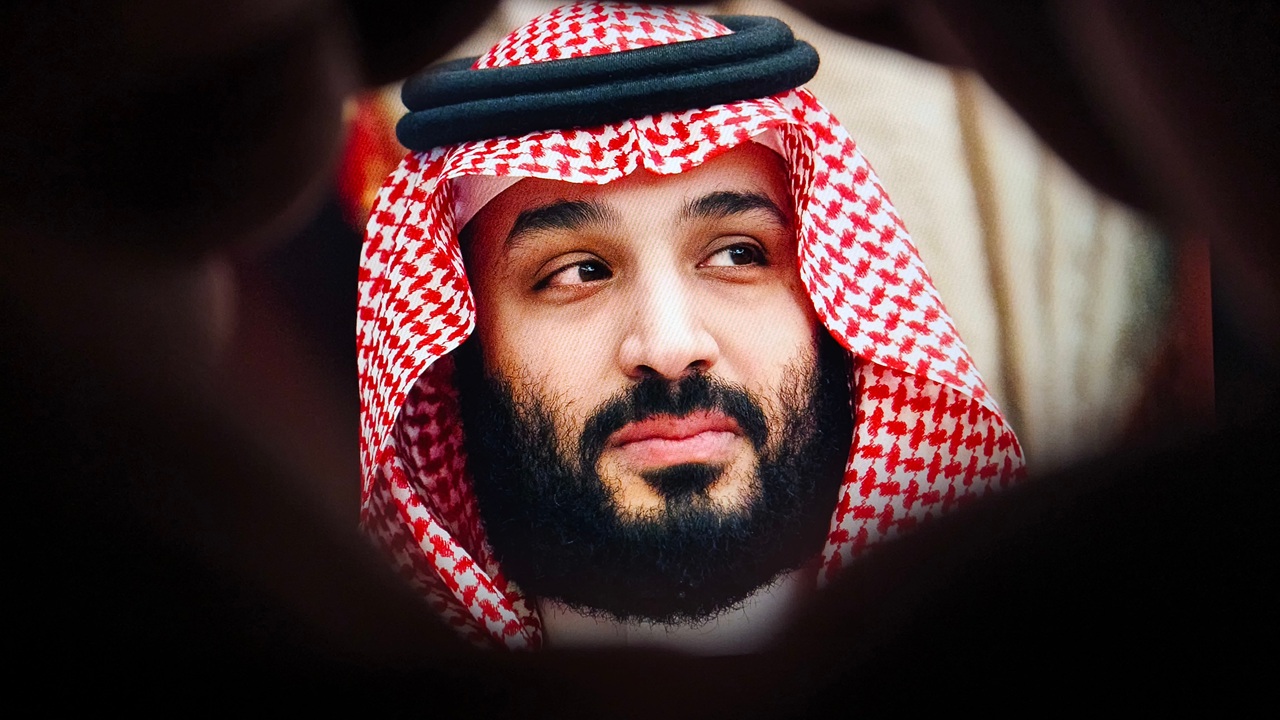
Big changes continue to take place in the Middle East and the United States. Most recently, Saudi Arabia’s Crown Prince Mohammed Bin Salman (MBS) enjoyed a lavish state dinner at the White House, hosted by President Donald Trump.
The meetings between Saudi rulers and American leaders pertained to a variety of economic deals as well as the decision to sell the kingdom US-made F-35 Lightning II fifth-generation warplanes. The meeting sent shockwaves in Jerusalem, which has long enjoyed a special relationship with the United States—so much so that the Israeli government ensured that they would be exclusively operating the F-35I in the region.
Indeed, the Israelis swear by the F-35I Adir and credit the American bird with being responsible for many of the successful airstrikes directed against key Iranian targets in the 12-Day War this last summer.
Saudi Arabia Wants Nuclear Weapons, Too
That’s not all that was discussed. Apparently, MBS brought up the prospects of acquiring nuclear weapons. Trump appeared to glower at the suggestion and dismissed it.
Yet, leaders in the region—especially Israeli leaders—are likely unsure of how to take Trump’s response. After all, it wasn’t long ago that the forty-seventh president had similarly dismissed Saudi requests for the F-35.
And the reason that the Israelis are concerned about the prospects of Saudi Arabia getting the F-35 or, eventually, getting a nuclear weapon (with America’s blessing) is because these Saudi moves are not at all directed against the common enemy that Israel and Saudi Arabia share—Iran.
Instead, these moves by Riyadh are pointed at Israel.
Between the Israeli actions in places like the Gaza Strip in the wake of the gruesome 10/7 terrorist attacks perpetrated by Iran-backed Hamas in Gaza, as well as Israel’s shocking airstrikes (with the F-35I) in Doha, Qatar, earlier this year, the Saudis are no longer content to trust that the Israelis will not turn on them. That these strikes in Qatar were conducted by the F-35, for instance, is likely why Riyadh wants its own F-35 system.
It has been revealed that Israeli leaders intimated to President Trump during the 12-Day War that if he did not take action against those suspected nuclear weapons sites in the Islamic Republic of Iran then the Israelis would deploy nuclear weapons against those targets.
Hearing this and seeing how the Israelis have acted with impunity throughout the region thus far, it is likely that Riyadh wants nukes as a check against unwanted Israeli aggression (as Riyadh perceives it).
As for the Iran factor, it should not be underestimated. Indeed, MBS has publicly stated that “If Iran develops a nuclear bomb, we will follow.” The Saudis see Iran’s nuclear program as an existential threat. They will act according to that belief.
Why Saudi Arabia Wants the Bomb
In the grand scheme of things, and especially after the Doha strike, the Saudis no longer trust Washington’s security umbrella. Riyadh rightly assumes that the Americans are slowly exiting the Middle East. So, if America won’t deter Iran, Riyadh will.
Interestingly, Pakistan has been getting more involved in the region’s nuclear politics. Earlier this year, Pakistan gave a security guarantee to Riyadh that if Saudi Arabia was ever attacked, the Pakistanis would defend the country with nuclear weapons. This was an interesting turn. Saudi Arabia did, after all, help to bankroll Pakistan’s nuclear weapons program. So Islamabad owes Riyadh big.
There has for years been speculation of a turn-key nuclear weapons agreement between Riyadh and Islamabad, in which Pakistan stands ready to deploy pre-built warheads to Saudi Arabia and Pakistani technicians are standing by to help the Saudis quickly stand up their own nuclear weapons arsenal.
Saudi Arabia wants domestic enrichment, US civilian nuclear support, and looser restrictions than the United Arab Emirates’ “gold standard” non-enrichment deal. Washington fears that enrichment is synonymous with a breakout capacity.
Washington Must Be Prepared for a Nuclear Saudi Arabia
And we cannot discount the possibility, however slim, that Washington might wake up one day to a less friendly government in power in Riyadh—who would then have access to those nuclear weapons.
If Riyadh goes nuclear, Turkey, Egypt, and the United Arab Emirates will all seek their own nuclear deterrents. You’d have the world’s most volatile region in a multi-sided race for nuclear supremacy. Iran would also accelerate their own nuclear program.
Irrespective of whether Washington supports them, Riyadh is headed toward nuclear weapons capability—and the only question left is whether it becomes a quiet threshold state or an open nuclear weapons power.
About the Author: Brandon J. Weichert
Brandon J. Weichert is a senior national security editor at The National Interest. Recently, Weichert became the host of The National Security Hour on America Outloud News and iHeartRadio, where he discusses national security policy every Wednesday at 8pm Eastern. Weichert hosts a companion book talk series on Rumble entitled “National Security Talk.” He is also a contributor at Popular Mechanics and has consulted regularly with various government institutions and private organizations on geopolitical issues. Weichert’s writings have appeared in multiple publications, including The Washington Times, National Review, The American Spectator, MSN, and the Asia Times. His books include Winning Space: How America Remains a Superpower, Biohacked: China’s Race to Control Life, and The Shadow War: Iran’s Quest for Supremacy. His newest book, A Disaster of Our Own Making: How the West Lost Ukraine is available for purchase wherever books are sold. He can be followed via Twitter @WeTheBrandon.
Image: Shutterstock / FotoField.