Ukraine’s European partners are pushing hard for a proposal that respects Ukraine’s territorial integrity and sacrifices.
Peace talks for ending the war in Ukraine continue with an unrelenting pace, as leaders across the Atlantic seek to push the deal over the line and end Europe’s bloodiest conflict since World War II.
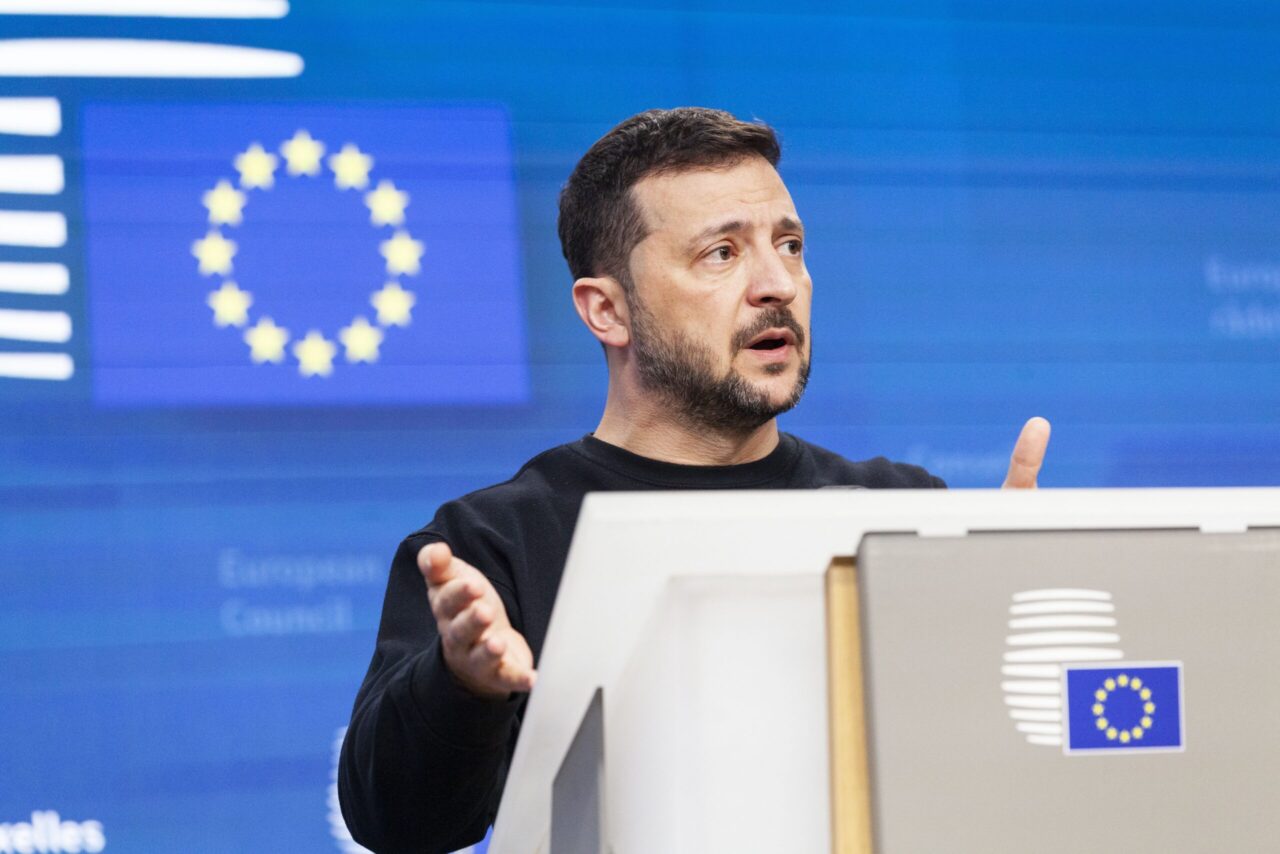
Over the past days, Ukrainian president Volodymyr Zelenskyy has had a flurry of meetings with European leaders. On Monday, the Ukrainian leader met in London with British prime minister Sir Keir Starmer, French president Emmanuel Macron, and German chancellor Friedrich Merz. The European leaders reaffirmed their support for the embattled nation.
The Sticky Points to a Deal for Ukraine
Currently, much of the discussion is around the security guarantees that Ukraine would get in exchange for a peace settlement, as well as the territorial concessions Kyiv is willing to make.
Kyiv’s European partners are pushing hard for a proposal that respects Ukraine’s territorial integrity and the sacrifices the Ukrainian military and people have made defending the country’s land. The Europeans are also insisting that Ukraine gets the necessary security assurances that will make this peace last.
On the subject of security guarantees, the initial US proposal promised a NATO Article 5 equivalent for Ukraine. Under the proposed provision, a future attack against Ukraine would be an attack on the “transatlantic community.” The wording is somewhat vague. It does not stipulate that an attack on Ukraine would automatically trigger a response from the United States or NATO.
Moreover, when it comes to territorial concessions, the path is not clear for Kyiv. Zelenskyy and his government cannot unilaterally agree to concede any territory to Russia. According to the Ukrainian constitution’s Article 73, any official concession of land would need to go through the Ukrainian people first in the form of a referendum. To be sure, Zelenskyy could influence the Ukrainian people one way or the other, but, in the end, it would be up to the Ukrainians to agree to give any land to Russia in exchange for peace.
The Final Hurdle to a Deal for Ukraine
In the end, any agreement reached among the United States, Ukraine, NATO, and the European Union would have to go to the Kremlin. Without the approval of Russian president Vladimir Putin, the war in Ukraine will not end.
And right now, it does look like the conflict will end only when the Kremlin gets what it wants—at the very least, the Donbas and the Crimean Peninsula. Such territorial concessions would establish a land bridge between Russia and Crimea, thus achieving one of Russia’s initial invasion goals.
A Russian approval of a proposed peace settlement, however, might not necessarily spell the end for Ukraine’s troubles (or Europe’s). By invading Ukraine in the first place (in 2014 and 2022), Moscow has shown that it does not respect state sovereignty, national independence, and international law. So, it would not be beyond the Kremlin to agree to a peace agreement only to violate the conditions in five, 10, or 20 years.
A lasting peace requires conditions that Russia will respect, even if that respect stems from a fear of US or NATO reprisals.
About the Author: Stavros Atlamazoglou
Stavros Atlamazoglou is a seasoned defense journalist specializing in special operations and a Hellenic Army veteran (national service with the 575th Marine Battalion and Army HQ). He holds a BA from the Johns Hopkins University and an MA from the Johns Hopkins’ School of Advanced International Studies (SAIS). His work has been featured in Business Insider, Sandboxx, and SOFREP.
Image: Shutterstock.com / photoibo