Under the latest US proposal, if a future Russian government decides to claim more Ukrainian territory, it would risk direct US and NATO military involvement.
There is a flurry of activity across the Atlantic as Ukraine and its partners are searching for the best formula to end the war.
The discussions among Ukraine, the United States, NATO, and the European Union are sticking around two main points: First, Ukraine’s potential territorial concessions to Russia; and second, the security guarantees Kyiv will receive from the United States and NATO so that it can agree to a peace settlement confidently secure in its sovereignty in the future.
Any agreement between Ukraine and its partners will need the Kremlin’s agreement before there is peace. Ukraine’s demands for postwar security guarantees could prove an unsurpassable hurdle for Moscow.
Russia’s Reluctance to Make a Peace Deal
Russia is reluctant to agree to a peace settlement that includes significant security guarantees to Ukraine.
On Wednesday, Russian foreign minister Sergei Lavrov stated that Russia would respond to “any hostile steps” on the part of Europe, including the deployment of military forces in Ukraine. Moscow’s top diplomat qualified his statements by saying that his country does not wish to go to war with Europe.
In its latest operational update on the war, the Institute for the Study of War assessed that “the Kremlin is setting information conditions to reject any meaningful security guarantees for Ukraine by threatening Europe.”
Lavrov’s statements are similar to those made by other senior Russian officials. For example, the first deputy head of Russia’s State Duma International Affairs Committee, Alexei Chepa, said that the Russian military will deliberately target any European military units in Ukraine.
Russian President Vladimir Putin indicated that his country is ready to go to war with Europe if necessary.
“The Kremlin is likely setting information conditions to undermine Ukrainian and Western efforts to secure meaningful security guarantees, such as the deployment of military contingents or other military assistance, against possible renewed Russian aggression in the future,” the Institute for the Study of War added.
US Security Guarantees are on the Table
The current US proposal includes a NATO Article 5-style provision that stipulates that in the event of a future Russian aggression against Ukraine, the attack would be considered an attack on the transatlantic community. The current version of the provision is broad enough to be interpreted in more than one way.
Under one reading (and the most positive to Kyiv), the United States and NATO would be directly involved in combat operations against Russia in the event of further attacks against Ukraine. If a future Russian government decides to claim more Ukrainian territory, it would risk direct US and NATO military involvement.
However, under another reading, the provision stipulates that the United States and NATO could—but would not be required to—be directly involved in combat operations against Russia in the event of further attacks against Ukraine. Under this version, the United States and NATO could have the same support role they have now, providing the Ukrainian military with key security aid, intelligence, and training for Ukrainian troops. No doubt important, such security aid, however, would not dissuade Russia from further acts of aggression. And this should be the sole purpose of any security guarantees to Kyiv.
About the Author: Stavros Atlamazoglou
Stavros Atlamazoglou is a seasoned defense journalist specializing in special operations and a Hellenic Army veteran (national service with the 575th Marine Battalion and Army HQ). He holds a BA from the Johns Hopkins University and an MA from the Johns Hopkins’ School of Advanced International Studies (SAIS). His work has been featured in Business Insider, Sandboxx, and SOFREP.
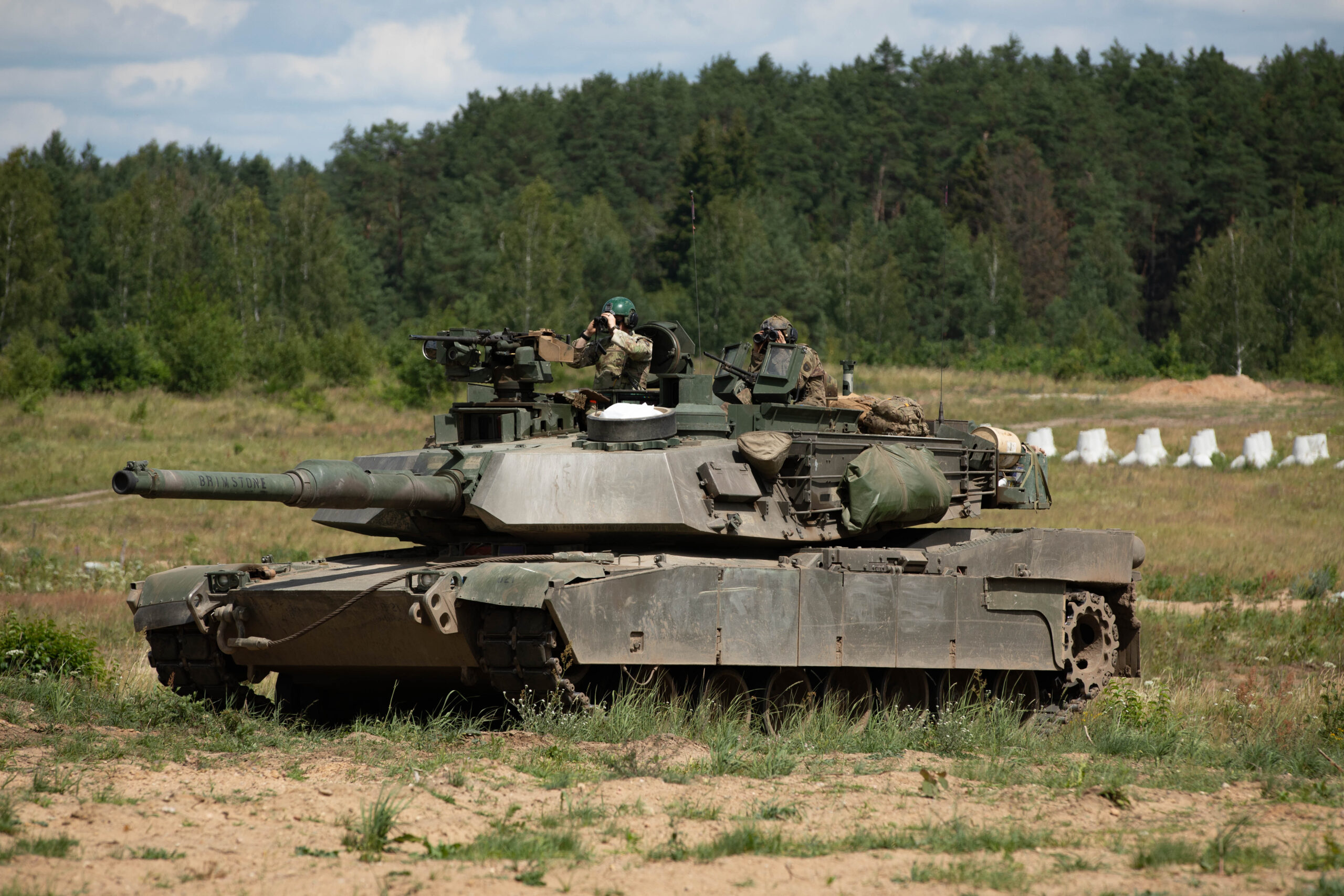
Image: DVIDS.