At the request of unnamed “friendly countries,” the Ukrainian government has agreed to suspend its strikes on Russian oil and gas facilities for the time being.
The Ukrainian government has been asked to limit its successful campaign against the Russian energy infrastructure in response to the spike in energy costs due to the war in Iran.
This is yet another example of how the ongoing war in Iran has escaped the geographical confines of the Middle East, and is affecting geopolitical events in other parts of the world.
Trump to Zelensky: Stop Targeting Russian Energy
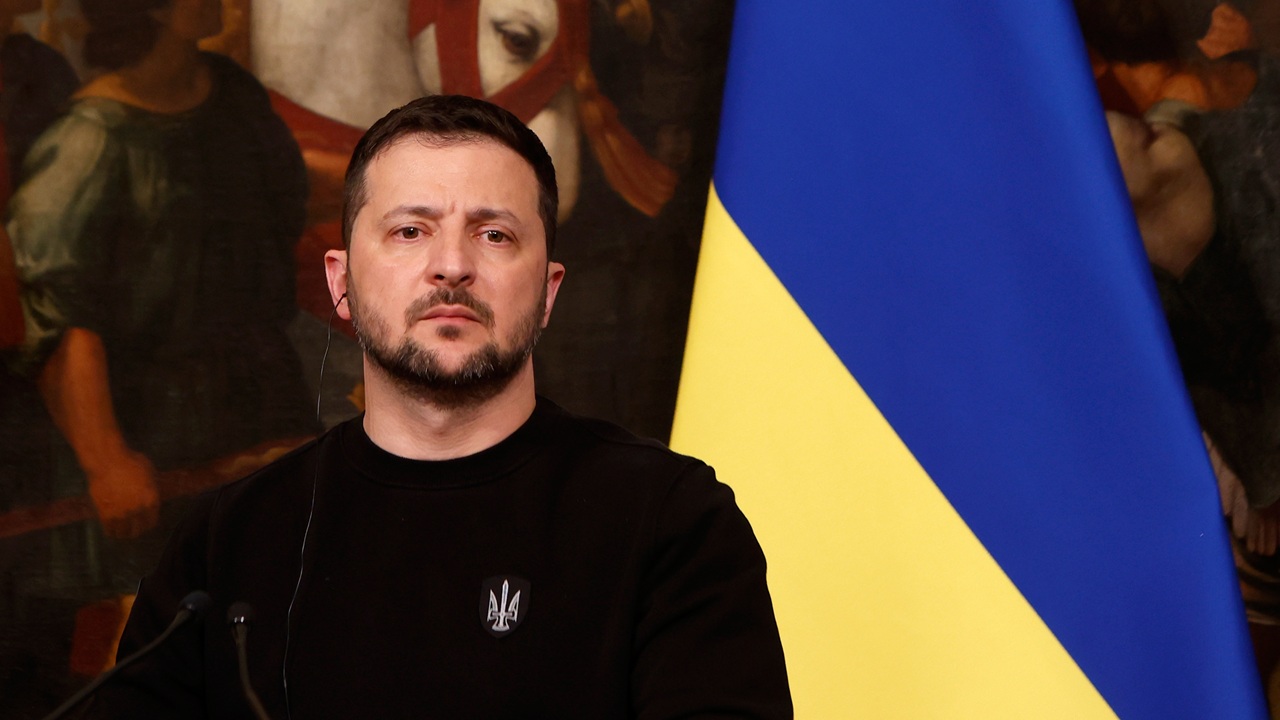
According to reports, Ukrainian President Volodymyr Zelensky told reporters in a press WhatsApp group that unnamed “friendly countries” had asked Kyiv to limit its long-range strikes against Russian oil and gas infrastructure.
Though Zelensky did not clarify which countries had made the request, President Donald Trump had previously taken action to temporarily waive energy sanctions on Russia, and highlighted Russian oil exports as a way to alleviate the surge in global oil prices.
Recent Ukrainian strikes across Russia have targeted crude oil refining units, petroleum bitumen producing facilities, hydrotreating units, and gas fractionation units, among other energy targets.
“Recently, following such a severe global energy crisis, we have indeed received signals from some of our partners about how to reduce our responses in the oil sector and the energy sector of the Russian Federation,” Zelenskiy said in a WhatsApp briefing with journalists.
Why Was Ukraine Bombing Russian Oil Infrastructure?
The request comes after the recent targeting of Russian oil and gas infrastructure across several Russian provinces. The Ukrainian forces have been attacking the Russian energy grid in response to persistent large-scale Russian missile and kamikaze drone attacks against Ukrainian urban centers and critical infrastructure. Russian forces have fired over 1,000 missiles and one-way attack unmanned aerial systems against Ukraine in recent weeks.
Russia is one of the largest producers of oil and natural gas in the world. Despite the ongoing war in Ukraine, Russia has continued to provide gas to the rest of Europe, even at a reduced rate.
The United States imposed heavy sanctions on the Russian oil and gas sector in response to the Kremlin’s full-scale invasion of Ukraine in February 2022. However, the surging energy prices, the result of the protracted war in the Middle East, forced the White House to issue a 30-day waiver on sanctions for the delivery and sale of crude oil and petroleum products of Russian origin loaded on tankers as of March 12.
Energy prices continue to steadily rise as the war in Iran continues. Efforts by the White House, including the International Energy Agency’s (IEA) decision to release 400 million barrels of oil to address the global supply disruption due to the closure of the Strait of Hormuz, have failed to stabilize the energy market.
Ukraine Has Carried Out Spectacular Attacks Inside Russia
The Ukrainian military and intelligence services have displayed a remarkable capability to strike deep inside Russia against high-value targets.
For example, last summer, Kyiv launched Operation Spiderweb, targeting several Russian Aerospace Forces bases across Russia with one-way unmanned aerial systems. The attack targeted Russia’s long-range strategic bomber fleet that Moscow has been using to attack Ukrainian urban centers and critical infrastructure. At least 10 Tu-95 Bear and Tu-22M3 Backfire bombers were destroyed on the tarmac, while several others received varying degrees of damage.
Operation Spiderweb was the most visible example of Ukraine’s ability to strike deep inside Russia at high-value targets, but Kyiv has carried out other strikes as well. For instance, it has carried out sophisticated assassination missions against senior Russian military officers believed to have been engaged in war crimes and crimes against humanity in Ukraine.
About the Author: Stavros Atlamazoglou
Stavros Atlamazoglouis a seasoned defense journalist specializing in special operationsand a Hellenic Army veteran (national service with the 575th Marine Battalion and Army HQ). He holds a BA from the Johns Hopkins University and an MA from the Johns Hopkins’ School of Advanced International Studies (SAIS). His work has been featured in Business Insider, Sandboxx, and SOFREP.