At the start of the Ukraine War, Russia had only three “Black Hole” submarines ready for combat in the Black Sea. That number has likely now decreased to one.
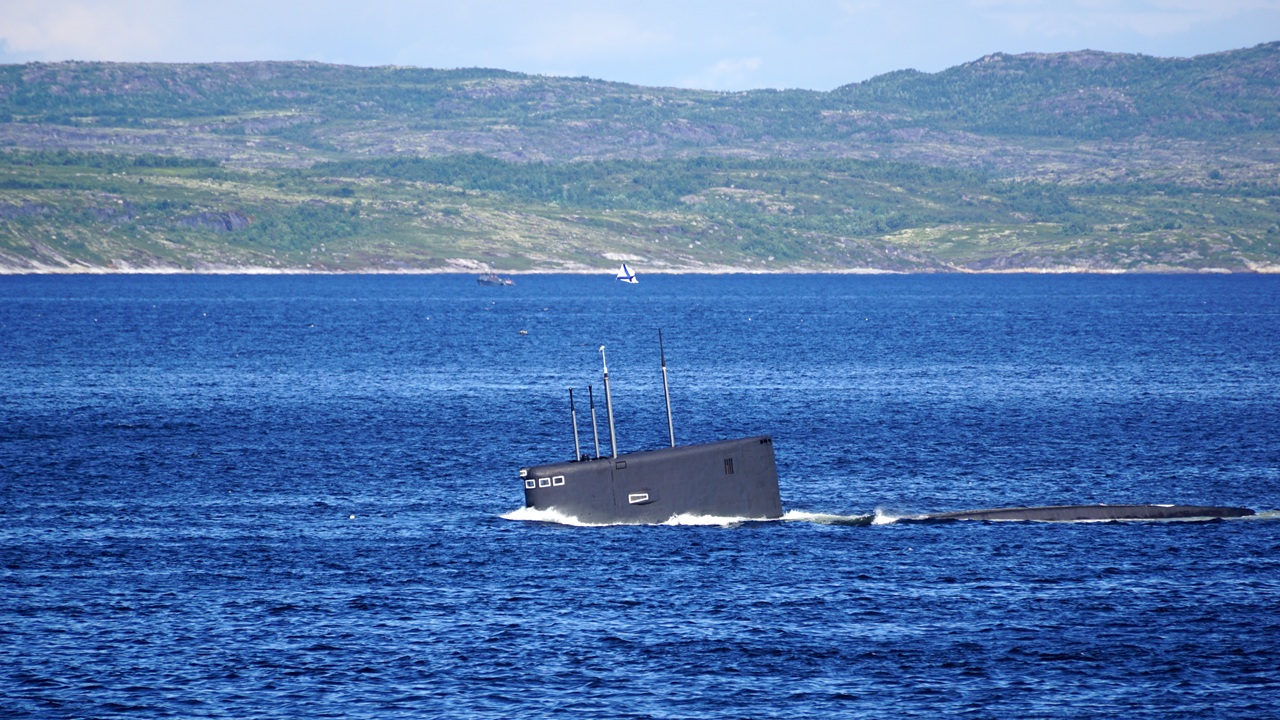
The Russian Navy’s Project 636.3 Varshavyanka class (NATO reporting name “Improved Kilo II”) diesel-electric attack submarines have often been described as “Black Holes” due to their exceptional quietness that allows them to operate almost undetected in coastal waters. Regardless of whether the moniker is fitting, it was reported on Monday that one of the boats was disabled and possibly sunk by a Ukrainian “Sub Sea Baby” drone while in port in Novorossiysk.
The loss of such an asset would be a severe blow to the Russian military. In addition to the submarine’s cost of an estimated €340 million ($399 million), it was armed with four Kalibr cruise missile launchers, allowing it to strike Ukrainian territory. Russia may have one fewer platform to carry out such attacks with the Kalibr.
Ukraine Put a Hole in the “Black Hole”
If confirmed, Monday’s attack would be notable as it marked the first successful use of the Sub Sea Baby underwater drone against a Russian submarine.
The Security Service of Ukraine (SBU) announced, “The damaged boat was forced to remain in the port of Novorossiysk due to successful special operations by Sea Baby surface drones, which drove Russian ships and submarines out of Sevastopol Bay in the temporarily occupied Crimea.”
Video of the attack was widely shared on social media, although the specific submarine has yet to be identified. The Kremlin has not yet offered public comment.
Since Russia’s initial invasion of Ukraine in February 2022, its Black Sea Fleet has suffered several notable setbacks, including the sinking of its flagship, the guided-missile frigate Moskva, in April of that year.
The Russian Black Sea Fleet Looks Awfully Thin
As the war in Ukraine enters its fifth year, most of Russia’s naval power has remained on the sidelines of the conflict. Due to Russia’s unusual geography, it has separate fleets for the Black Sea, the Baltic Sea, the Pacific, and the Arctic, and only the Black Sea Fleet has seen significant fighting.
As more and more ships in the Black Sea Fleet have become casualties of the war, Russia’s combat power in the Black Sea has waned. However, by international agreement, the Kremlin cannot move other military ships into the Black Sea to reinforce it without permission from Turkey, which controls the Bosporus Strait connecting the Black Sea to the Mediterranean. Turkey, a NATO member, has steadfastly refused to grant such permission.
The Russian Navy’s 4th Independent Submarine Brigade, a unit of the Black Sea Fleet, operated six Project 636.3 submarines before the start of the war. Three of the submarines were caught outside the Black Sea at the start of the invasion—two in the Mediterranean and one in the Baltic—and were unable to return. That left just three in the Black Sea.
One of those, B-237 Rostov-on-Don, was severely damaged after being struck by a Storm Shadow/SCALP-EG cruise missile that was fired by a Ukrainian Air Force Sukhoi Su-24 (NATO reporting name “Fencer”) tactical fighter-bomber in September 2023. It was believed to have been sunk in a follow-up missile strike in August 2024.
The possible loss of a Project 636.3 Varshavyanka class attack submarine in the Black Sea comes just two months after another boat of the class was forced to limp back to Russia after experiencing a mishap. The Black Sea Fleet’s B-261 Novorossiysk was one of the two subs of the class that were in the Mediterranean Sea in February 2022, and it was left without a home port after Russia abandoned its military facilities in Syria following the fall of the Assad regime.
There were reports that the submarine caught fire, which explains why it traveled on the surface while escorted by a Russian Navy tug during a transit of the English Channel in October. The Royal Navy’s Type 23 Duke-class frigate HMS Iron Duke shadowed the Improved Kilo-class boat, while the Dutch Navy also provided escort.
Predictably, the Kremlin denied that there were any issues—but if these reports are confirmed, 2025 will have been a black year indeed for Russia’s Black Holes.
About the Author: Peter Suciu
Peter Suciu has contributed over 3,200 published pieces to more than four dozen magazines and websites over a 30-year career in journalism. He regularly writes about military hardware, firearms history, cybersecurity, politics, and international affairs. Peter is also a contributing writer for Forbes and Clearance Jobs. He is based in Michigan. You can follow him on Twitter: @PeterSuciu. You can email the author: [email protected].
Image: Shutterstock / Sergei Fokin.