Ukraine has abundant experience fighting against Iranian drones in its own skies—the same drones that are now being used to target the Arab nations of the Persian Gulf.
Three weeks into “Operation Epic Fury,” Iran’s drone and missile attacks across the Middle East persist. In an attempt to protect urban centers and energy infrastructure, Ukraine is sending counter-drone equipment to the area.
Ukraine’s brutal war of attrition against Russia—now in its fifth year—has given the country’s armed forces abundant experience in fighting one-way attack drones on a budget.
Ukrainian Counter-Drone Assistance in the Middle East
Iranian drone strikes continue to present a difficult task for the US military, Israel, and their partners across the region. Iranian drones are striking oil and natural gas infrastructure in the Gulf. They are also attacking commercial maritime traffic trying to traverse the Strait of Hormuz, where 20 percent of the world’s oil supply passes every day.
Over the past week, Ukrainian counter-drones experts have deployed in the region and are providing expert assistance to friendly countries, including Saudi Arabia, the United Arab Emirates, Qatar, Kuwait, and Jordan.
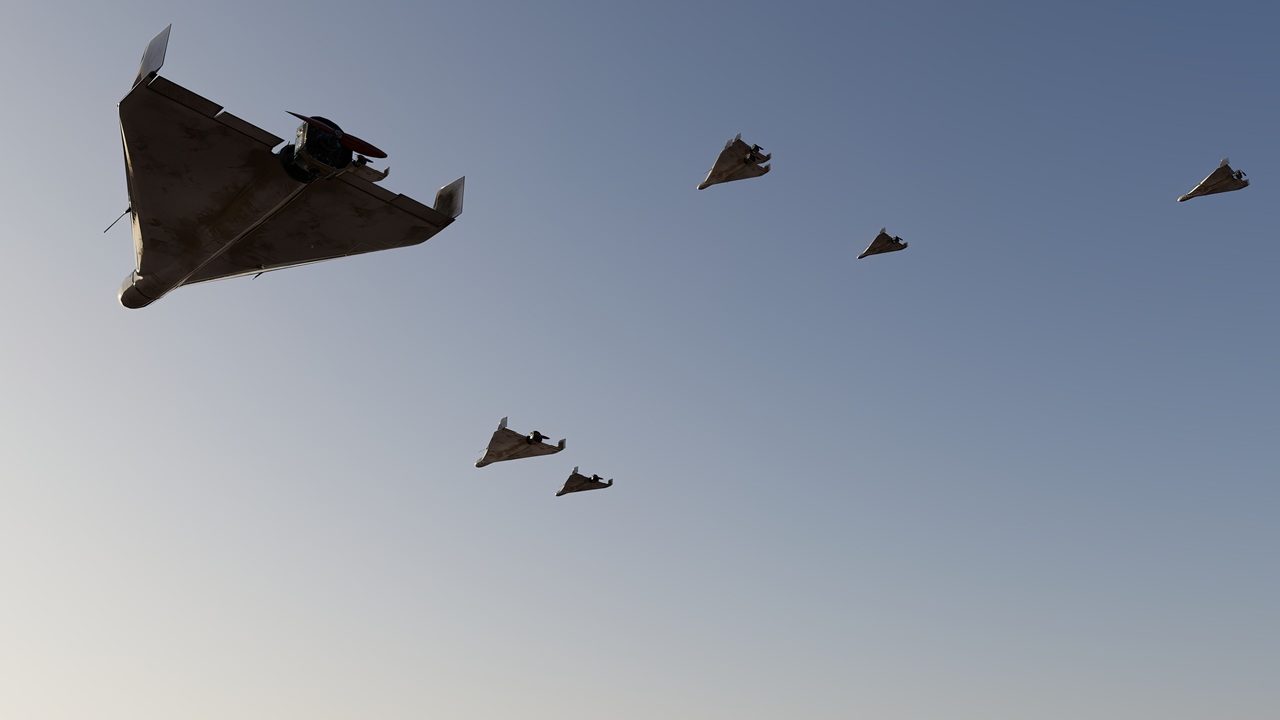
The Arab nations of the Persian Gulf region are eagerly seeking Ukrainian help because Kyiv’s forces have dealt with exactly the same type of threat for four years. Since the early months of the war in Ukraine, Iran has been providing Russia with military assistance, including tens of thousands of Shahed-type kamikaze drones. Now Iran is using the same kinds of drones in its air campaign against America and its allies, meaning that the Ukrainian experience is extremely relevant.
“The work is focused on two areas. The first is the use of Ukrainian technologies to counter aerial threats, in particular UAV attacks,” Rustem Umerov, secretary of the National Security and Defense Council of Ukraine, said. “The second is consultations with partners on assessing the security situation and preparing practical solutions for air defense based on Ukraine’s experience.”
Ukrainian counter-drone experts have assessed the defenses of critical infrastructure facilities, including oil and liquified natural gas refineries and transport terminals, and proposed solutions.
Inside Ukraine, the Ukrainian military has developed a layered defense to counter Iranian-made drones used by the Russian forces. Kyiv’s defense involves kinetic measures, air defense missiles, fighter jets, interceptor drones, anti-aircraft cannons and machine guns, as well as electronic warfare technology designed to confuse a drone’s guidance and control features.
“Expert recommendations are also being provided to improve the effectiveness of certain air defense systems. Interception units have been deployed to protect civilian and critical infrastructure. Work is also underway to expand coverage areas,” Umerov added.
But Ukrainian assistance is not limited simply to expert assessments and estimates about air defense coverage. Kyiv has also sent friendly countries interceptor drones, special loitering munitions designed to hunt other drones.
Why Drones Are So Dangerous—and So Ubiquitous
One-way attack unmanned aerial systems, also known as kamikaze drones or loitering munitions, offer a cheap and efficient kinetic option to militaries. Iran has been a pioneer of unmanned aerial system technology, with some of its programs dating back before the turn of the century.
Whereas ballistic and cruise missiles are considerably more destructive than kamikaze drones, they are also easier to spot and intercept. Conversely, one-way attack unmanned aerial systems do not pack as much high explosive material but are hard to spot and intercept due to their size.
Shahed drones, of the kind used by Iran, pack a 90-pound high explosive warhead, have an operational range of nearly 1,300 miles, are easy to mass produce, and are dirt cheap (approximately $35,000 per drone) relative to conventional missiles. They are also much easier to shoot down, but the economics of doing so tend to favor the attacker, as interceptor missiles such as the MIM-104 Patriot are far more expensive.
This cost imbalance is an additional factor that makes Ukrainian assistance invaluable. Ukraine, which does not have enormous stocks of Patriot and other anti-air missiles, has developed low-cost anti-air systems such as counter-drone drones and ground fire. As the Iran conflict progresses and US-supplied Patriot stocks diminish, these methods could become vital to the Gulf states’ security.
About the Author: Stavros Atlamazoglou
Stavros Atlamazoglou is a seasoned defense journalist specializing in special operations and a Hellenic Army veteran (national service with the 575th Marine Battalion and Army HQ). He holds a BA from the Johns Hopkins University and an MA from the Johns Hopkins’ School of Advanced International Studies (SAIS). His work has been featured in Business Insider, Sandboxx, and SOFREP.