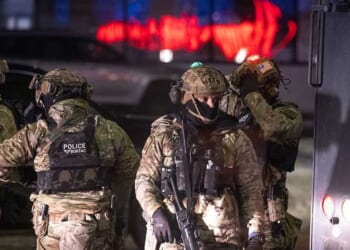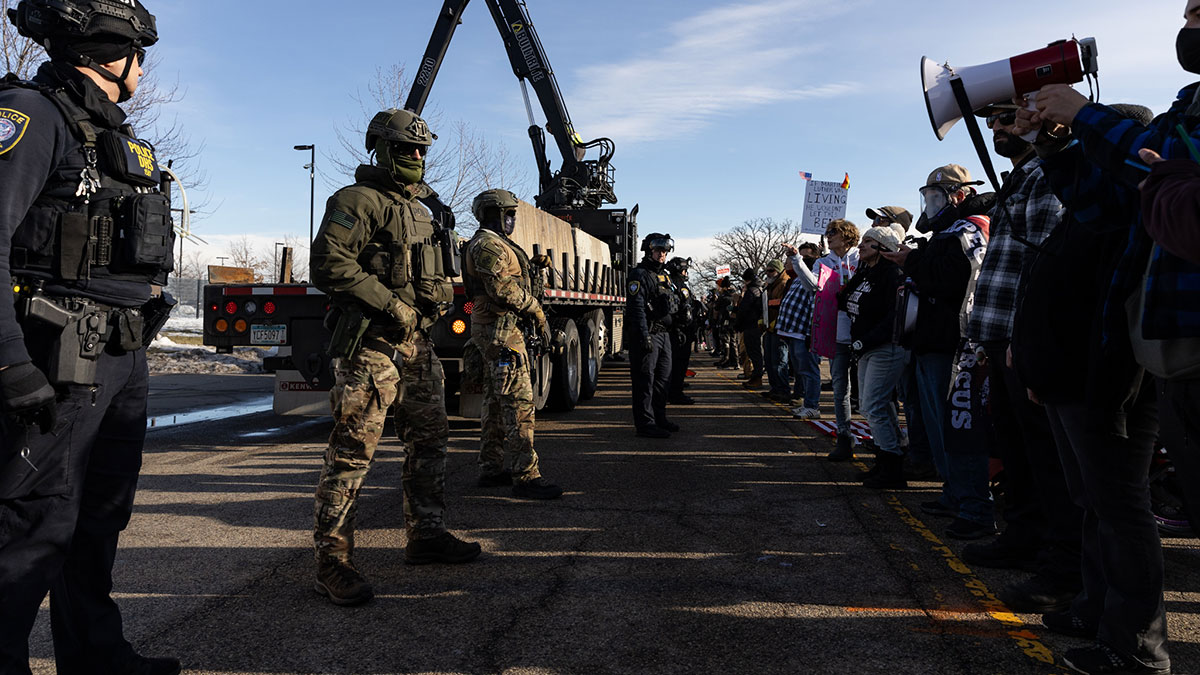
Over the weekend, another anti-ICE protester, Alex Pretti, was shot and killed during a struggle with federal immigration agents in Minneapolis—the second such death in just over two weeks. Renee Good was also killed during a confrontation with agents on January 7.
Both incidents have poured accelerant on an already-raging fire. After Good’s killing, protesters barricaded at least one block in Minneapolis, a move reminiscent of the 2020 post-George Floyd riots. The following Sunday, demonstrators disrupted a church service because a lay pastor worked for ICE. After Pretti’s shooting, rioters took to the streets of nearby St. Paul, clashing with immigration officials and attempting to overrun a hotel where agents were staying.
Finally, a reason to check your email.
Sign up for our free newsletter today.
Rhetoric, too, is escalating. Minnesota Governor Tim Walz told reporters earlier this month that Minnesota was “under attack” and that he was “fight[ing] a war against the federal government.” A Minnesota bookstore owner, interviewed by Jake Tapper, likened immigration-detention centers to concentration camps and suggested that the Trump administration might put immigrants into ovens. A self-described Antifa member made news by calling for “armed” action in city streets.
Across the nation, both deaths were immediately denounced by politicians and prominent activists on the left as cold-blooded murders. On the right, many—including some federal officials—were just as quick to ascribe the worst motives, branding both Good and Pretti “domestic terrorists” and would-be “assassins.”
Political priors inevitably shaped interpretations of the footage. To some, Good was executed while merely attempting a U-turn; to others, she was killed while clearly trying to run down a federal agent. Critics of the Minneapolis enforcement operation saw Pretti as man murdered in cold blood for exercising his First Amendment rights. Defenders argued that he was shot after reaching for a firearm he intended to use against the agents—a straightforward case of self-defense.
The legal truth in both cases is far more ambiguous than many assume. By now, Americans ought to have learned to wait for fuller information before rushing to judgment after such incidents. From the 2014 Michael Brown shooting and the myth of “Hands up, don’t shoot,” to the 2020 shooting of “unarmed” Jacob Blake, communities have erupted because too many refused to stay calm long enough for the facts to emerge.
We can hardly expect the public to remain measured, though, if our leaders do not. That’s why the most important thing right now is for everyone in power—on both sides—to lower the temperature.
That starts with calling off the open hostilities waged by activists and local and state leaders against immigration enforcement. Activists have targeted federal agents’ hotels for harassment, honking horns, banging drums, and making it impossible for them to sleep. They have followed enforcement officers’ cars, boxed them in, and alerted would-be deportees so they can abscond.
This effort is highly coordinated. It includes in-person and virtual trainings on how to disrupt federal agents, thousand-person group chats dedicated to tracking and doxing agents, license-plate databases, and roving patrols. Independent journalist Cam Higby’s reporting on what resembles a coordinated insurgency operation has gotten the attention of FBI director Kash Patel. It’s hard to justify scaling back federal enforcement when it could encourage activists to use these tactics again in the future.
The Minneapolis Police Department could also help ease local tensions. It has been conspicuously absent from some of the most contentious confrontations. Minneapolis need not abandon its “sanctuary” policies to allow police to assist with crowd control. Doing so would also make it harder for the Trump administration to claim that local officials are abetting broader obstruction efforts.
Governor Walz and local officials in Minneapolis and St. Paul must also discourage constituents from needlessly antagonizing federal agents. The message should be clear: make arguments, persuade voters, and file lawsuits if you believe your rights were violated—but stop blocking traffic, stop harassing law-enforcement officers, and do not physically interfere with enforcement operations.
Federal officials also need to stop being provocative. They risk undermining their own credibility and the credibility of the agents on the ground and the institutions they represent. They should emphasize to agents the importance of maintaining composure, even when confronted by agitators.
Some encouraging steps are now underway. Perhaps surprisingly, one of the more responsible voices has been that of President Trump, who has taken a more measured tone than many would have expected. The president spoke by phone with Governor Walz yesterday, and the administration seems to be working to deescalate the situation by reassigning Border Patrol’s Greg Bovino and sending border czar Tom Homan to Minneapolis.
The rest of us could keep a few things in mind, too. ICE and Customs and Border Protection are enforcing federal laws that have been on the books for decades; the government has both the authority and the duty to enforce them. There is no legal right to obstruct federal enforcement efforts, no matter how strongly one disagrees with the policies behind them. If we oppose this or any policy, we should pursue change peacefully—through politics and the courts—not by sowing chaos on American streets.
If this strikes you as too tall an order, consider the alternative, and its consequences: heated rhetoric and aggressive action have led only to tragedy.
Photo by Mostafa Bassim/Anadolu via Getty Images
City Journal is a publication of the Manhattan Institute for Policy Research (MI), a leading free-market think tank. Are you interested in supporting the magazine? As a 501(c)(3) nonprofit, donations in support of MI and City Journal are fully tax-deductible as provided by law (EIN #13-2912529).
Source link