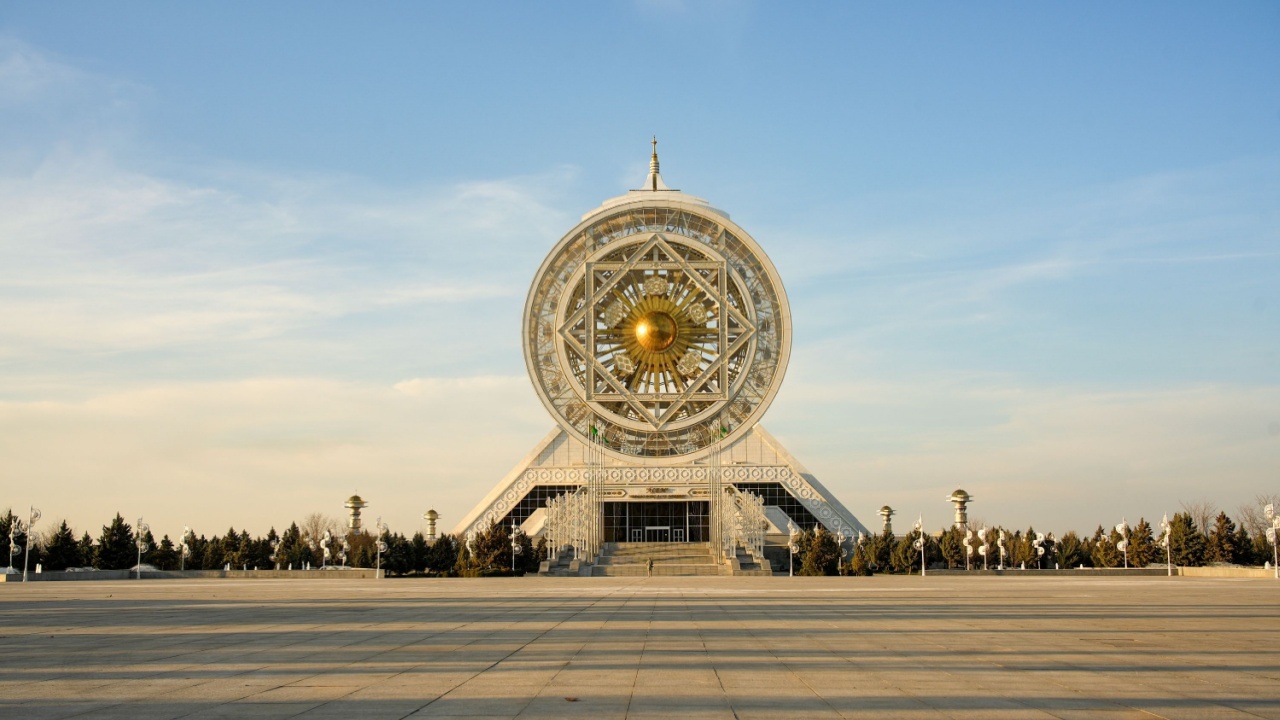
Can Turkmenistan reconcile its traditionally “neutral” foreign policy with further integration within the Central Asian region?
While global headlines track great-power clashes, a quieter diplomatic initiative is emerging from a country that seldom captures international attention: Turkmenistan. Ashgabat’s “Peace and Trust” Forum, convening leaders from Russian president Vladimir Putin to Turkish president Recep Tayyip Erdoğan and Iranian president Massoud Pezeshkian, is a live demonstration of the country’s leveraging of its permanent neutrality to build a regional platform that draws in regional powers.
This forum builds directly on Turkmenistan’s proposal for a “Consultative Meeting on Security in Central Asia”—a UN-branded maneuver to convert neutrality into influence. Together, they underscore a pivotal reality: Central Asia is no longer just a venue for a new “Great Game” dominated by external powers. As evidenced by their recent summits with the United States and the European Union, the Central Asian nations are increasingly assertive agents shaping their own geopolitical environment.
Turkmenistan’s “active neutrality” has evolved from a defensive principle into a strategic platform. By framing the security dialogue under a UN mandate, Ashgabat created a versatile diplomatic instrument. As one observer notes, the UN “franchise” allows a neutral state to “pour any content” into it, which Turkmenistan is doing by pairing the security meeting with a proposed “Regional Center for Climate Change Technologies in Central Asia.” This bundling of hard security and climate diplomacy enhances its appeal and demonstrates a sophisticated, multi-issue approach to regional diplomacy.
The initiative offers clear strategic benefits. For Turkmenistan, it carves out a distinct role as a convener and facilitator, bolstering sovereignty in a neighborhood bordered by Russia, China, and Iran and increasingly engaged with by the United States, European Union, Gulf Cooperation Council, and Israel.
Relations with Tehran are particularly important, a priority underscored by shared history and modern necessity. The Turkmen capital, Ashgabat—its name derived from the Persian for “city of love”—lies near the ruins of Nisa, capital of the Parthian Empire. This historical depth adds a layer of cultural and strategic resonance to their modern relationship.
Turkmen foreign minister Rashid Meredov was among the foreign dignitaries to address the Tehran Dialogue Forum in May. Iran, stuck in a diplomatic limbo with the United States after joint US-Israeli military strikes in June, is hedging by cultivating friendly relations with neighbouring states. In this context, it views stable ties with Ashgabat as strategically valuable, especially following Israel’s recent opening of an embassy in Turkmenistan.
Concurrently, Ashgabat is advancing its core economic interests through gas diplomacy, including new memoranda on gas supplies to Iraq via Iran, ensuring that tangible energy partnerships underpin its diplomatic outreach.
This economic statecraft is spearheaded by a clear division of labor within the leadership: President Serdar Berdimuhamedov handles political declarations and formal diplomacy, while his father and former president, Gurbanguly Berdimuhamedov, focuses on high-level economic outreach.
Notably, Gurbanguly led the Turkmen delegation at the meeting with the German Committee on Eastern European Economic Relations in Berlin last September. There, he proposed partnerships in renewable energy and, critically, expressed interest in purchasing German gas pipeline equipment—linking diplomatic initiatives directly to infrastructure development.
For Russia, the initiative offers a useful, low-risk supplementary platform that provides a way out of the diplomatic isolation the European Union—a bloc now locked in an adversarial relationship with Moscow—seeks to impose on it in Central Asia through its sanctions regime. It ensures Russia maintains a vital foothold within the region’s increasingly multi-vectorial foreign policies, offering an additional venue to promote its interests without the counter-productive center-periphery dynamics of the past.
Russia knows it has no monopoly on the region, a reality underscored by the Central Asian presidents’ recent summit with US president Donald Trump in Washington and the summit with the EU in Samarkand, Uzbekistan. Moscow’s goal is therefore to wrangle advantages for itself from within the region’s diplomatic landscape.
The format proposed by Ashgabat offers precisely this path. A functional, Turkmen-led security forum could mature into a standing regional structure—a potential alternative to broader, less manageable formats. While past efforts like the Conference on Interaction and Confidence-Building Measures in Central Asia (CICA) have struggled with scope and capacity, Turkmenistan’s focused, UN-linked model may avoid similar pitfalls.
Its success hinges on proving it can deliver pragmatic, results-oriented dialogue on specific issues like climate or water security, thereby offering a complementary, rather than competing, value proposition to formats like the Shanghai Cooperation Organization, which has a grand strategic focus.
However, the vision faces inherent constraints. Turkmenistan remains a closed state. Its capacity to sustain complex, high-level multilateral engagement remains unproven.
This capacity is being tested by the growing momentum toward full membership in the Organization of Turkic States (OTS). While Ashgabat has long maintained a cautious observer status, the organization—driven by Ankara’s ambition to transform it into a more institutionalized geopolitical platform to promote its interests—increasingly seeks Turkmenistan’s full commitment. This external pull toward a tighter, Turkic-aligned institutional framework presents an inherent tension with the foundational principle of permanent neutrality.
This external pressure crystallizes the core dilemma for Ashgabat: deeper integration into any bloc, even a culturally affinitive one, risks diluting the careful neutrality that defines its statecraft. But maintaining an overly hermetic, security-centric system stifles the connectivity needed to enhance the nation’s international stature.
Turkmenistan’s leadership thus faces a defining strategic choice: how to project “active neutrality” outward without destabilizing the controlled foundation at home. The success of initiatives like its proposed security dialogue will depend on resolving this tension.
Nevertheless, Turkmenistan’s diplomatic gambit is a telling case of pragmatic statecraft in a region too often dismissed as a passive arena for great-power rivalry. It reflects a conscious drive by Central Asian states to assert their agency, balance external relations, and build institutional frameworks that consolidate their sovereignty. Success is not assured, but the proposition alone signals a shift: Central Asia is no longer merely a playground—it is a table where its own nations are taking seats and setting agendas.
For US strategists, this signals that effective engagement with Central Asia must move beyond a narrow great-power lens. It requires recognizing—and engaging with—these increasingly confident, self-directed regional architectures, which are learning to leverage their position between larger powers rather than simply being leveraged by them.
About the Author: Eldar Mamedov
Eldar Mamedov is a Brussels-based foreign policy expert. He has degrees from the University of Latvia and the Diplomatic School in Madrid, Spain. He has worked in the Ministry of Foreign Affairs of Latvia and as a diplomat in Latvian embassies in Washington and Madrid. Since 2009, Mamedov has served as a political advisor for the Social Democrats in the Foreign Affairs Committee of the European Parliament (EP) and is in charge of the EP delegations for inter-parliamentary relations with Iran, Iraq, and the Arabian Peninsula. Find him on X: @EldarMamedov4.
Image: EyeTravelPhotos / Shutterstock.com.