The PKK has demanded the release of Kurdish leader Abdullah Öcalan from prison as a precursor to peace talks—but doing so would lead to a national crisis in Turkey.
The ghosts of Turkey’s long counterinsurgency war are back at the negotiating table. After years of frozen hostility, shifting alliances in Syria, and rising domestic pressure on Ankara, reports now indicate that the Kurdistan Workers’ Party (PKK) is signaling a willingness to reopen talks with Turkey.
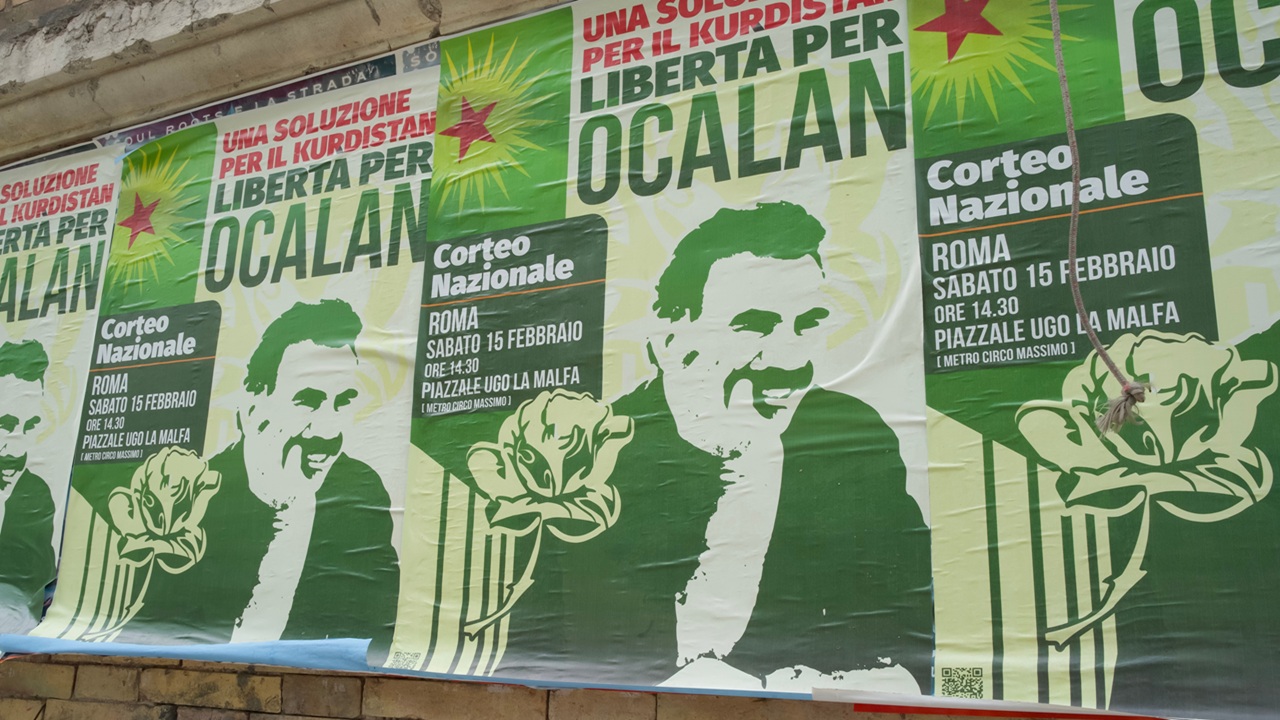
But the price is steep—and could be politically radioactive for longtime Turkish leader Recep Tayyip Erdoğan. The PKK wants Abdullah Öcalan, their imprisoned founder and ideological lodestar, freed or meaningfully empowered in the run-up to the peace negotiations.
This is no small demand. Öcalan is not merely a high-profile inmate. In the minds of millions of Kurds, he remains the symbolic heart of the Kurdish national project. Conversely, to millions of Turks—especially within the security establishment—he is an arch-terrorist, the architect of a violent insurgency responsible for decades of murder and chaos. His release would be the most explosive political act in modern Turkish history.
The PKK knows exactly what it is doing. With Turkey juggling economic strain, domestic protests amid a crackdown on the opposition, and heavy geopolitical commitments—from Syria to the Caucasus—the group senses leverage over Erdoğan. Ankara’s internal vulnerabilities are the foundation of this renewed push for talks. Peace, the PKK believes, is something Turkey wants. This is its price.
Ankara’s Red Line Meets Political Reality
In 1999, Turkish intelligence agents abducted Öcalan in Kenya and brought him back to Turkey to face terrorism charges. The Kurdish leader was convicted and sentenced to death—but after Turkey abolished capital punishment in 2004 in its bid to join the European Union, his sentence was commuted to life imprisonment. Today, Öcalan is the most heavily guarded prisoner in Turkey—for many years the sole inmate, and today one of only a handful, at a maximum-security prison on the island of İmralı in the Sea of Marmara.
For decades, Turkey’s official stance has been uncompromising: Öcalan is too dangerous to ever walk free. Even during the 2013-15 “Solution Process”—the closest Turkey and the PKK ever came to striking a durable peace—Ankara allowed Öcalan influence from his island prison on İmralı, but never entertained freeing him.
But the ground under Turkish politics is shifting. The economy remains fragile. The Kurdish political movement is fragmented but still influential. Erdoğan’s Justice and Development Party (AKP), long dominant, is facing electoral erosion. The once-stable nationalist bloc inside Turkey is increasingly divided over how to manage the Kurdish question in the long-term.
This creates a paradox. Releasing Öcalan is still unthinkable for many. Ignoring Kurdish grievances, however, is too politically costly. Ankara’s traditional security-first approach has not crushed the PKK after all these years. It has merely moved the conflict across borders and into the ungoverned gray zones of northern Iraq and Syria. The problem has metastasized, and it appears impossible to solve through further military measures.
In essence, the question for Erdoğan is no longer whether the old approach works. It is whether he is willing to take the profound political risk of trying something new.
The PKK’s Power Play
Demanding Öcalan’s release is not merely symbolism. It is part of a wider strategy by the PKK. They understand that any negotiation without its founder’s direct involvement will be seen as illegitimate by its rank-and-file and by many Kurds in Turkey and Syria. In the PKK’s grand narrative, Öcalan is their Nelson Mandela.
More importantly, the PKK wants to force Turkey into a public concession before talks even begin. This is about testing Ankara’s political resolve and exposing weakness. If Turkey budges even an inch on Öcalan, the PKK will claim psychological victory.
The demand is also guaranteed to kick up a firestorm in Turkey. Nationalists view Öcalan’s release as a nonstarter. Conversely, leftists and some peace-inclined Kurdish political groups argue that real settlement is impossible without his involvement.
Interestingly, the impact on domestic Turkish politics could be profound. Erdoğan’s own coalition might not survive the split—his nationalist partners in the right-wing Nationalist Movement Party (MHP) would almost certainly revolt, while elements of the AKP might privately accept such a move if it stabilized the country and opened political space ahead of future elections. The PKK is exploiting these fractures with surgical precision.
The Peace Negotiations’ Success Is Far from Guaranteed
Still, even if both sides enter the room, the architecture of these talks is already fragile. Turkey insists on full disarmament and demobilization. The PKK demands political recognition and autonomy. Neither side trusts the other.
The regional environment complicates things further. The PKK’s Syrian affiliate, the YPG, has built a quasi-state in northeastern Syria with American backing. Iraq’s Kurdistan Region is a complex theater where Turkey launches routine airstrikes against PKK positions. Iran has its own Kurdish independence movement, and Tehran works both against and with Kurdish groups in different areas whenever convenient.
Peace between Turkey and the PKK does not happen in isolation. It happens in a region where every actor has a stake in preventing the other from winning.
Therefore, the likelihood of a clean breakthrough in these negotiations remains low. But the fact that both sides are even talking about talking suggests desperation is beginning to shape their respective strategies.
Erdoğan Has No Good Options Ahead
Erdoğan is a political survivor with a flair for dramatic, legacy-defining maneuvers. If he believes that a controlled negotiation with the PKK could calm Turkey’s southeast, free up military bandwidth abroad, and reshape the political landscape ahead of future elections, he might take the risk.
Freeing Öcalan—or even granting him a public role—would be the most dangerous gamble of Erdoğan’s career. It would ignite nationalist fury, destabilize his coalition, and possibly trigger street unrest. But rejecting talks outright carries its own costs, such as endless insurgency, a restless Kurdish electorate, and a grinding regional shadow war that Turkey can ill afford.
Turkey and the PKK are circling each other again, each sensing weakness in the other. But Öcalan’s release is more than a political concession. It is a national trauma flashpoint. If this is truly the PKK’s opening demand, then Ankara faces a stark dilemma: either rewrite the rules of modern Turkish politics or accept another decade of low-intensity war.
The PKK has set the price of peace. Is Erdoğan willing—or able—to pay it?
About the Author: Brandon J. Weichert
Brandon J. Weichert is a senior national security editor at The National Interest. Recently, Weichert became the host of The National Security Hour on America Outloud News and iHeartRadio, where he discusses national security policy every Wednesday at 8pm Eastern. Weichert hosts a companion book talk series on Rumble entitled “National Security Talk.” He is also a contributor at Popular Mechanics and has consulted regularly with various government institutions and private organizations on geopolitical issues. Weichert’s writings have appeared in multiple publications, including The Washington Times, National Review, The American Spectator, MSN, and the Asia Times. His books include Winning Space: How America Remains a Superpower, Biohacked: China’s Race to Control Life, and The Shadow War: Iran’s Quest for Supremacy. His newest book, A Disaster of Our Own Making: How the West Lost Ukraine is available for purchase wherever books are sold. He can be followed via Twitter @WeTheBrandon.
Image: Shutterstock / Inga Fortuna.