Is the new Turkish-Saudi-Pakistani defense pact an attempt at an Islamic NATO or a strategic self-sabotage?
The idea of a budding “Islamic NATO” under Turkey, Pakistan, and Saudi Arabia might seem bold and fresh in a period of Middle Eastern “realignment.” But don’t dismiss it out of hand as the emergence of a symbolic new regional alliance: the trilateral convergence risks creating conflicting security commitments. In the event that a pact is signed, NATO’s southern flank might face strategic incoherence if Ankara’s obligations were to diverge from the alliance’s priorities, challenging coordination with Washington and European partners.
Given Pakistan’s status as a nuclear power, the pact could perpetuate strategic ambiguities. Even if official language doesn’t extend Pakistan’s nuclear umbrella to partners, the perception of potential nuclear backing for Saudi Arabia—and, eventually, Turkey—could heighten crisis instability and miscalculation risks. One disgruntled state is India. Pakistan’s contentious relationship with India is well-established. India has already expressed concern over the emergence of the Saudi-Pakistan pact signed in September 2025. Adding Turkey, whose ties with India are already fraught, is likely to intensify strategic competition across the wider Indo-Middle East corridor.
Perhaps most worryingly, the pact between the three Muslim states is likely to be perceived and possibly marketed as a counter-balancing initiative to Israel and the Abraham Accords signatory states, which in turn is a motivator to harden security competition throughout the region that could “destabilize already fragile balances, undermine existing deterrence frameworks, and sharply increase risks for Israel and Western interests.”
Whose NATO Is Turkey Loyal To?
It would be mere hypocrisy to suggest Turkey is forbidden from seeking strategic alliances outside of NATO, after all, some of the United States’ most important allies are non-NATO countries. But despite some analysts’ insistence that concern over Turkey’s reduced commitment to NATO is missing the point, Ankara joining a defense pact with Riyadh and a nuclear-armed Islamabad is a serious conflict of interest.
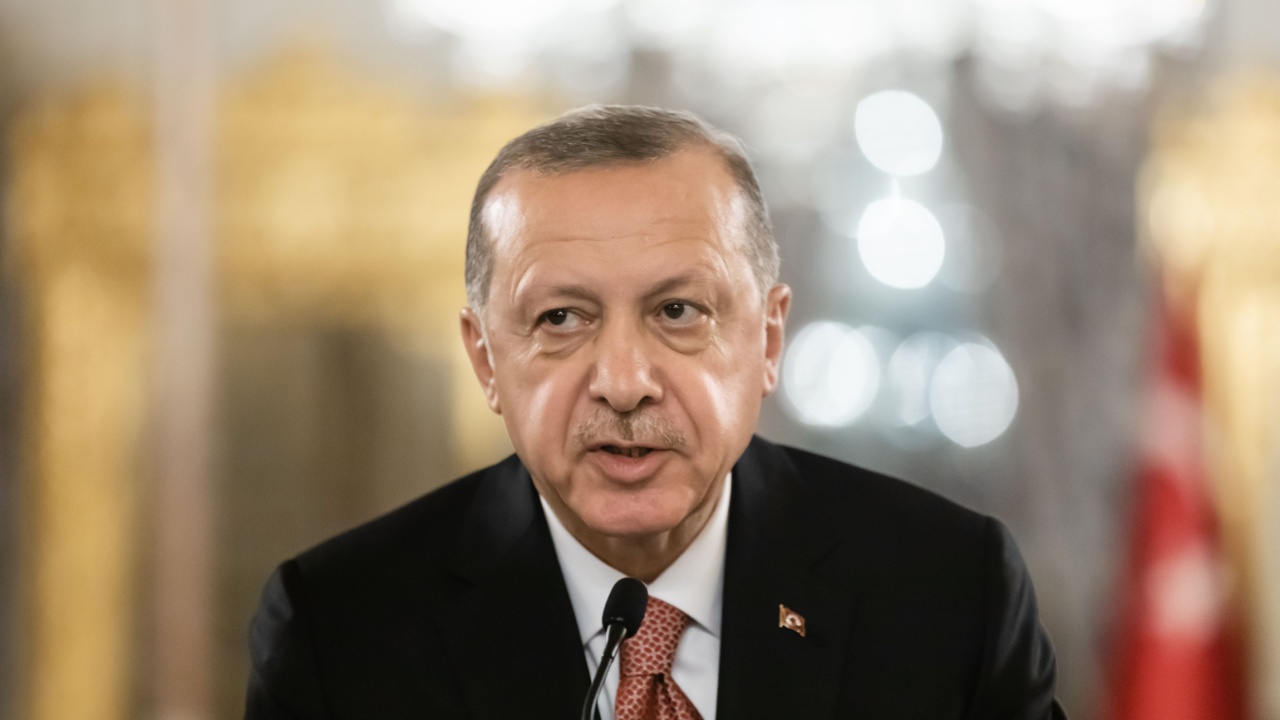
President Recep Tayyip Erdogan’s interest in the so-called “Islamic NATO” is based on his desire to maneuver against the alliance to which Turkey has been a party for 74 years. This avoidance and rejection of responsibility are clear divergences from the mutual defense agreements Washington has pursued beyond NATO. This presents a major problem for three NATO priorities worldwide: protecting democracy, nuclear nonproliferation, and counterterrorism.
Riyadh and Islamabad might not be explicit adversaries of NATO, but Ankara’s building of a mutual defense alliance with them is a mockery of the founding pillars of “democracy, individual liberty, and the rule of law” enshrined in the 1949 North Atlantic Treaty. Instead, such a nascent collective defense pact may evolve into a treaty system for undemocratic dominance in the Middle East, eschewing and opposing the interests of the United States, NATO, Israel, and other democratic partners.
In seeking an alternative collective security agreement that seeks to combine Turkey’s defense industrial base with Pakistani nuclear weapons, Erdogan may very well try to advance Turkish power by reaching for the bomb. Partnering with a volatile nuclear state with a history of selling atomic secrets—if the name AQ Khan comes to mind—brings Ankara closer to circumventing the Non-Proliferation Treaty. After all, Erdogan has long complained that he “cannot accept” NATO’s insistence that his authoritarian regime and others should not possess such weapons.
If Turkey places its defense and security visions in this new axis, NATO’s counterterrorism mission will be a serious casualty owing to “Islamic NATO’s” remarkably poor record. Shortly after the War in Afghanistan began, in which thousands of NATO soldiers gave their lives, Pakistan became a sponge for the Taliban and Al Qaeda. Osama bin Laden spent years hiding in Pakistan with the knowledge and tacit approval of Pakistani intelligence, while Washington spent billions on aiding Islamabad in counterterrorism.
Even in the absence of split loyalties, Erdogan’s Turkey sabotaged the global counter-ISIS mission at every turn. One must not forget how Erdogan let jihadist foreign fighters pour through Turkey into Iraq and Syria wholesale, or how he “responded” to ISIS’s rise by attacking the Syrian Kurds, one of the last lines of defense against the caliphate of murder.
A Golden Opportunity for China
China has never had much of a military footprint in the Middle East, which has prevented the United States from engaging in the kind of great power competition (GPC) it faces in the Indo-Pacific. Beijing’s interest instead concentrates on the Belt and Road Initiative’s (BRI) projects across the region. Given Pakistan’s role in this network, the Chinese Communist Party stands to benefit from the defense pact, risking the spread of Beijing’s influence to a new level in the Middle East. Given the scope of US missions in regional peacebuilding, counterterrorism, and nonproliferation, Washington hardly needs more GPC threats to worry about.
Chinese military influence in Pakistan is difficult to understate. In 2024, 81 percent of Pakistan’s arms imports came from China, with Islamabad and Beijing inching closer together against growing US-India ties. This reliance makes Pakistan the springboard for China to exploit the “Islamic NATO’s” acquisition of US and NATO military technology.
Throughout BRI installations in Pakistan, China has deployed private military contractors (PMCs) and members of the Ministry of State Security––Beijing’s intelligence agency––and made the entire South Asian state a listening post. As Saudi Arabia prepares to acquire both US-made F-35s and Sino-Pakistani JF-17s for its air force, streamlined Pakistani-Saudi defense gets Chinese spies one step closer to America’s sensitive military secrets.
Turkey’s NATO technologies and capabilities are just as vulnerable to Chinese espionage under a collective defense agreement with Pakistan. Erdogan’s never-ending quest to obtain F-35s notwithstanding, he has embraced the BRI and touted his “Turkish dream” as a pursuit hand-in-hand with Xi Jinping’s “Chinese dream” of global dominance. Erdogan’s subscription to the false promises of a “benevolent” world order under Beijing’s auspices, combined with his penchant for double-crossing NATO allies, should sound alarm bells across the Atlantic.
About the Authors: Sinan Ciddi and William Doran
Sinan Ciddi is a senior fellow on Turkey at the Foundation for Defense of Democracies (FDD) in Washington, DC. Sinan has over two decades of research experience focused on Turkish domestic politics and foreign policy, with bylines in Foreign Policy, Foreign Affairs, Politico, Newsweek, The National Interest, and 19FortyFive. He frequently provides commentary on various media outlets, including BBC, CNN International, DW News, France 24, the Greek Current Podcast, and CBS’s John Batchelor Show. Sinan is also an associate professor of national security studies at Marine Corps University and an adjunct professor at Georgetown University’s School of Foreign Service.
William Doran is a student at Georgetown University Walsh School of Foreign Service and a research intern at the Turkey Program at the Foundation for the Defense of Democracies.
Image: Sasa Dzambic / Shutterstock.com.