Israel holds an effective veto over the export of the F-35 fighter jet in the Middle East—and Turkey-Israel relations are at a historic low, making Israeli obstruction a foregone conclusion.
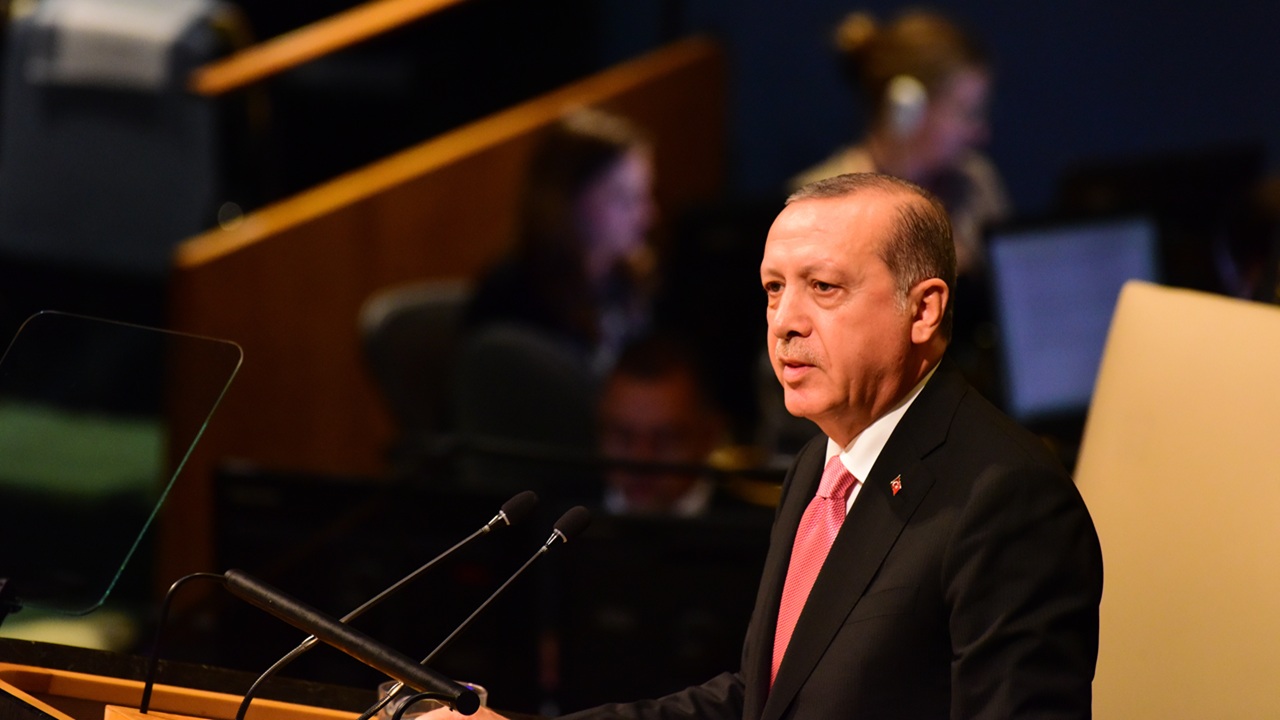
Turkish President Recep Tayyip Erdogan has expressed frustration with the United States over his country’s expulsion from the Lockheed Martin F-35 Lightning II program—even as he remains noncommittal about the future of the Russian-made S-400 “Triumf” air defense system, which led to the expulsion during the first Trump administration in 2017.
At the time, and in the years since, Washington has made clear that the fifth-generation stealth fighter isn’t compatible with the Russian-made anti-aircraft system, and that the S-400 would compromise the security of the F-35s in use by NATO. As the White House stated at the time of the expulsion, “The F-35 cannot coexist with a Russian intelligence platform that will gather information about its advanced capabilities.”
Turkey Is Making New Efforts to Rejoin the F-35 Program
The expulsion, which was carried out under the “Countering America’s Adversaries Through Sanctions Act” (CAATS), significantly impacted Turkey’s aerospace and defense industry, which had been playing a key role in the production of the F-35 Lightning II. Ankara also made payments of nearly $1.4 billion for the undelivered F-35s.
As a result, Erdogan has repeatedly argued that his nation should be allowed to rejoin the program and, just this week, told US news outlet Bloomberg that Turkey’s re-entry into the high-profile arms program would improve relations between Washington and Ankara.
“Removing Türkiye (Turkey) from the F-35 program is unfair,” the Turkish leader stated, adding that he has raised the matter with US President Donald Trump. “It is important and necessary for Turkey to receive F-35 aircraft and reinstitution in the program.”
Turkey has also continued to negotiate with the United States to procure F-16 Block 70 jet fighters, and the discussions are ongoing. Last month, US Ambassador to Turkey Tom Barrack told reporters, “These issues will be resolved within the next four to six months.”
It was reported at the time that Turkey could return the S-400s to Russia, which has sought additional batteries to replace the ones lost in the ongoing war in Ukraine. That option solves one problem, but creates another for Washington—namely a new advantage for the Kremlin on the battlefield in Ukraine, an outcome that both Ukraine and the United States seek very much to avoid. Alternative options for Ankara include transferring the S-400s to a neutral third country (which Russia opposes), transferring them to the United States (which Russia strongly opposes), and simply destroying them and writing off the loss.
Another Hurdle for Turkey to Clear: Israeli Objections
Even if Washington and Ankara reach an agreement over the S-400s, there is one more hurdle that must be cleared before Turkey’s readmission to the F-35 program: objections from the United States’ closest regional ally, Israel. By law, the United States has a guaranteed commitment to ensure Israel’s qualitative military edge over potential rivals, including those that are also US partners and allies.
“We have our reservations,” Israel’s Deputy Foreign Minister Sharren Haskel told the Greek newspaper Kathimerini on Tuesday regarding the potential F-35 sale. “A lot of the technology inside the airplane is technology produced by Israel. And obviously this is not something that we will share with them.”
Haskel expressed “serious” concerns about Turkey obtaining the F-35, as relations between the NATO nation and the Middle Eastern state have reached a low point in recent years. Ankara’s continued support for Hamas has greatly deepened mistrust with Israel, and the two nations now view each other as serious rivals in the Eastern Mediterranean and Middle East region.
Israel has also forged closer ties with Greece, Turkey’s other primary rival. Athens has expressed a desire to acquire Israeli-made weapons, and it has also adopted the F-35, with deliveries slated for later this decade.
“I think that the cooperation between Greece and Israel on defense mechanisms is essential and can contribute a lot to the security and safety in the future,” Haskel added.
Keeping all of its partners happy may be the Trump administration’s greatest challenge, at least when it comes to the F-35 Lightning II.
About the Author: Peter Suciu
Peter Suciu has contributed over 3,200 published pieces to more than four dozen magazines and websites over a 30-year career in journalism. He regularly writes about military hardware, firearms history, cybersecurity, politics, and international affairs. Peter is also a contributing writer for Forbes and Clearance Jobs. He is based in Michigan. You can follow him on Twitter: @PeterSuciu. You can email the author: [email protected].
Image: Shutterstock / a katz.